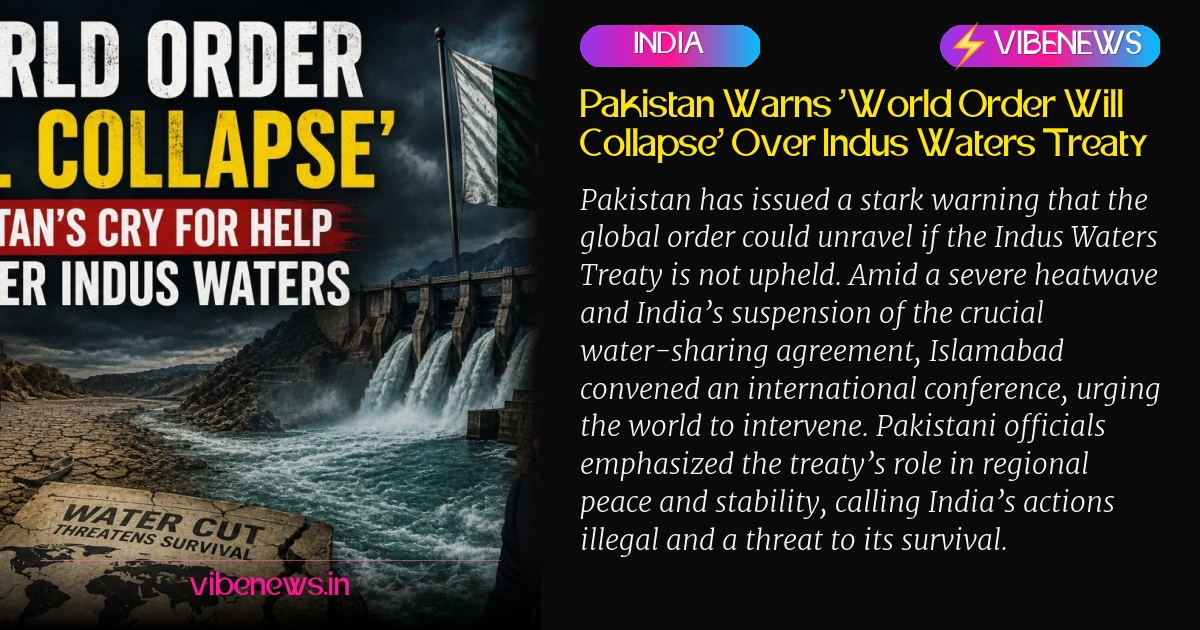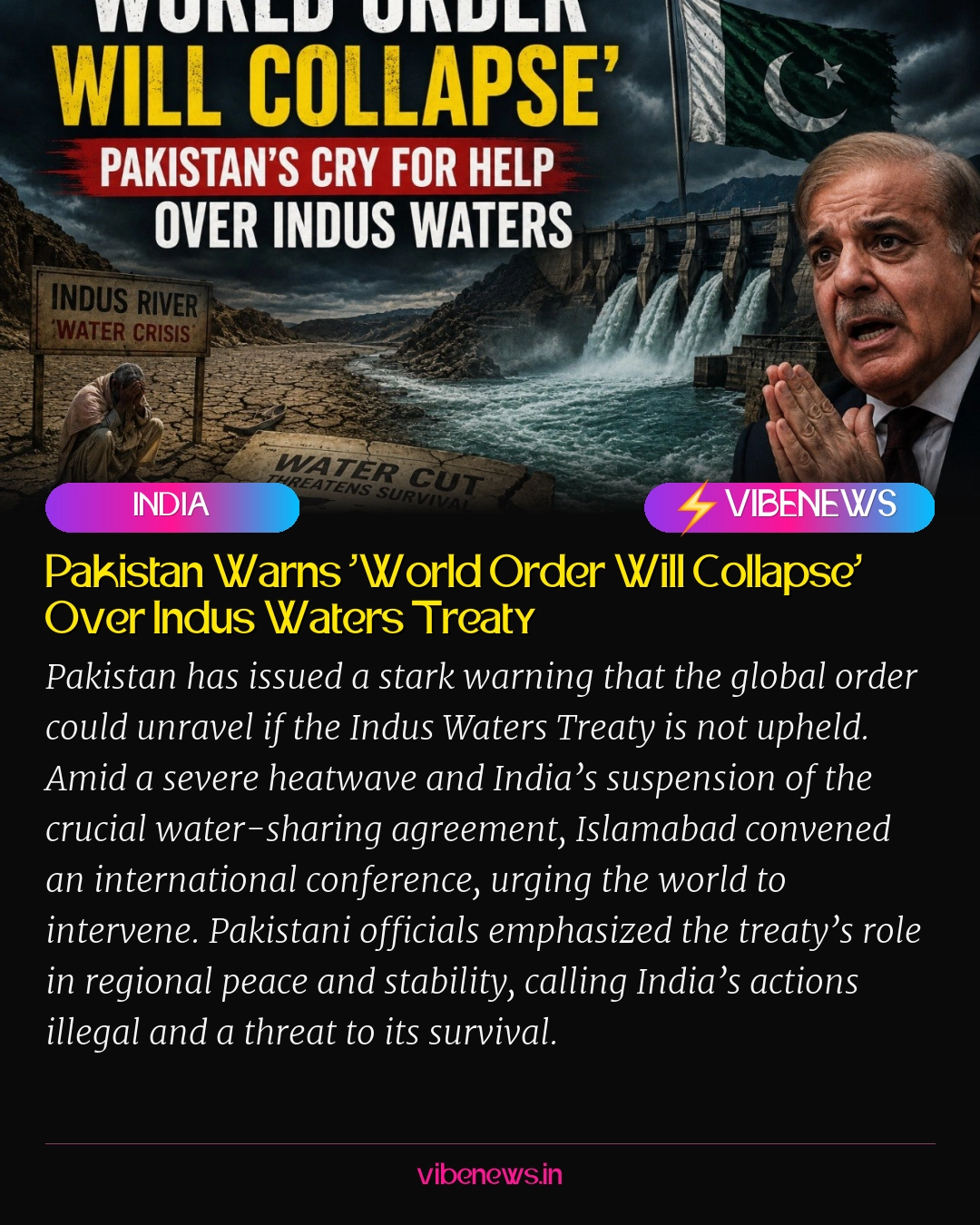
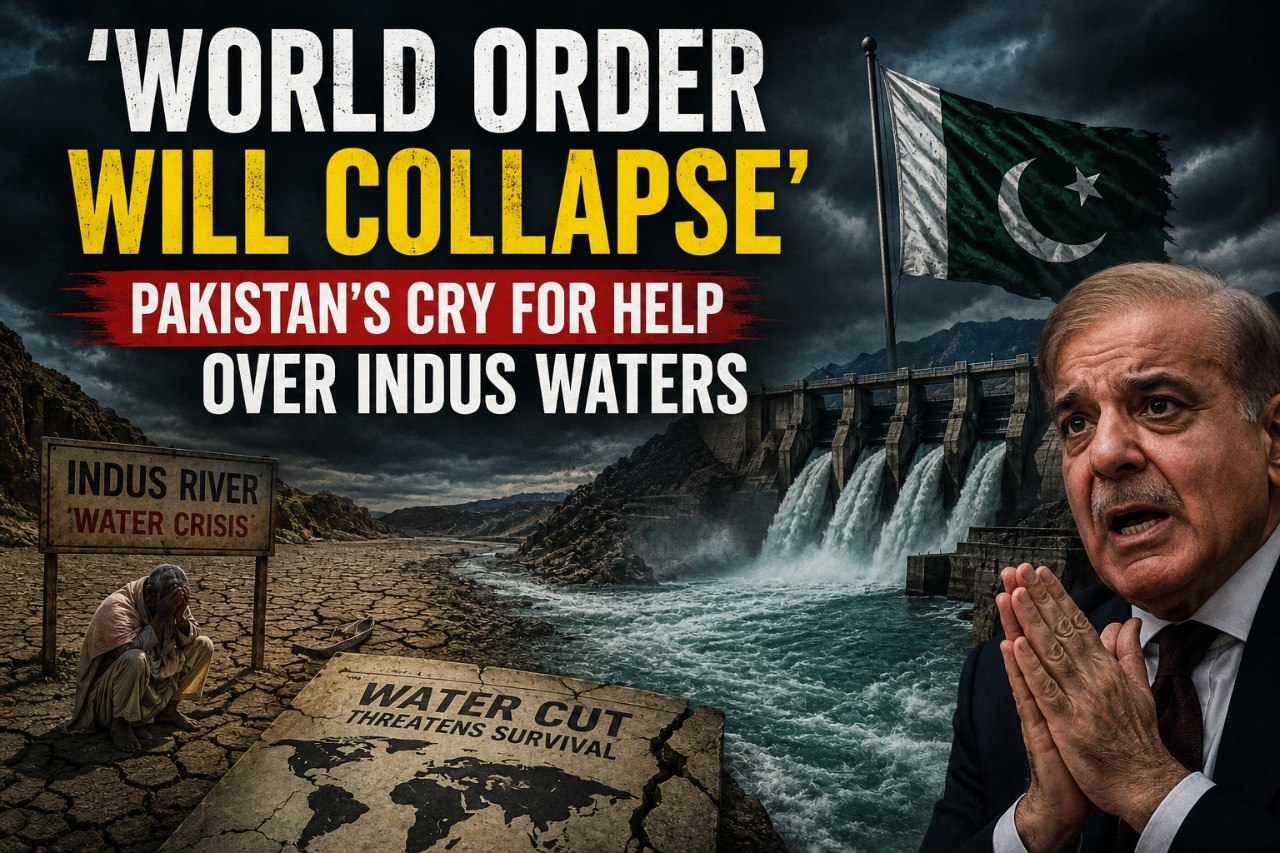
Pakistan has issued a dire warning that the very foundation of the international world order stands to collapse if the Indus Waters Treaty (IWT) is not respected and upheld. This urgent plea came during an "international conference" hosted in Islamabad, where Pakistani officials expressed profound concern over India’s decision to suspend the vital water-sharing agreement.
Musadik Malik, a Pakistani Minister, delivered one of the most forceful statements, asserting that the treaty’s fate would serve as a litmus test for the credibility of international agreements globally. "The Indus Waters Treaty has witnessed three wars between the two nuclear powers," Malik stated. He added, "If this treaty doesn’t hold, no world order that is on paper post World War II will remain secure." He further described the IWT as the "strongest pact the world has ever seen," suggesting its failure would signify a profound breakdown in global governance.
The conference, titled ‘The Indus Waters Treaty: A Key Instrument for Peace and Regional Stability,’ convened amidst Pakistan’s escalating fears of a severe water crisis. The nation is grappling with an intense heatwave, a situation exacerbated by the El Niño weather pattern. Pakistan’s Deputy Prime Minister, Ishaq Dar, condemned India’s revocation of the IWT as "illegal," stressing that water should never be weaponized as a political tool. He argued that no party can unilaterally suspend or terminate obligations under a treaty lacking such provisions.
Dar underscored the IWT’s significance beyond mere water distribution, calling it a "vital instrument of regional peace, stability and cooperation." He insisted that shared waters must foster cooperation, dialogue, and respect for international law, rather than confrontation. He reiterated Pakistan’s long-standing position that any attempt to divert, interrupt, or reduce water allocated to Pakistan under the treaty would be considered an "act of war," referencing a decision by Pakistan’s National Security Committee following India’s suspension announcement. Such actions, he warned, would have "profound consequences" for regional peace and security.
Bilawal Bhutto Zardari, chief of the Pakistan Peoples Party (PPP) and former foreign minister, also addressed the seminar, declaring the Indus River non-negotiable. He proposed an "international convention against the weaponisation of waterways," emphasizing Pakistan’s resolve to defend its water rights. "If anyone believes that Pakistan will surrender Sindh, they do not know Pakistan," Bhutto Zardari asserted, highlighting the deep cultural and existential connection of its people to the rivers. He stressed the need for peace with dignity, dialogue under law, and coexistence without submission, sending a clear message that Pakistan would defend its water, people, treaty, sovereignty, and future.
Bhutto Zardari framed the Indus as Pakistan’s lifeline, not a pressure point or bargaining chip. He warned that any attempt to turn this lifeline into a noose must be treated as a threat to the state’s survival. While failing to address India’s core security concerns regarding state-sponsored militancy, he maintained that using water as a weapon contravenes international law. Mehar Ali Shah, chairman of Pakistan’s Indus River System Authority, further alleged that India had reduced water flows in the Chenab River in recent months, in direct violation of the treaty.
India, for its part, has maintained that its decision to suspend the treaty followed repeated provocations and a failure of bilateral engagement. Harish Parvathaneni, India’s Permanent Representative, speaking at a United Nations event marking World Water Day 2026, stated that New Delhi was compelled to put the treaty in abeyance after the Pahalgam terror attack in April 2025. That attack killed 26 civilians, with India blaming Pakistan-based militants, a charge Islamabad denies. Parvathaneni clarified that the IWT would remain suspended until Pakistan takes "credible and irreversible steps to end support for terrorism."
Brokered by the World Bank and signed in 1960, the Indus Waters Treaty has historically been a rare point of stability between the two nuclear-armed neighbors. It governs the distribution of water from the Indus River system, allocating the eastern rivers (Ravi, Sutlej, and Beas) to India and the western rivers (Indus, Jhelum, and Chenab) to Pakistan. The treaty famously survived multiple wars, including conflicts in 1965, 1971, and the 1999 Kargil conflict. However, its suspension in May 2025, following the Pahalgam attack and subsequent border strikes by India in Operation Sindoor, marked a significant deterioration in relations, leaving diplomatic and trade ties frozen. Pakistan’s current appeals underscore the profound implications of this dispute, not just for regional stability but for the broader framework of international agreements.
TL;DR
- Pakistan warns that the global world order will collapse if the Indus Waters Treaty (IWT) is not upheld, following India’s suspension of the agreement.
- Pakistani Minister Musadik Malik stated the treaty’s future determines the credibility of all international agreements post-World War II.
- Pakistan’s Deputy Prime Minister Ishaq Dar called India’s suspension "illegal" and emphasized that water should never be used as a political tool.
- PPP chief Bilawal Bhutto Zardari declared the Indus River a lifeline for Pakistan, warning that any attempt to undermine its water rights would be treated as a threat to the state’s survival.
- India suspended the IWT in April 2025 as a punitive measure after the Pahalgam terror attack, blaming Pakistan-based militants.
- India’s Permanent Representative Harish Parvathaneni stated the treaty would remain in abeyance until Pakistan takes credible steps to end support for terrorism.
- The World Bank-brokered IWT, signed in 1960, has historically survived multiple wars between India and Pakistan until its suspension in 2025.