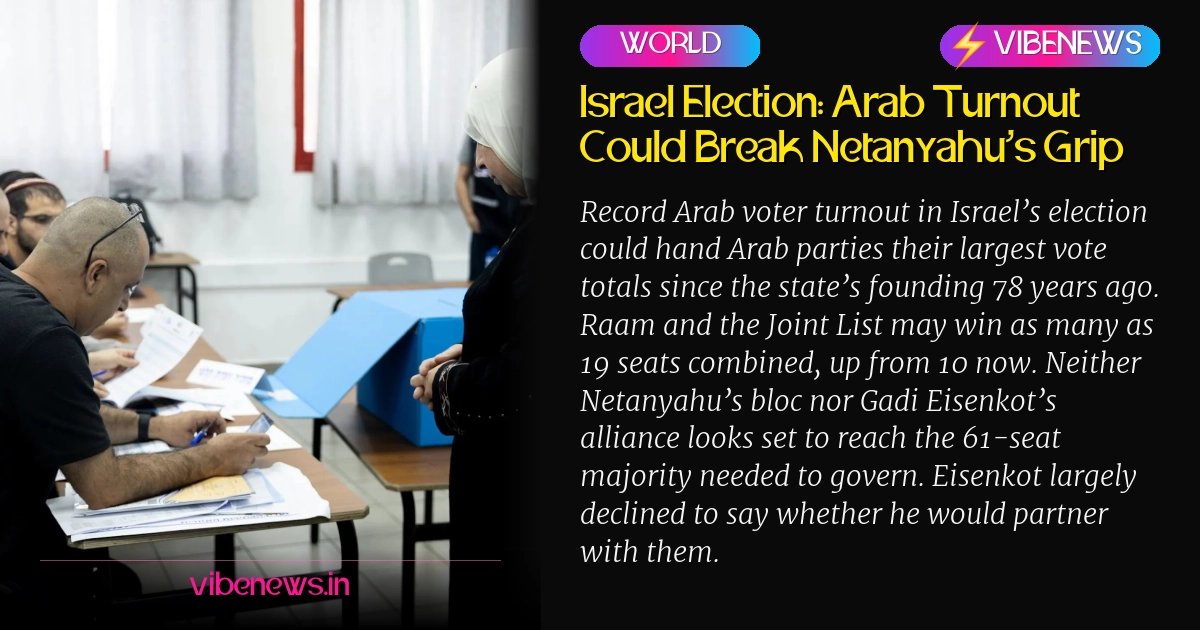
Israel’s Arab parties are on track for their largest vote totals in generations after record turnout in Tuesday’s election, and the numbers could make them the most important players in forming the next government.
Raam and the Joint List alliance could win as many as 19 seats combined. The Arab parties hold 10 seats in the outgoing Parliament. In a 120-seat chamber where 61 seats form a majority, that jump is enough to change the arithmetic of who can govern.
A campaign built on fear of the Arab vote
Prime Minister Benjamin Netanyahu spent the final stretch before the vote warning his supporters that Arabs were trying to steal the election. He returned again and again to the specter of Arab voters, using it to rally his right-wing base and promising to keep them out of power.
Electoral officials said they had no reports of widespread irregularities. The claim was made anyway, and it landed on a base that Netanyahu needed to fire up.
Netanyahu warned supporters that the Arabs were ‘trying to steal the election.’
The rhetoric arrived at a moment when the vote itself was turning into a referendum on whether Arab citizens would be treated as a bloc to be feared or as a bloc that could decide the outcome.
Record turnout, and a minority that cannot be ignored
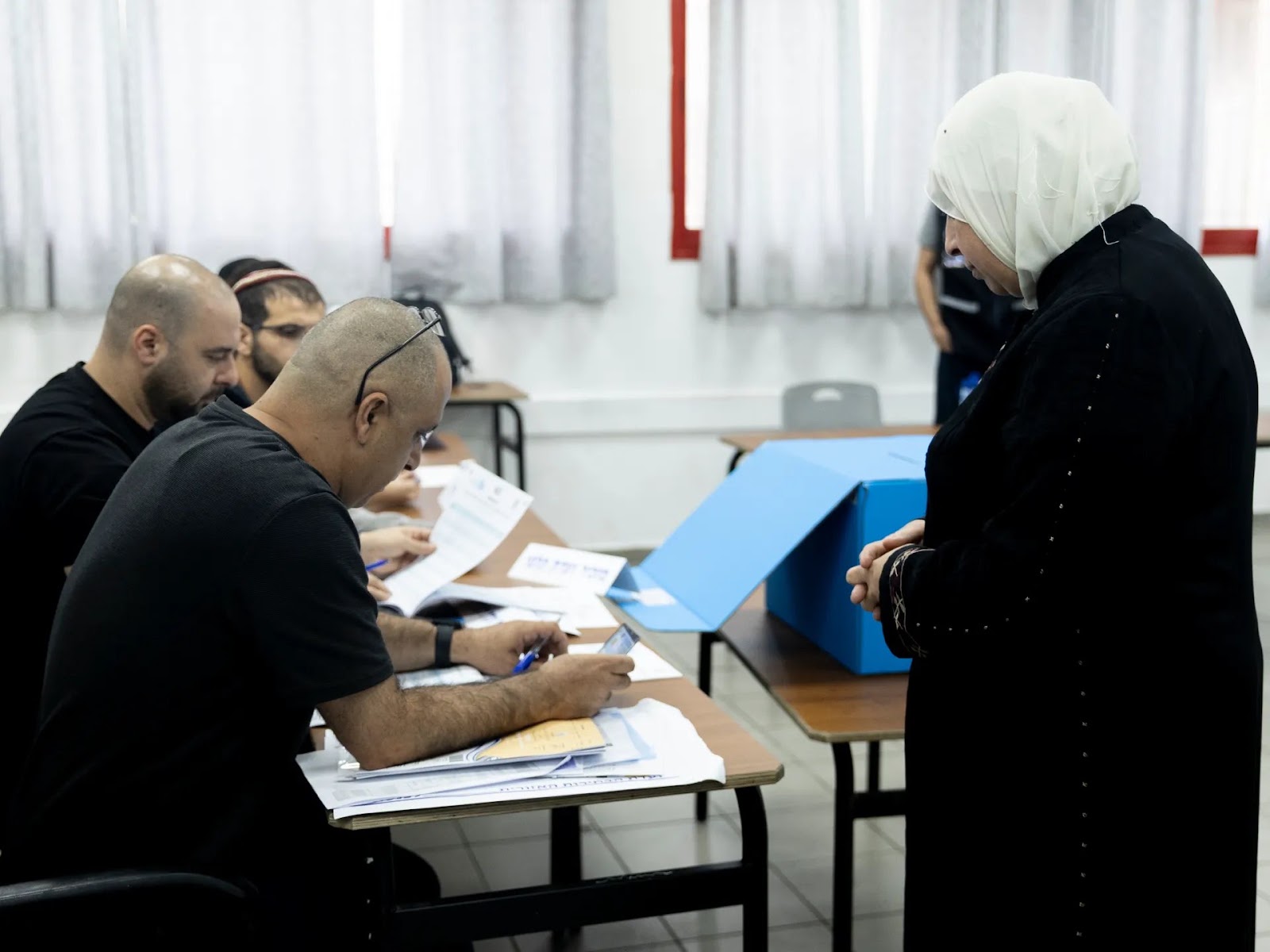
Turnout in the Arab community, which makes up about 20 percent of Israeli citizens, surged on Tuesday. Supporters of the Arab parties showed up in numbers that could give them their largest vote totals in generations, possibly since Israel’s establishment 78 years ago.
For decades, these parties have sat at the edges of Israeli political life. They have watched Jewish parties assemble governing coalitions and choose prime ministers without them. That pattern now looks vulnerable.
The Arab minority represents a political reality that cannot be ignored. The question is no longer whether Arab voters matter. It is who is willing to say so out loud and act on it.
Eisenkot’s dilemma
Netanyahu’s leading rival, Gadi Eisenkot, has not committed to anything. He largely declined to answer whether he would partner with Arab parties if necessary to topple the Netanyahu government. He did say that none of them met his conditions for potential allies.
That refusal to rule out a partnership, paired with a refusal to accept one, keeps the door open without walking through it. For a candidate trying to unseat a prime minister who has spent years running against the Arab vote, the calculation is brutal. Embracing Arab parties could cost him votes on the right. Shutting them out could leave him without a path to 61 seats.
Israel’s future could turn in part on whether Eisenkot decides to take that political risk. Without the Arab parties’ support, his alliance will almost certainly fall short of the 61-seat majority required to form a new government and end Netanyahu’s hold on power.
The math that matters right now
The outcome points to a stalemate at the top. Netanyahu’s alliance also looks set to fall short of 61 seats. Neither side appears to have a clear route to a majority on its own.
That leaves the Arab parties in a position few in Israel have seen in modern memory. Their seat count could decide whether the next government is built around Netanyahu or around an Eisenkot-led alliance, and the choice of partners will be just as consequential as the seat totals.
What happens next will depend on negotiations that have not yet begun in earnest, and on whether Eisenkot is willing to say publicly what he would do with the votes that Arab citizens cast on Tuesday.
For Netanyahu, the warning about Arab voters may have energized his base. For the Arab parties, the turnout delivered something they have rarely had: a seat total that forces the country’s largest parties to talk to them.
TL;DR
- Record Arab voter turnout in Israel’s Tuesday election could give Arab parties their largest vote totals in generations.
- Raam and the Joint List could win as many as 19 seats combined, up from 10 in the outgoing Parliament.
- Netanyahu warned supporters Arabs were ‘trying to steal the election,’ though officials reported no widespread irregularities.
- Gadi Eisenkot largely declined to say whether he would partner with Arab parties to topple Netanyahu.
- Neither Netanyahu’s alliance nor Eisenkot’s looks set to reach the 61-seat majority needed to form a government.