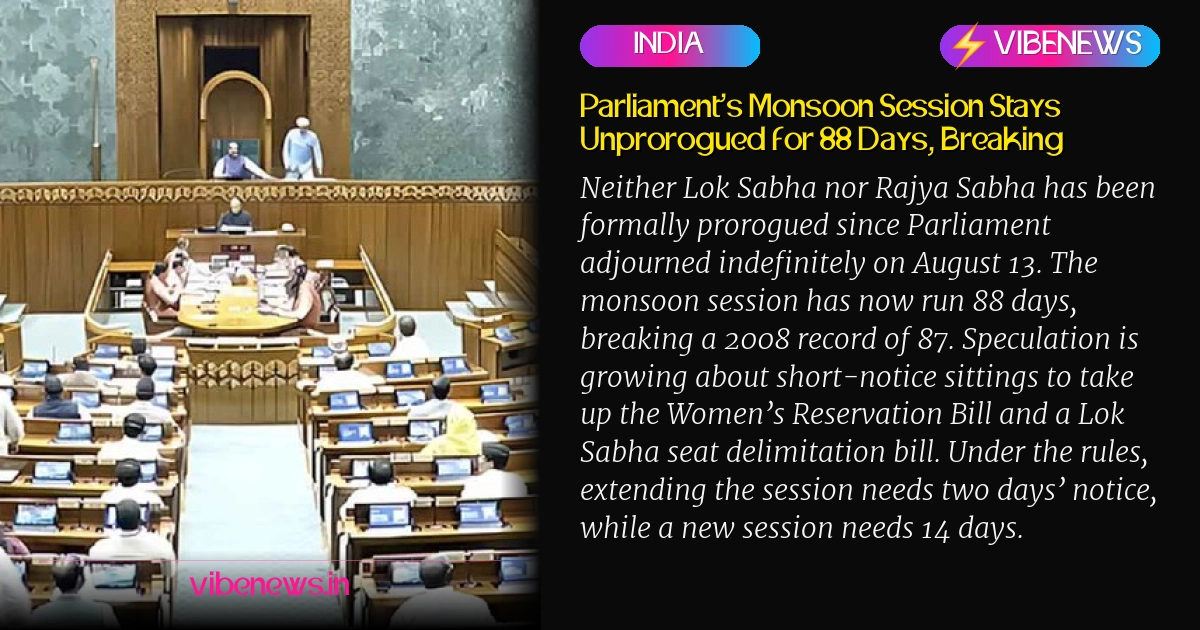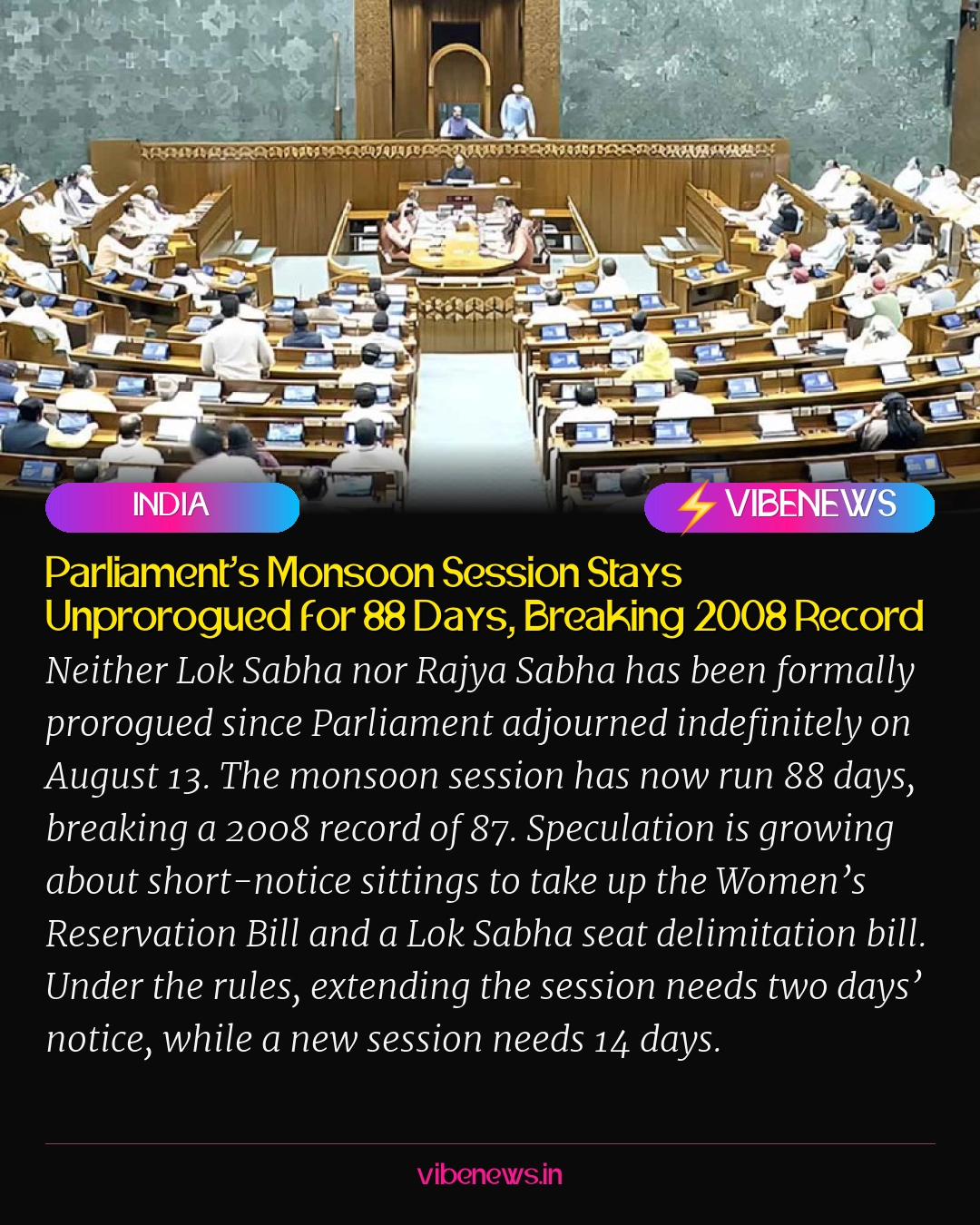
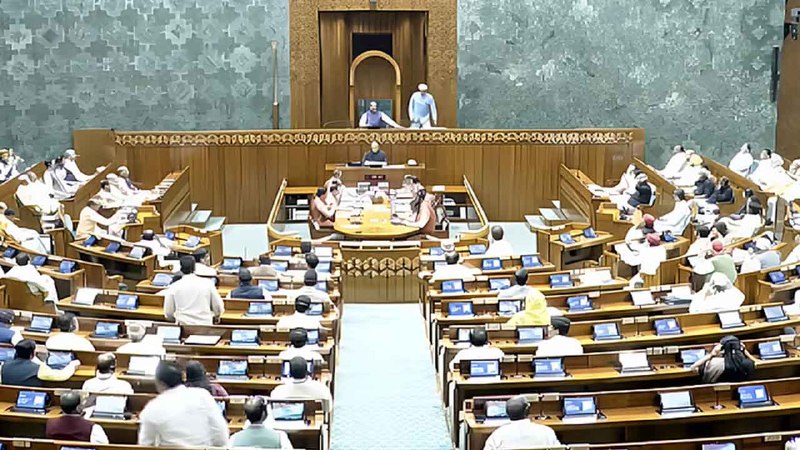
Parliament’s monsoon session has now gone 88 days without a formal end, and that is a record. Both Houses were adjourned indefinitely on August 13, but the session has never been officially closed. The stretch breaks the 87-day mark set in 2008.
Here is the odd part. Adjourning a session and proroguing it are two different things. Proroguing formally ends a session, and as of Monday neither Lok Sabha nor Rajya Sabha had done it. The session is still technically alive, sitting in a kind of limbo that Parliament has rarely stayed in this long.
That gap has set off a wave of speculation in political circles. The buzz centres on the idea that Parliament could be called back for a short sitting on very short notice. The likely agenda, according to the reports, is the Women’s Reservation Bill and a bill on the redrawing of Lok Sabha seat boundaries.
The delimitation proposal is the bigger number. The bill under discussion would raise the number of Lok Sabha seats from 543 to 850. That single figure is what makes the stalled session feel like more than a procedural quirk.
Why would the government leave the session open rather than closing it? The answer lies in the rulebook. If lawmakers want to extend the current session, they must give at least two days’ notice. If they want to start a fresh session instead, the notice period jumps to at least 14 days. Keeping the session alive gives the government a faster route to bring the House back.
Here is where the story gets more unusual. The Constitution does not set a fixed time limit for how long an adjourned session can remain open without being prorogued. Nothing in the text forces Parliament to close the door by a certain date. That silence is exactly why the current stretch has drawn attention.
The Constitution sets no fixed time limit for how long an indefinitely adjourned session can be kept alive.
Parliament sessions normally wind down in a predictable way. Lawmakers adjourn, the presiding officers announce the end, and the formal prorogation follows. This time, the sequence has been left incomplete for almost three months. Each day that passes without prorogation adds to the record and to the questions about what comes next.
For now, the official position is silence on a timeline. Neither House has announced when it might reconvene, and no date for a special sitting has been confirmed in the reports available. Anything beyond the adjournment and the speculation remains unconfirmed.
What makes this moment stand out is not a single vote or a single speech. It is the simple fact that the country’s legislature has been technically in session, with no end in sight, for 88 days. Whether that ends in a quiet formal closure or a sudden return to the House, the record is already on the books.
TL;DR
- Parliament’s monsoon session has gone 88 days without formal prorogation, breaking the 2008 record of 87 days.
- Both Houses were adjourned indefinitely on August 13, but the session has never been officially ended.
- Neither Lok Sabha nor Rajya Sabha had been formally prorogued as of Monday, November 9.
- Speculation points to short-notice sittings for the Women’s Reservation Bill and a Lok Sabha seat delimitation bill.
- The proposed delimitation bill would raise Lok Sabha seats from 543 to 850.
- The Constitution sets no fixed time limit for keeping an adjourned session alive.