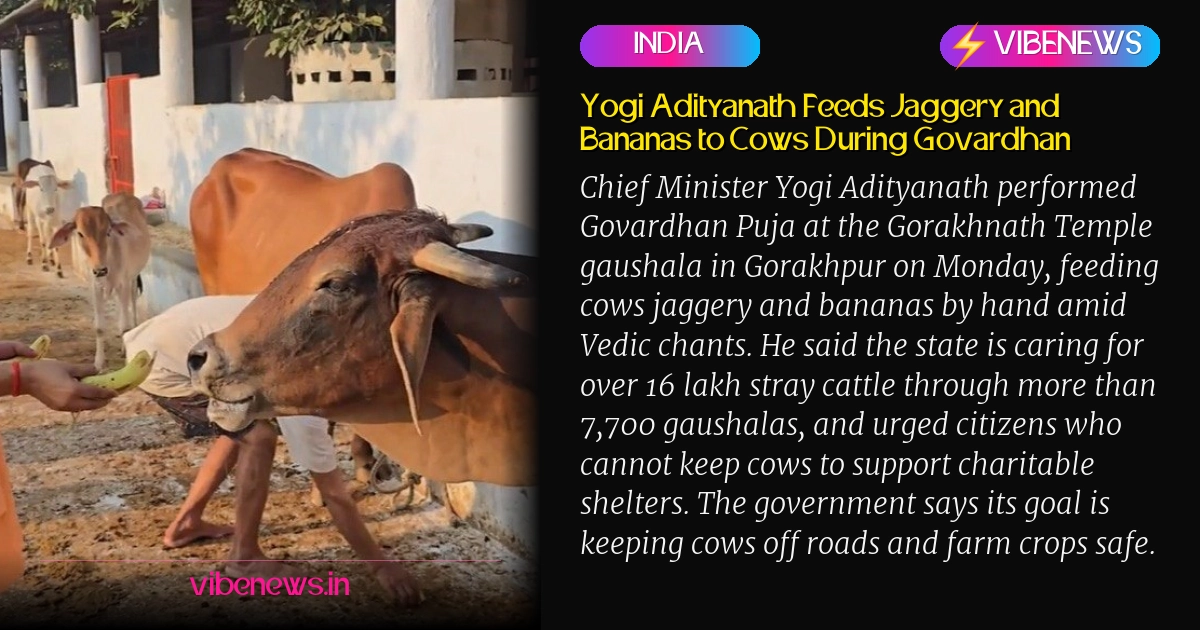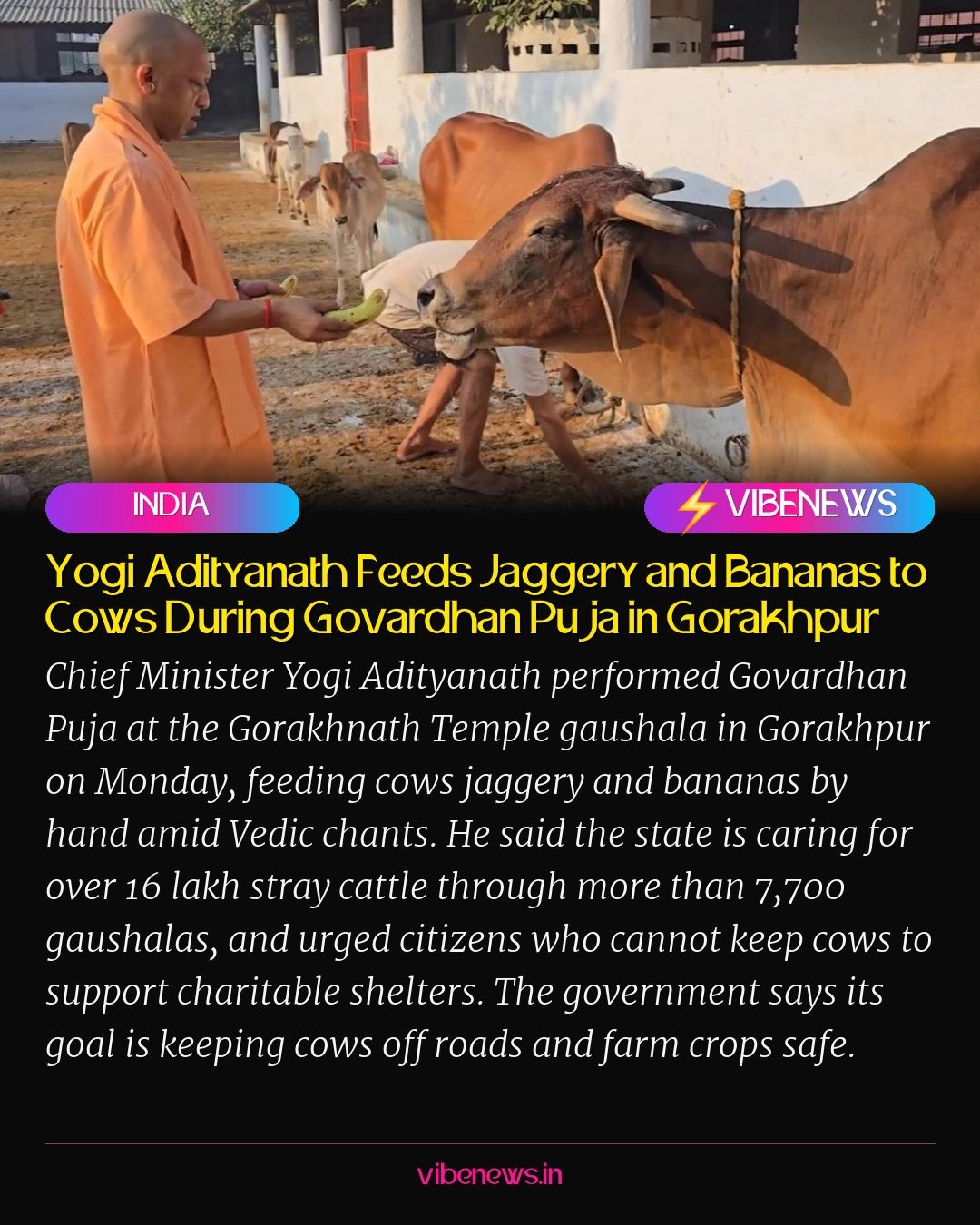
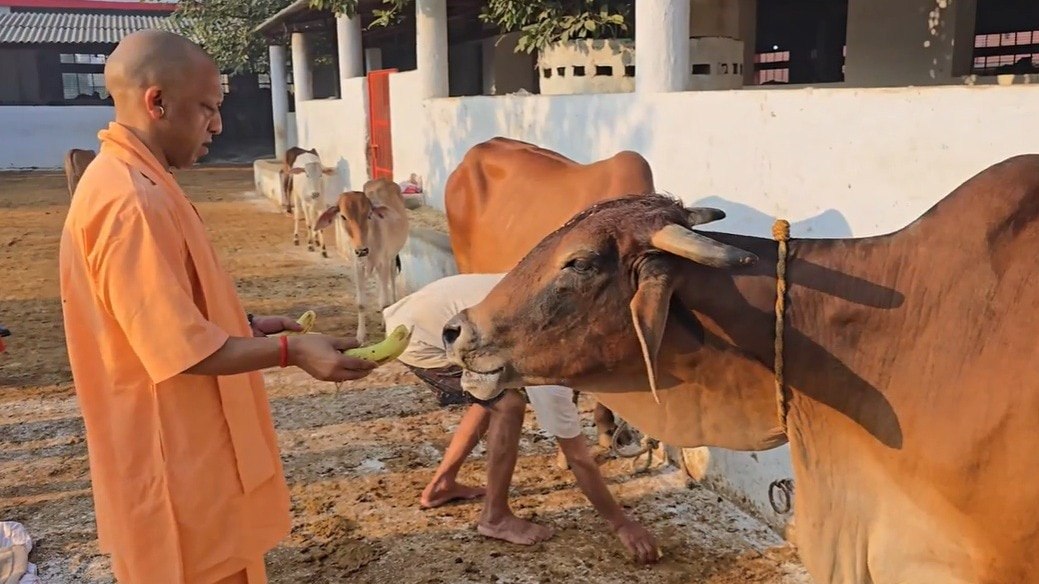
Chief Minister Yogi Adityanath performed Govardhan Puja at the gaushala of the Gorakhnath Temple in Gorakhpur on Monday morning, and he fed jaggery and bananas to the cows with his own hands.
The ritual unfolded inside the temple’s cowshed as Vedic chants filled the air. Yogi Adityanath worshipped the cows, garlanded them and spent time stroking and feeding them. He greeted the people of Uttar Pradesh on the festival and repeated his commitment to protecting cows.
A ritual with a clear message for the state
The festival visit was more than a religious occasion for the Chief Minister. He used the platform to lay out what the state government is doing for stray cattle, a issue that has long drawn attention in rural and urban Uttar Pradesh alike.
According to the Chief Minister, the state is looking after more than 16 lakh stray cattle through over 7,700 gaushalas. That is a large network to run, and he presented it as proof that the state is treating the issue as a continuing responsibility rather than a seasonal drive.
Three schemes, three different models
Yogi Adityanath said the government is currently running three separate schemes for the care of abandoned cattle, each built for a different kind of situation.
The first is a system of government-run cow shelters, where stray animals are housed and looked after directly by the state.
The second is a partnership model. Under it, farmers who look after a stray cow can receive Rs 1,500 per month for each animal. It is a direct incentive for families to take on the care of cows that would otherwise end up on the streets.
The third scheme runs on a decentralised basis. In rural areas, the Animal Husbandry Department manages it, while in urban areas the Urban Development Department handles the arrangements through what the state calls Kanha Upvan. The division of responsibility shows how the government is trying to cover both village and city.
The aim: fewer cows on roads, safer crops
The Chief Minister was direct about the purpose behind all of this. The government’s main objective, he said, is to make sure cows do not stay on the roads and that farmers’ crops remain protected.
That link between stray cattle and farm damage is what gives the policy its immediate stakes. Crops are the livelihood of many families in the countryside, and the government is framing cow care as part of protecting that livelihood.
Our main aim is to ensure that cows do not remain on the roads and that the crops of farmers stay safe. (Translated from Hindi)
Cow service and a call to the public
Yogi Adityanath described India as a land of agriculture and sages, and called the cow its soul. He said that the four goals of life in Indian tradition, namely dharma, artha, kama and moksha, can all be served through cow service.
He also made a direct appeal to citizens. Those who cannot keep a cow at home, he said, should support charitable gaushalas. In his view, that kind of help is a way to take part in the work of cow service and earn its spiritual merit.
The message fits neatly with the day’s ritual. The Chief Minister did not stop at the prayers. He used the moment to explain how the state intends to manage stray cattle, and he asked ordinary people to share the responsibility.
The event itself was short and focused, centred on the cowshed, the chants and the feeding. The images from the gaushala carried the day’s emotional weight, with the Chief Minister personally caring for the animals as residents marked the festival.
TL;DR
- Yogi Adityanath performed Govardhan Puja at the Gorakhnath Temple gaushala in Gorakhpur on Monday.
- He fed cows jaggery and bananas by hand and garlanded them while Vedic chants filled the cowshed.
- The state says it is caring for over 16 lakh stray cattle through more than 7,700 gaushalas.
- Farmers can receive Rs 1,500 per month for each stray cow they look after under one state scheme.
- Three state schemes run through government shelters, farmer partnership and the Kanha Upvan programme.
- Yogi Adityanath urged citizens who cannot keep cows to support charitable gaushalas.