Modi’s Arrival and Bilateral Agenda
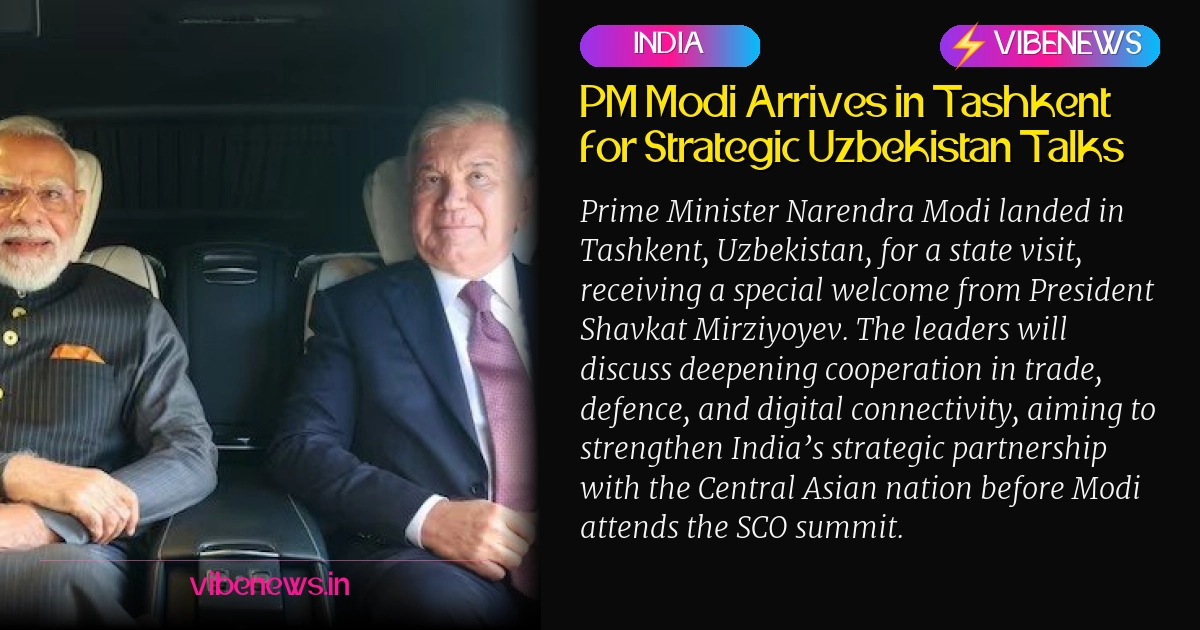
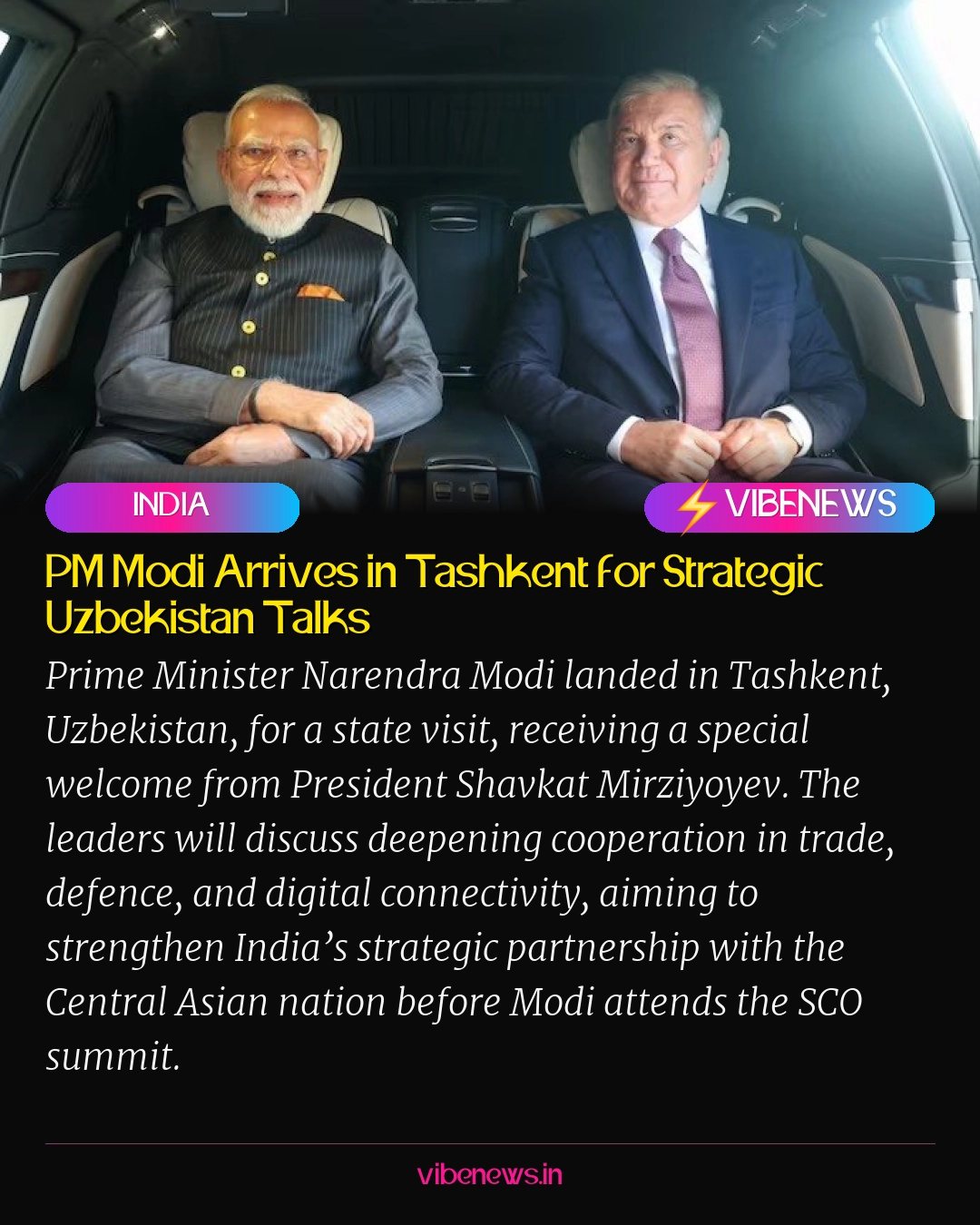
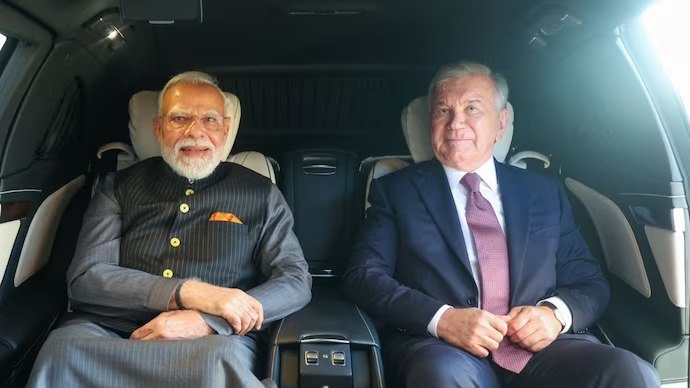
Prime Minister Narendra Modi arrived in Tashkent, Uzbekistan, for a significant state visit aimed at fortifying India’s strategic partnership with the Central Asian nation. Upon his arrival, he received a special welcome from Uzbekistan President Shavkat Mirziyoyev, a gesture Modi acknowledged as reflecting the deep and growing momentum of bilateral ties.
This marks Modi’s fourth visit to Uzbekistan, underscoring the consistent engagement between the two countries. The leaders are scheduled to hold delegation-level talks, where they will review existing cooperation across crucial sectors.
Discussions are expected to cover trade and investment, defence collaboration, digital connectivity initiatives, energy partnerships, educational exchanges, and strengthening people-to-people ties. The talks will also set a forward-looking agenda, aligning with the shared visions of ‘Viksit Bharat’ (Developed India) and ‘Yangi Uzbekistan’ (New Uzbekistan).
India’s Enduring Central Asian Diplomacy
India’s relationship with Uzbekistan is rooted in historical and cultural connections that span centuries. Uzbekistan, strategically located in Central Asia, holds significant importance for India’s ‘Connect Central Asia’ policy, which seeks to enhance economic, political, and security cooperation with the region.
The visit provides an opportunity to build upon previous engagements, including the India-Central Asia Summit, which has become a vital platform for regional dialogue. India views Central Asia as a crucial partner for its extended neighbourhood policy, focusing on stability and prosperity.
The Shanghai Cooperation Organisation Summit
Following his bilateral engagements in Tashkent, Prime Minister Modi will travel to Bishkek, Kyrgyz Republic, to attend the 26th Shanghai Cooperation Organisation (SCO) Summit. This summit is particularly significant as it marks 25 years since the organisation’s inception.
India has been an active and constructive member of the SCO since 2017, advocating for a region free from terrorism, separatism, and extremism. Modi’s departure statement highlighted India’s vision for the SCO, anchored in ‘Security, Connectivity, and Opportunity’.
At the summit, Modi is expected to address the gathering, outlining India’s priorities and perspectives on regional challenges and opportunities. He will also hold bilateral meetings with several SCO leaders on the sidelines, fostering diplomatic ties and addressing mutual interests.
Cultural and Regional Engagement
Beyond the high-level political discussions, the Prime Minister’s itinerary in Tashkent includes visits to sites of cultural significance. He will pay respects at the Shastri Memorial and the Mahatma Gandhi Centre at the Tashkent State University of Oriental Studies.
These visits underscore the deep cultural and historical bonds between India and Uzbekistan, celebrating shared values and historical figures. Such gestures reinforce the people-to-people connections that form a bedrock of bilateral relations.
In Bishkek, in addition to the SCO Summit, Modi is also scheduled to attend the opening ceremony of the 6th World Nomad Games. This event further highlights India’s engagement with the diverse cultural heritage of Central Asia and its commitment to fostering broader regional understanding.
Editorial Context
This visit by Prime Minister Modi to Uzbekistan and his participation in the SCO Summit carry substantial long-term implications for India’s foreign policy and regional standing. It reinforces India’s commitment to its ‘Connect Central Asia’ strategy, which is vital for diversifying energy sources, expanding trade routes, and enhancing security cooperation.
Strengthening ties with Uzbekistan, a key player in Central Asia, allows India to counterbalance other regional influences and secure its strategic interests in a geopolitically sensitive area. The focus on digital connectivity and defence cooperation also signals a deeper, more integrated partnership that extends beyond traditional trade.
India’s active role in the SCO, particularly its emphasis on security and counter-terrorism, is crucial for regional stability. This engagement helps India address cross-border threats and promotes a cooperative framework for tackling extremism. The visit underscores India’s ambition to be a net security provider and a reliable economic partner in its extended neighbourhood, contributing to a more stable and prosperous Eurasian landscape.
TL;DR
- Prime Minister Narendra Modi received a special welcome from Uzbekistan President Shavkat Mirziyoyev upon his arrival in Tashkent for a state visit.
- The visit aims to strengthen India’s strategic partnership with Uzbekistan, focusing on deepening cooperation in trade, investment, defence, and digital connectivity.
- Modi’s discussions with President Mirziyoyev will align with the shared visions of ‘Viksit Bharat’ and ‘Yangi Uzbekistan’.
- The Prime Minister will subsequently attend the 26th Shanghai Cooperation Organisation (SCO) Summit in Bishkek, Kyrgyz Republic, marking 25 years of the organisation.
- India’s vision for the SCO, as articulated by Modi, is anchored in ‘Security, Connectivity, and Opportunity’ for the region.
- Cultural diplomacy is also a key aspect, with Modi visiting the Shastri Memorial and Mahatma Gandhi Centre in Tashkent.