The Ranchi Agitation: A Cry for Justice
Thousands of students in Ranchi, Jharkhand, engaged in an indefinite sit-in against alleged irregularities in state recruitment examinations, are receiving an unexpected lifeline: meals ordered by strangers through food delivery apps like Swiggy and Zomato. This unique form of digital solidarity mirrors a similar phenomenon observed during recent protests in New Delhi, highlighting an evolving landscape of public support for civic movements.
Since late July, Ranchi’s Jaipal Singh Munda Stadium has become the epicenter of a massive student protest. Aspirants for government jobs are demanding accountability and systemic reforms following alleged irregularities in examinations conducted by the Jharkhand Public Service Commission (JPSC) and the Jharkhand Staff Selection Commission (JSSC). These bodies are crucial for recruiting officers for state civil services and various subordinate government posts, respectively.
The immediate trigger for the current agitation was the cancellation of the 14th JPSC Combined Preliminary Examination, but underlying grievances over exam integrity have simmered for years. Protesters are specifically calling for a Central Bureau of Investigation (CBI) probe into recruitment examinations over the past seven years, stringent action against those responsible for malpractices, and the introduction of a "not attempted" option in OMR sheets to prevent arbitrary marking.
The JMM-led Mahagathbandhan government, headed by Chief Minister Hemant Soren, is squarely in the crosshairs of the protesters, who have raised slogans demanding the government "come to its senses."
Digital Lifeline: Strangers United by a Cause
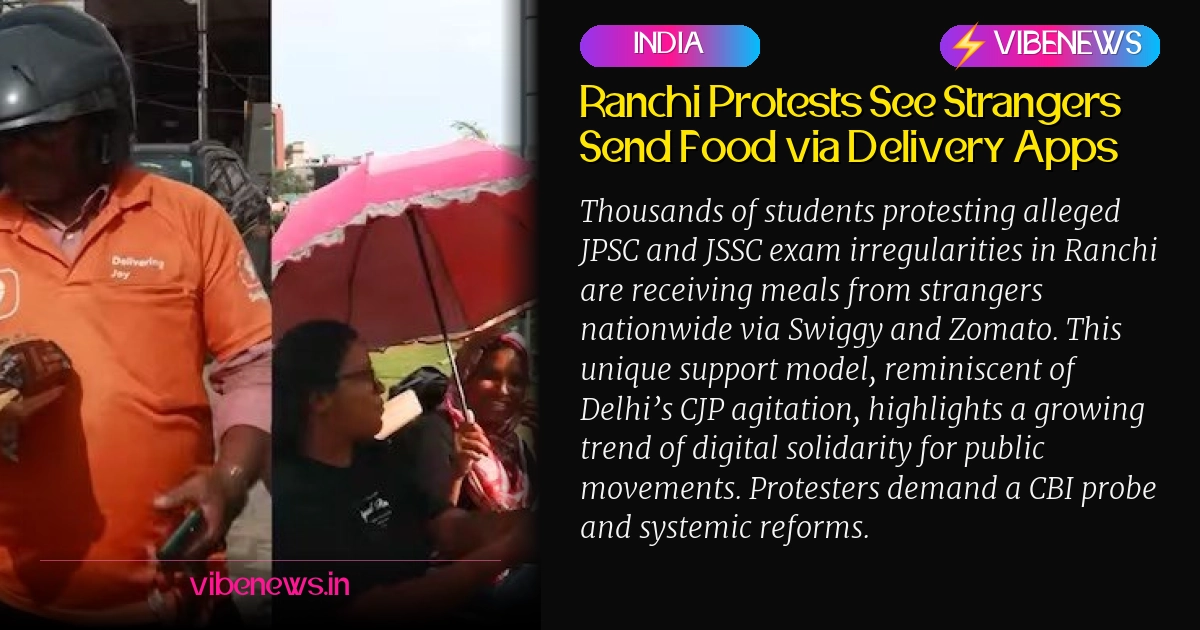
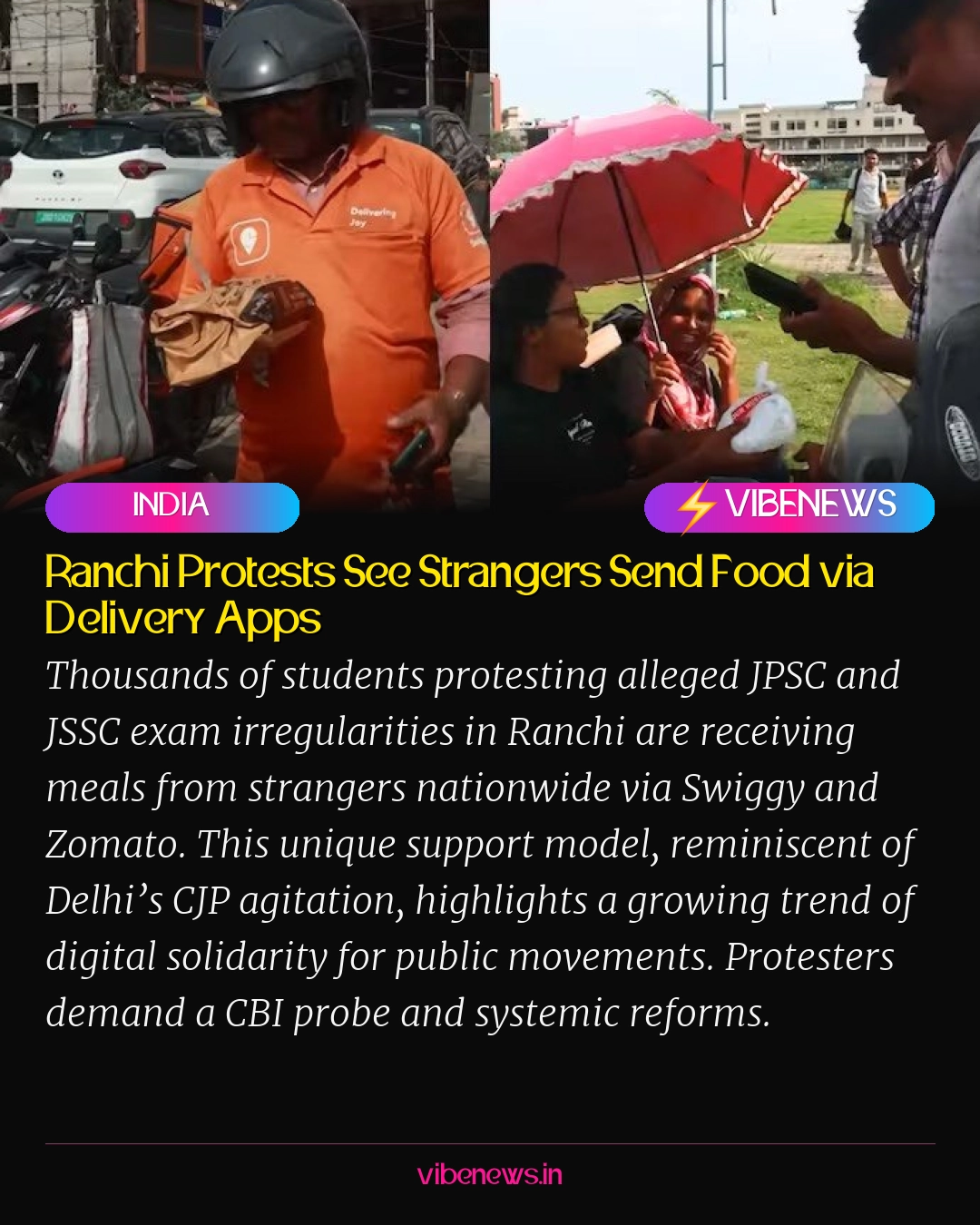
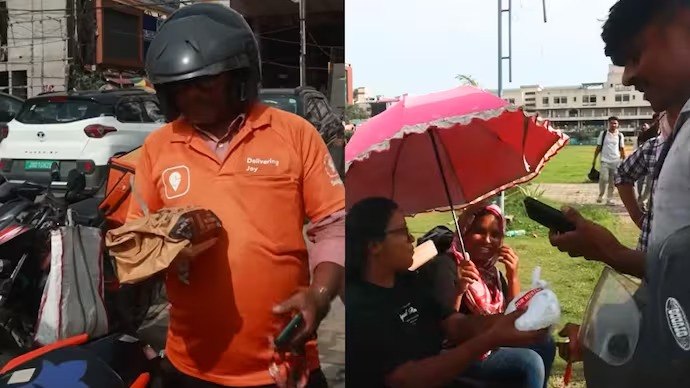
Amidst the growing numbers at the protest site, a remarkable pattern of support has emerged. Individuals, many residing hundreds of kilometers away and with no direct connection to Jharkhand, are utilizing food delivery platforms to send meals to the protesting students. The instructions to delivery partners are often simple: "Hand it to any student protesting."
Delivery executives, initially surprised by such unconventional orders, have reported a steady stream of food parcels arriving at the stadium. One executive recounted never having received an order without a specific recipient’s name before. This spontaneous outpouring of aid underscores a collective empathy transcending geographical boundaries.
Interactions facilitated by journalists revealed the motivations behind this digital philanthropy. Tilak, calling from Delhi, explained his decision was influenced by witnessing the hardships faced by students during the CJP protests, recognizing that sustained agitation requires basic sustenance. Similarly, Ekta, a Delhi-based teacher, initially placed a trial order to ensure its efficacy before planning further contributions, demonstrating a thoughtful approach to remote support.
Echoes of Jantar Mantar: A New Model of Solidarity
This phenomenon is not entirely new. It bears a striking resemblance to the month-long agitation led by the Cockroach Janta Party (CJP) at Jantar Mantar in New Delhi, where students protested the NEET-UG paper leak. During that period, strangers from across India and even abroad used Swiggy and Zomato to send meals to the Delhi protesters, creating an informal support network.
The recurrence of this model in Ranchi suggests a nascent but powerful trend in civic engagement. Digital platforms, traditionally used for convenience, are now being repurposed as tools for collective action and humanitarian support during protests. This shift highlights how technology can amplify public sentiment and facilitate solidarity in ways previously unimaginable.
Sustaining the Movement: Beyond Digital Aid
While digital food deliveries provide crucial sustenance, the protest also relies heavily on on-ground community participation and traditional forms of support. Organizers like Vinay Kumar have highlighted the challenges, such as the lack of basic facilities like electricity and restrictions on cooking at the site.
A donation box has been set up, allowing ordinary people to contribute financially, keeping the movement alive. Furthermore, political entities like the Jharkhand Loktantrik Krantikari Morcha (JLKM), led by Jairam ‘Tiger’ Mahato, have extended "moral support," emphasizing the non-partisan nature that protesters wish to maintain.
The Road Ahead: Intensification and Demands
The students have made it clear that their demands are non-negotiable. They have called for Chief Minister Hemant Soren’s resignation on moral grounds and warned of intensifying their agitation, including a march to the Jharkhand Assembly, if their grievances remain unaddressed in the coming days.
Editorial Context
The Ranchi protests, bolstered by unprecedented digital solidarity, underscore several critical long-term trends. Firstly, they highlight the persistent and deeply felt issue of integrity in public recruitment examinations across India, a matter that directly impacts the aspirations and futures of millions of young people. The government’s response to these demands will be a crucial test of its commitment to transparency and accountability.
Secondly, the emergence of food delivery apps as a channel for remote support signifies a profound evolution in protest dynamics. This model of anonymous, digital philanthropy could become a standard feature of future agitations, offering a new layer of resilience and public engagement. It also raises questions about the role of technology platforms in facilitating civic action and the broader implications for social movements in a digitally interconnected world.
TL;DR
- Strangers nationwide are sending food via Swiggy and Zomato to students protesting alleged exam irregularities in Ranchi.
- The protests target alleged malpractices in JPSC and JSSC recruitment examinations, demanding a CBI probe and systemic reforms.
- This unique support model mirrors a similar phenomenon observed during the Cockroach Janta Party (CJP)-led protests in Delhi over the NEET-UG paper leak.
- Protesters at Jaipal Singh Munda Stadium face logistical challenges, relying on both digital aid and on-ground community contributions.
- Key demands include a CBI investigation, reforms in the recruitment system, and the resignation of Chief Minister Hemant Soren.
- Students have threatened to intensify their agitation, including a march to the Jharkhand Assembly, if their demands are not met.