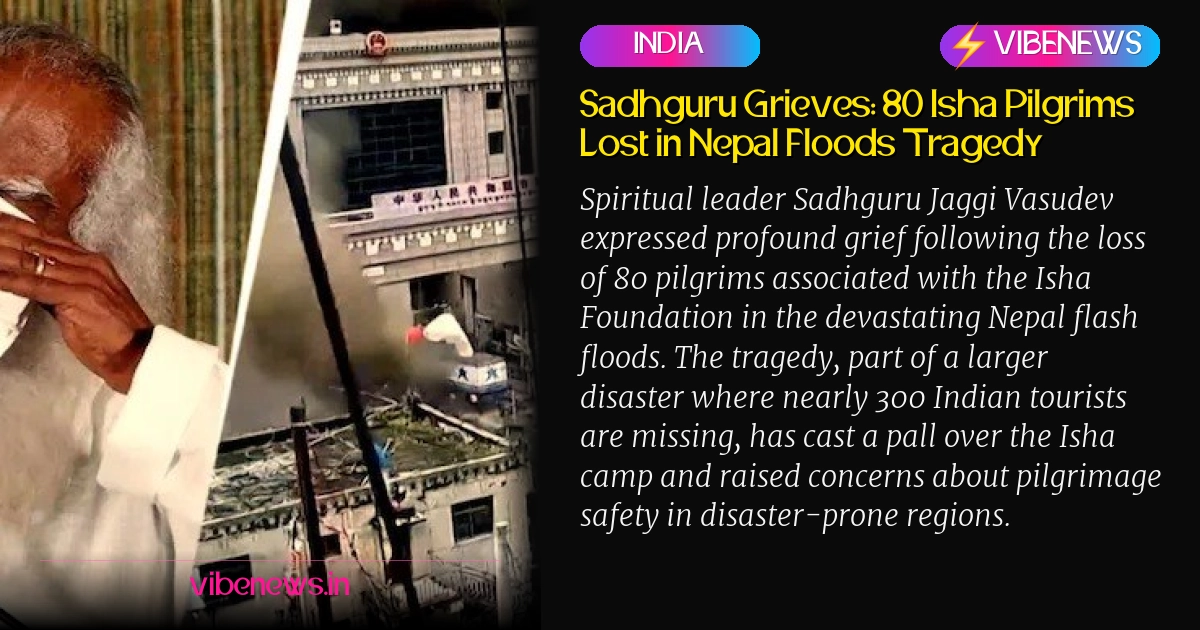

Spiritual leader Sadhguru Jaggi Vasudev has expressed profound grief following the devastating flash floods in Nepal, which have reportedly claimed the lives of 80 pilgrims associated with the Isha Foundation. The tragedy has cast a somber shadow over the spiritual community, with Sadhguru himself visibly emotional as news of the extensive loss emerged from the Himalayan nation.
This specific loss forms part of a larger catastrophe, as Nepal’s Foreign Minister Shishir Khanal confirmed that nearly 300 Indian tourists remain missing across various flood-affected regions. The scale of the disaster underscores the inherent risks associated with travel in mountainous terrains, particularly during unpredictable weather patterns.
Nepal’s Torrential Ordeal
The recent deluge in Nepal, triggered by incessant monsoon rains, has unleashed widespread destruction, particularly in the Himalayan foothills and along major river basins. Flash floods and landslides have obliterated infrastructure, swept away homes, and disrupted vital communication networks, leaving countless individuals stranded and vulnerable.
Rescue operations have been severely hampered by the challenging terrain and ongoing adverse weather conditions. Local authorities, supported by international aid agencies, are working tirelessly to locate survivors and recover bodies, but the sheer magnitude of the disaster presents formidable obstacles.
A Spiritual Leader’s Anguish
The news of the missing Isha pilgrims has deeply affected Sadhguru Jaggi Vasudev, who addressed his followers with a heavy heart. His emotional response reflects the deep personal connection and responsibility felt towards those who embark on spiritual journeys under the foundation’s guidance.
At various Isha camps and centers globally, a palpable sense of gloom has settled. Prayers and vigils are being held for the missing, and the foundation is actively coordinating with Indian and Nepali authorities to gather information and provide support to the families of the affected pilgrims.
The Allure and Peril of Himalayan Pilgrimages
For centuries, the Himalayas have drawn spiritual seekers and adventurers alike, revered as sacred landscapes and sites of profound spiritual significance. Pilgrimages to destinations like Muktinath, Pashupatinath, and the various high-altitude monasteries are deeply ingrained in the cultural and religious fabric of India and Nepal.
However, these journeys are often fraught with peril. The region is highly susceptible to natural disasters, including earthquakes, landslides, and flash floods, especially during the monsoon season from June to September. Past tragedies, such as the devastating Kedarnath floods in India, serve as stark reminders of the unpredictable and formidable power of nature in these majestic mountains.
Pilgrims, often driven by faith and devotion, sometimes underestimate the environmental risks or are caught unaware by sudden shifts in weather. Tour operators and spiritual organizations face the complex challenge of balancing spiritual aspirations with stringent safety protocols in such volatile environments.
Coordinated Rescue and Recovery Efforts
Both the Nepali and Indian governments have mobilized extensive resources for search and rescue operations. The Nepal Army, along with local police and disaster response teams, is leading efforts on the ground, while India has dispatched its National Disaster Response Force (NDRF) teams and is providing diplomatic assistance.
The focus remains on reaching remote areas where communication lines are down and access roads have been destroyed. International cooperation is crucial in such cross-border disasters, ensuring that all possible avenues are explored to account for the missing and provide aid to those displaced.
Long-Term Implications for Spiritual Tourism
This tragedy is likely to prompt a re-evaluation of safety standards and risk assessment for spiritual tourism in the Himalayan region. Organizers of large-scale pilgrimages may need to implement more rigorous pre-trip briefings, real-time weather monitoring, and robust emergency response plans.
Governments, too, might consider stricter regulations for tour operators and enhanced public advisories regarding travel during high-risk seasons. The incident serves as a poignant reminder that while spiritual journeys offer profound experiences, they must be undertaken with utmost respect for the natural environment and its inherent dangers.
Editorial Context
The loss of 80 Isha pilgrims and the broader count of nearly 300 missing Indian tourists in the Nepal floods transcends a mere news event; it is a stark illustration of humanity’s increasing vulnerability to extreme weather phenomena, often exacerbated by climate change. This incident compels a deeper examination of how spiritual organizations and tour operators manage risks in ecologically sensitive zones.
Beyond the immediate grief, this tragedy highlights the critical need for advanced disaster preparedness, resilient infrastructure, and effective early warning systems in regions prone to natural calamities. It also underscores the ethical responsibility of guiding large groups into potentially hazardous environments, demanding a balance between spiritual pursuit and the paramount importance of human safety. The long-term impact will likely reshape pilgrimage practices, fostering a greater emphasis on ecological awareness and robust emergency protocols for future generations of spiritual travelers.
TL;DR
- Sadhguru Jaggi Vasudev expressed deep sorrow over 80 Isha Foundation pilgrims reportedly lost in Nepal’s devastating flash floods.
- Nepal’s Foreign Minister Shishir Khanal confirmed that nearly 300 Indian tourists are missing following the widespread disaster.
- The floods, triggered by heavy monsoon rains, have caused extensive damage to infrastructure and communication networks across Nepal.
- The tragedy highlights the significant risks associated with Himalayan pilgrimages, especially during the unpredictable monsoon season.
- Both Indian and Nepali authorities have launched coordinated search and rescue operations in the challenging mountainous terrain.
- The incident is expected to lead to a re-evaluation of safety protocols and risk management for spiritual tourism in disaster-prone regions.