A New Dimension to Kerala’s Gulf Migration Story
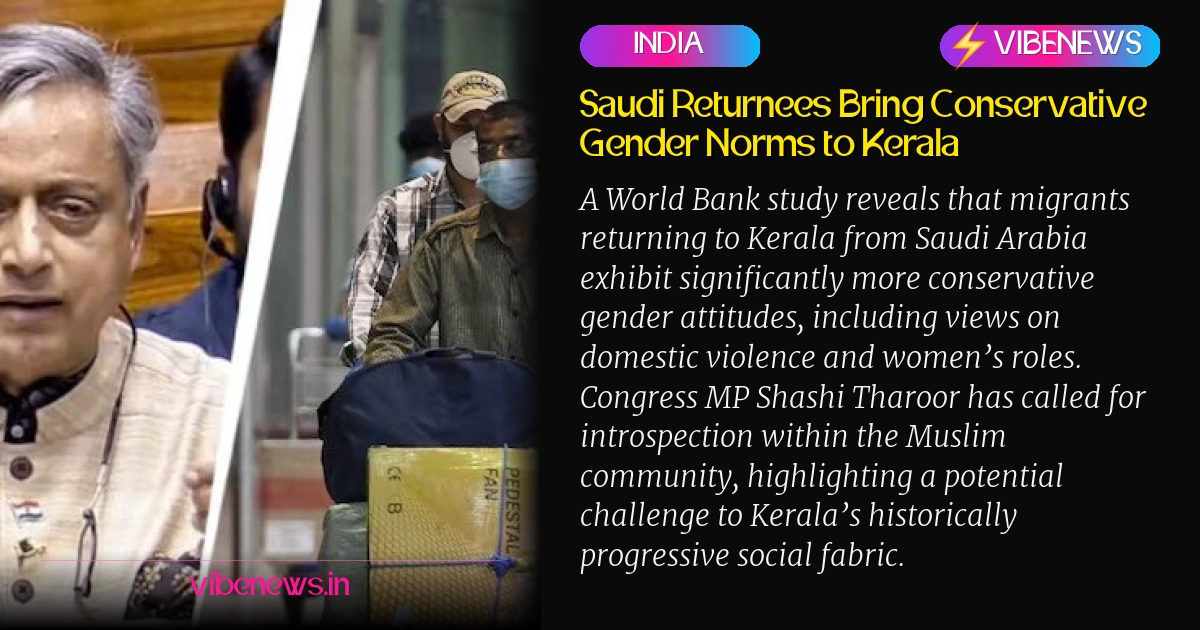
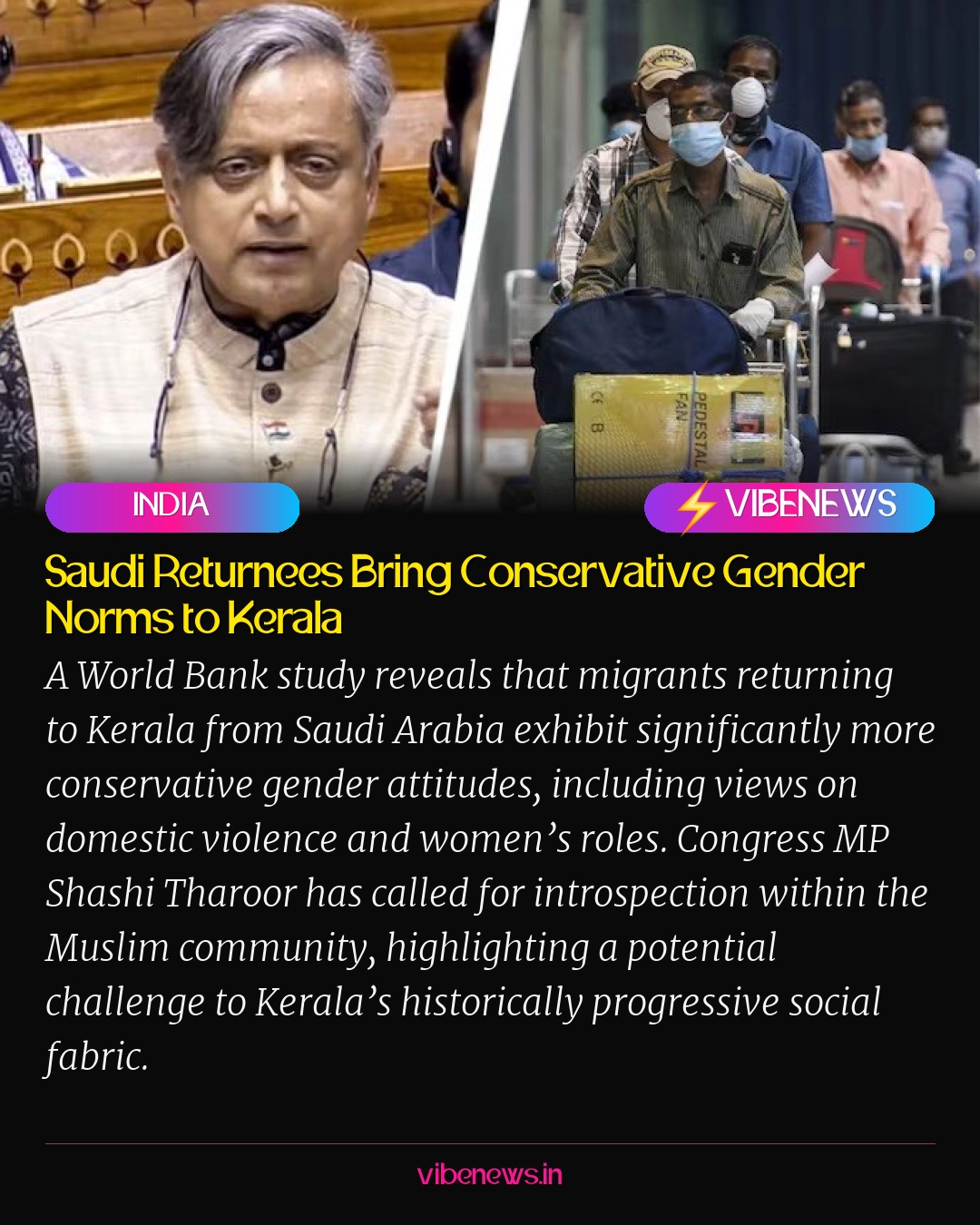
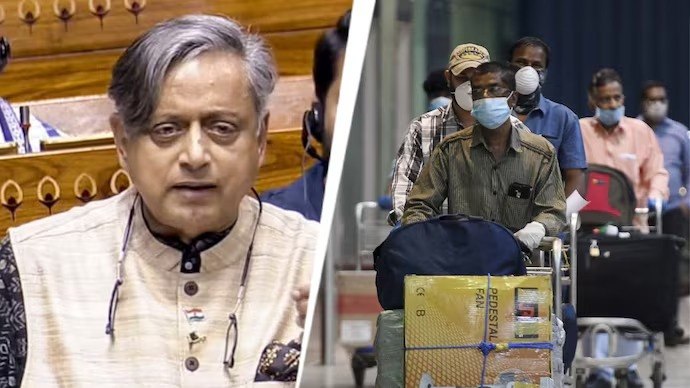
For decades, Kerala’s deep connection with the Gulf region has primarily been understood through the lens of economic remittances. The narrative centered on the financial prosperity brought home by Malayali expatriates, transforming lives, building homes, and fueling the state’s economy. However, a World Bank study has cast a spotlight on a less discussed, yet profoundly significant, dimension of this migration: the transfer of social and gender attitudes, particularly from Saudi Arabia.
The research, published in March 2022 but gaining wider attention recently, indicates that migrants returning from Saudi Arabia tend to exhibit markedly more conservative views on gender norms. These attitudes encompass acceptance of physical violence against women, traditional household decision-making roles, and extreme gender expectations, posing a potential challenge to Kerala’s historically progressive social landscape.
A Call for Community Introspection
The findings prompted a strong reaction from Congress MP Shashi Tharoor, who represents Thiruvananthapuram. On Sunday, August 23, Tharoor described the reports as "disturbing" and warned against the import of "conservative and even reactionary attitudes and customs from abroad." He emphasized Kerala’s long-standing tradition of a liberal and progressive practice of Islam, noting the state’s commendable record in educating Muslim women and girls to high levels.
Tharoor’s comments, initially made on X (formerly Twitter) and later reiterated to journalists, underscored the potential conflict between these imported attitudes and Kerala’s inherent social traditions. He called for serious introspection and internal discussion within the Muslim community to address these emerging concerns, stressing that his intervention was an intellectual reflection aimed at prompting public discourse.
Unveiling Social Shifts
The World Bank’s policy research working paper, titled "Beyond Money: Does Migration Experience Transfer Gender Norms? Empirical Evidence from Kerala, India," specifically examined whether exposure to more conservative societies influences migrants’ attitudes upon their return. The study’s central question moved beyond economic impacts to explore the non-economic consequences of living in different cultural environments.
Shamika Ravi, a member of the Economic Advisory Council to the Prime Minister, also weighed in, stating that the study’s empirical findings align with numerous anecdotal reports from Kerala over the past three decades. She highlighted a critical finding: returning migrants from Saudi Arabia exhibited attitudes towards gender-based violence that were three standard deviations more conservative compared to non-migrants, a statistic she deemed a "great cause of concern."
Methodology and Striking Disparities
Authored by George Joseph, Qiao Wang, Gnanaraj Chellaraj, Emcet O Ta, Luis Andres, Syed Usman Javaid, and Irudaya Rajan, the study utilized data from the Kerala Migration Survey 2013. This comprehensive survey covered 14,575 households across all 14 districts of Kerala, gathering information on over 63,000 household members.
For its primary analysis, researchers compared three distinct groups: 256 returning migrants from Saudi Arabia, 322 returning migrants from other Gulf countries (Bahrain, Kuwait, Oman, Qatar, UAE), and 8,614 non-migrants. Saudi Arabia was treated separately due to its notably more conservative social environment, particularly concerning women’s roles and societal norms.
The study measured attitudes across five broad indices: employment, general gender attitudes, household decision-making, gender-based violence, and extreme gender attitudes. The disparities observed for Saudi returnees were particularly stark. They were found to be 6.0 standard deviations more conservative on general gender attitudes, 2.3 SD more conservative on household decision-making, 3.0 SD more conservative on gender-based violence, and 2.6 SD more conservative on extreme gender attitudes, compared to non-migrants.
Interestingly, Saudi returnees were 7.8 SD less conservative on the employment index, suggesting that the findings do not indicate a blanket rejection of women’s participation in the workforce but rather a specific shift in social and domestic gender norms.
Specific Attitudes and Societal Implications
The survey responses cited in the World Bank paper provide a clearer picture of what "conservative" entails. Among Saudi returnees, 43% agreed that a man has the right to beat his wife if she disobeys him, a figure higher than the 37% among returnees from other Gulf countries. On women’s mobility, 75.3% of Saudi returnees believed that a man loses respect if his wife or daughter moves freely outside the home, compared to 67.7% of other Gulf returnees.
Further findings revealed that 85% of Saudi returnees believed a "man who cannot control his wife" loses community respect, and 64.8% felt the man should have the final word at home. Attitudes towards sexual violence also showed significant differences: 53% of Saudi returnees believed a woman or girl going out alone after dark is to blame if molested, and 70% believed women’s "immodest dressing" provokes men to behave badly.
Editorial Context: A Challenge to Kerala’s Syncretic Fabric
The significance of this World Bank study extends far beyond a simple economic analysis of migration. It raises profound questions about the non-economic, cultural, and social consequences of prolonged exposure to different societal norms. For a state like Kerala, which prides itself on its unique history of religious syncretism, communal harmony, and progressive social indicators, these findings present a critical challenge.
Kerala’s society has long been a beacon of coexistence, exemplified by instances like a mosque hosting a Hindu wedding or a temple opening its premises for Eid al-Adha prayers during floods. The potential import of conservative attitudes, particularly those that normalize gender-based violence and restrict women’s autonomy, could subtly but significantly erode this cherished social fabric over the long term. This development necessitates a deeper societal dialogue, not just within the Muslim community as Tharoor suggested, but across all sections of Kerala, to understand and mitigate any shifts that could undermine the state’s foundational values of equality and progress.
TL;DR
- A World Bank study reveals Saudi returnees to Kerala hold significantly more conservative gender attitudes than non-migrants.
- These conservative views include increased acceptance of domestic violence, traditional household roles, and restricted women’s mobility.
- Congress MP Shashi Tharoor called the findings "disturbing" and urged introspection within Kerala’s Muslim community.
- The study highlights a potential challenge to Kerala’s historically progressive and syncretic social fabric.
- Specific data shows 43% of Saudi returnees agreed a man has the right to beat his wife if she disobeys him.
- The research suggests migration transfers not only money but also social norms and values from destination countries.