The Supreme Court of India recently delivered a significant ruling, clarifying that the Bar Council of India (BCI) possesses no statutory authority to regulate the conduct of law students or initiate disciplinary action against them. This landmark decision underscores that such powers are exclusively vested in the educational institutions where students are enrolled, operating under their own established rules and regulations.
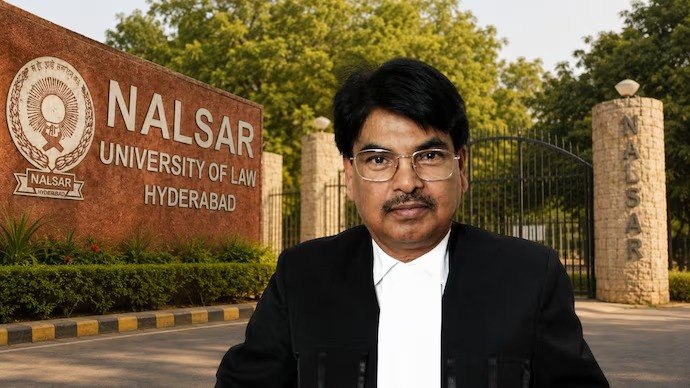
The ruling emerged from a contentious dispute involving students of Hyderabad’s prestigious Nalsar University of Law. These students had voiced objections to the proposed participation of the Chief Justice of India in their university’s convocation ceremony, sparking a swift and controversial response from the BCI.
The Nalsar Controversy Unfolds
Last month, the Bar Council of India, a statutory body tasked with regulating the legal profession and education across the nation, issued an extraordinary directive. It instructed state bar councils not to enroll the entire 2026 graduating batch of Nalsar University. This unprecedented move was a direct punitive measure against the students for their collective opposition to the Chief Justice’s involvement in the academic event.
The BCI’s order immediately drew widespread criticism from legal experts, academics, and student bodies nationwide, who condemned it as an overreach of authority and an infringement on academic freedom. Faced with intense backlash, the BCI subsequently withdrew its contentious order within hours of its issuance. Its chairman, Manan Kumar Mishra, also publicly apologized to the affected students, acknowledging the error in judgment.
Supreme Court’s Definitive Stance
A bench comprising Chief Justice Surya Kant and Justices Joymalya Bagchi and V Mohana presided over the matter. The Supreme Court unequivocally set aside the two notifications issued by the BCI in connection with the Nalsar controversy, even though both had already been withdrawn. The court’s decision was not merely about the specific incident but aimed at establishing a clear jurisdictional boundary.
The apex court clarified that the Advocates Act, 1961, which is the foundational statute for the BCI’s existence and powers, does not grant it any express or implied authority to take disciplinary action against law students. The court’s order explicitly stated, "We are of the opinion that the Advocates Act, 1961, whereunder the BCI has been statutorily created, does not confer any express or implied power upon the BCI or any State Bar Council to take any disciplinary action against the students of law; such a power is preceded by registration of a law graduate as an advocate under the said Act."
The bench further elaborated that "So far as students are concerned, it is their parent institution or the authority prescribed under the regulations/byelaws of such institution who alone are competent to take disciplinary action. We declare all communications dated 13 Aug or subsequent modified communication to be without any authority of law. Interim directions made absolute." This pronouncement firmly places the responsibility for student conduct within the academic framework.
Chief Justice’s Strong Disapproval
Earlier, when the Nalsar matter first came to the Supreme Court’s attention, Chief Justice Surya Kant had expressed strong disapproval of the BCI’s intervention. He had remarked, "It’s a dialogue between students and me. Who are they (BCI) to interfere? This is totally uncalled for." His comments highlighted the court’s view that the BCI had overstepped its bounds in a matter that was essentially an internal university affair.
Broader Scrutiny of BCI’s Role
This ruling comes amidst broader scrutiny of the BCI’s functioning and leadership. Just recently, while hearing pleas challenging the legality of Manan Mishra’s prolonged tenure as the BCI chief and seeking his removal, the Supreme Court had emphasized another crucial point. It stated that the Council must take any significant policy decision in consultation with the Attorney General for India and the Solicitor General. This indicates a judicial push for greater accountability and adherence to established protocols within the BCI.
Implications for Legal Education and Student Autonomy
The Supreme Court’s ruling is a significant victory for student autonomy and academic freedom within India’s legal education system. It reinforces the principle that universities are self-governing bodies responsible for their students’ conduct, free from external regulatory interference in such matters. For institutions like Nalsar University in Hyderabad, this clarifies their authority and protects their internal disciplinary processes from external pressures.
This decision also provides much-needed clarity on the jurisdictional boundaries of the BCI. While the BCI plays a vital role in setting standards for legal education and regulating the legal profession, its powers are not limitless, especially when it comes to individuals who have not yet formally entered the profession. It ensures that students, while aspiring to become advocates, are primarily accountable to their academic institutions until they are enrolled as members of the bar.
Editorial Context
This Supreme Court judgment holds profound long-term significance for the landscape of legal education and professional regulation in India. By definitively delineating the Bar Council of India’s powers, the ruling safeguards the autonomy of educational institutions and protects the rights of law students from potential overreach by a professional regulatory body. It establishes a crucial precedent that academic freedom and internal disciplinary mechanisms of universities must be respected, preventing external bodies from arbitrarily penalizing students for expressing dissent or engaging in academic discourse.
Over time, this clarity will foster a more predictable and just environment for law students, ensuring that their academic careers are not jeopardized by actions outside the purview of their universities. Furthermore, it serves as a reminder to statutory bodies like the BCI about the precise limits of their authority, encouraging a more focused approach to their core mandate of regulating the legal profession and setting educational standards, rather than intervening in student-level disciplinary matters. This judicial intervention is likely to shape future interactions between regulatory bodies and academic institutions, promoting a healthier balance of power and clearer lines of accountability.
TL;DR
- The Supreme Court ruled that the Bar Council of India (BCI) lacks statutory power to discipline law students.
- Disciplinary authority over students rests exclusively with their respective educational institutions, not the BCI.
- The ruling stemmed from a controversy at Nalsar University of Law, Hyderabad, where BCI attempted to penalize students for objecting to the CJI’s convocation participation.
- The BCI had previously withdrawn its punitive order against Nalsar students and issued an apology.
- The Supreme Court clarified that BCI’s disciplinary jurisdiction over individuals begins only after they enroll as advocates under the Advocates Act, 1961.
- Chief Justice Surya Kant had strongly criticized the BCI’s interference in the Nalsar matter, calling it "totally uncalled for."