The Indian government is significantly tightening its regulatory grip on mobile connections, introducing stringent enforcement measures for the existing SIM card limits. From August 24, telecom service providers across the nation will be mandated to cease issuing new SIM cards to subscribers who have already reached their permissible quota of mobile connections.
This directive, issued by the Department of Telecommunications (DoT) in a circular dated August 17, marks a pivotal shift from a largely self-declared system to a more robust, technology-driven verification process. The move aims to enhance security, curb fraudulent activities, and ensure greater accountability in mobile subscriber management.
The Renewed Enforcement Framework
While the concept of limiting mobile connections is not novel, the DoT’s latest mandate focuses on rigorous enforcement. For over a decade, the ceiling has been set at nine connections per individual, applicable across all operators and telecom circles. Residents in specific regions, including Jammu and Kashmir, Assam, and the North-Eastern states, operate under a slightly different ceiling of six connections.
The crucial change lies in the proactive role now assigned to telecom companies. They are required to implement technical and organisational safeguards to identify and prevent customers from obtaining additional connections once their limit is met. This necessitates a thorough pre-issuance check, making it considerably more challenging for individuals to circumvent the established caps.
Leveraging Digital Intelligence
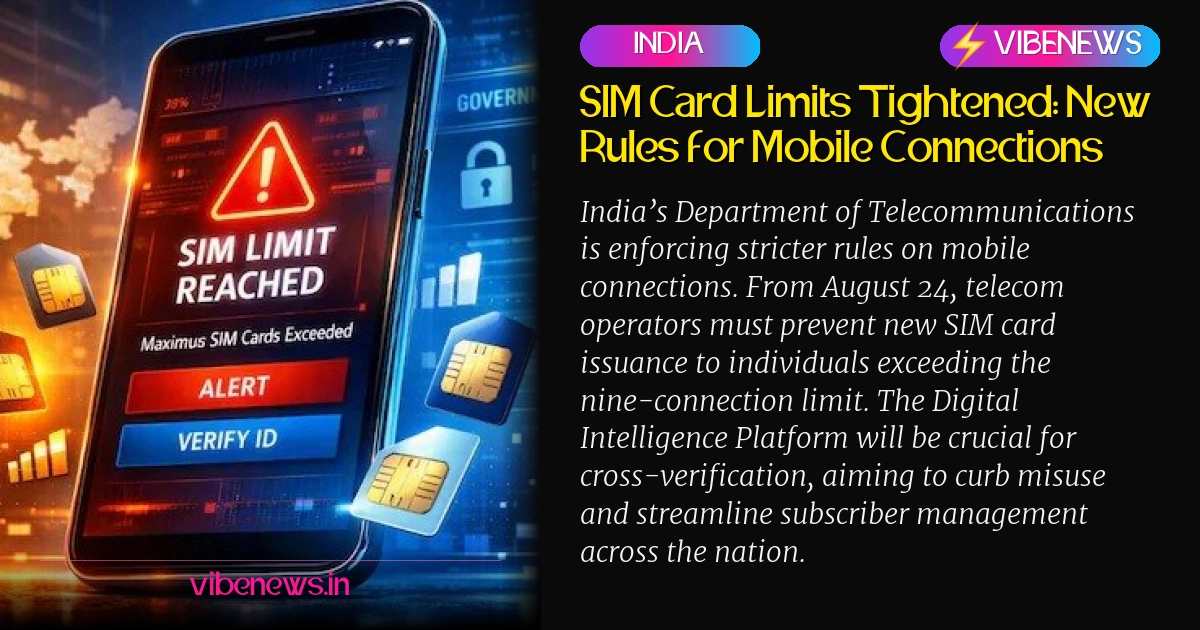
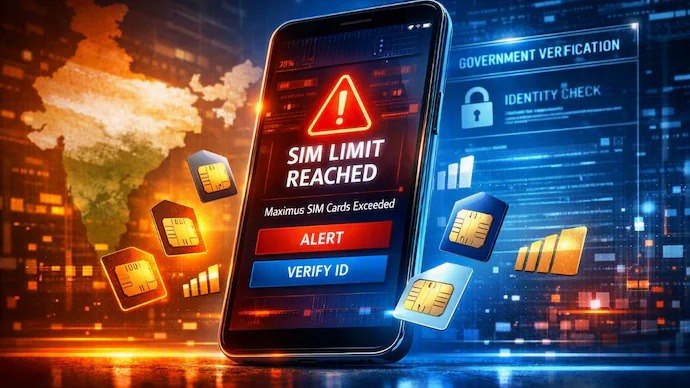
Central to this enhanced enforcement is the government’s Digital Intelligence Platform (DIP). This sophisticated system aggregates subscriber details from various telecom companies, providing a unified database for cross-referencing. Operators will leverage DIP to ascertain a customer’s existing connections before processing any new SIM card request.
Further bolstering this mechanism, the DIP will introduce a photo-based identification feature starting August 23. This visual aid will display a representative image for subscribers who have already reached their applicable SIM limit, offering an additional layer of verification for operators. Telecom companies have been given until November 30 to fully integrate their internal processes and systems with the DIP, ensuring seamless compliance.
Subscriber Responsibilities and Interim Measures
The new framework also places a clear onus on subscribers. When applying for a new mobile connection, customers will now be required to explicitly declare all mobile numbers already registered under their name. This includes connections obtained from different operators or in other telecom service areas, to be noted in the Customer Application Form (CAF).
Recognizing the transition period, the DoT has outlined an interim process. Any mobile connection activated beyond the permitted limit during this phase may face immediate suspension for a day. This temporary suspension will remain in effect until the discrepancy is resolved, with action taken under the existing terms and conditions of the Customer Application Form.
Historical Context and Rationale
The original imposition of SIM card limits over a decade ago was primarily driven by national security concerns and the need to curb the misuse of mobile connections. Unregulated access to multiple SIMs had historically facilitated various illicit activities, ranging from anonymous threats to financial fraud and even terror-related communications. The government’s consistent stance has been to balance accessibility with security, ensuring that mobile services remain a tool for legitimate communication rather than a conduit for crime.
The previous system, while having a stated limit, often relied on individual operator checks, which could be circumvented if a subscriber applied to different service providers. The current overhaul addresses this loophole by creating a centralized, cross-operator verification system, reflecting an evolution in digital governance and security protocols.
Broader Implications for the Telecom Sector
For telecom service providers, these new directives necessitate significant operational adjustments. Integrating with the Digital Intelligence Platform, updating customer application processes, and training staff on the new verification protocols will require substantial investment and coordination. While potentially increasing initial administrative burdens, the long-term benefit for operators could include cleaner subscriber databases, reduced instances of fraud, and improved regulatory compliance.
The industry will need to adapt its customer onboarding journeys to incorporate these mandatory checks seamlessly, ensuring that legitimate customers are not unduly inconvenienced while maintaining the integrity of the new system. This also presents an opportunity for operators to review and streamline their internal data management practices.
Public Response and Consumer Impact
The immediate impact on the general public is expected to be minimal for the vast majority of users who typically hold one or two mobile connections. However, individuals who genuinely require multiple SIMs for business purposes, IoT devices, or family plans might need to review their existing connections. The new disclosure requirement in the CAF ensures transparency from the subscriber’s end, promoting responsible usage.
While the government’s intent is to enhance security, effective communication and clear guidelines from telecom operators will be crucial to prevent confusion among consumers. The emphasis on a centralized platform aims to create a more equitable and secure digital environment for all mobile users in India.
Editorial Context
The government’s renewed push to enforce SIM card limits signifies a deeper commitment to digital identity management and national security in India. In an increasingly digital landscape, where mobile numbers often serve as primary identifiers for various online services and financial transactions, ensuring the integrity of these connections is paramount. This move is not merely about capping numbers; it is about strengthening the foundational layer of digital trust.
Over the long term, this initiative could significantly reduce the prevalence of fraudulent SIM card activations, which have been a persistent challenge for law enforcement and a source of vulnerability for citizens. By centralizing verification through the Digital Intelligence Platform, the government is building a more robust framework for tracking and authenticating mobile users, potentially impacting everything from cybercrime investigations to the rollout of future digital services. It underscores a broader governmental strategy to create a more secure and accountable digital ecosystem for its vast population.
TL;DR
- New enforcement rules for SIM card limits take effect from August 24, 2026, across India.
- Individuals are generally restricted to nine mobile connections, with a limit of six for residents in Jammu and Kashmir, Assam, and North-Eastern states.
- Telecom operators are now mandated to implement technical measures to prevent new SIM issuance if a subscriber has already reached their permitted limit.
- The Digital Intelligence Platform (DIP) will be utilized for cross-verification of subscriber details across different telecom service providers.
- Customers are required to declare all existing mobile numbers registered under their name when applying for a new connection.
- An interim process allows for the temporary suspension of mobile connections activated beyond the prescribed limit until the issue is resolved.