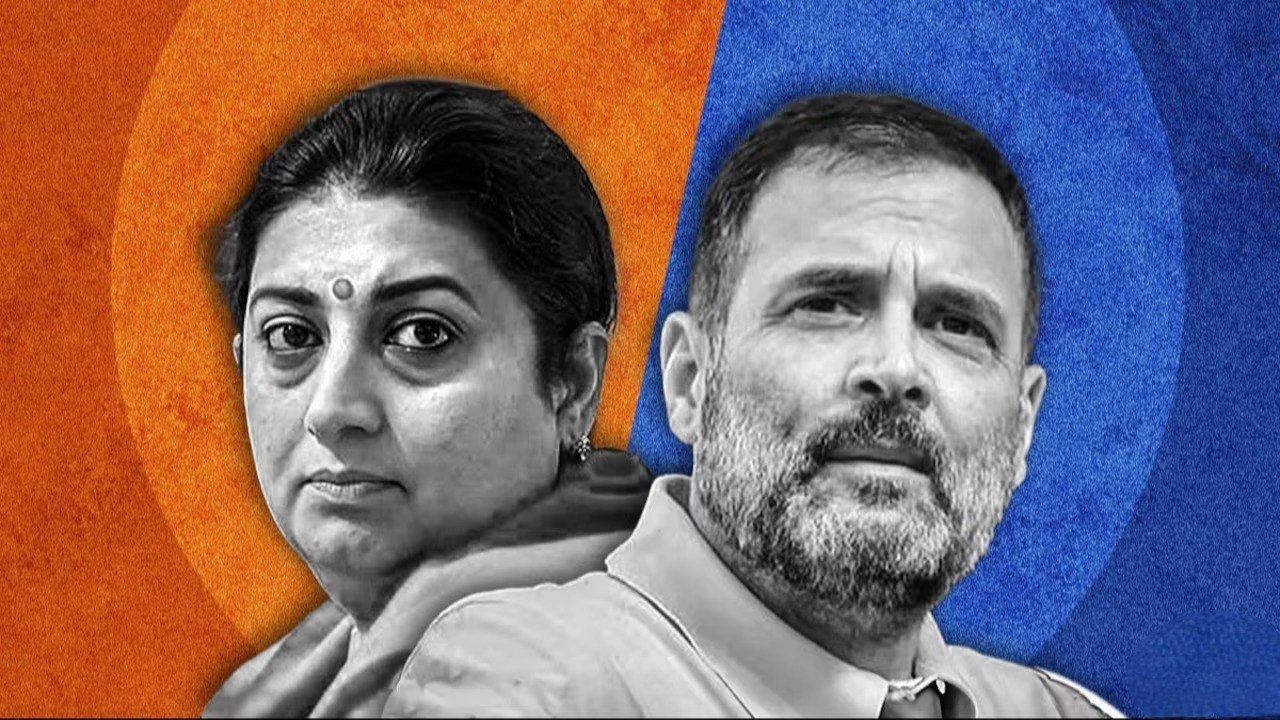
Union Minister Smriti Irani has issued a direct challenge to Congress leader Rahul Gandhi, urging him to actively support the immediate implementation of the 33 percent reservation for women in legislative bodies. Her remarks also called upon the Congress party to ensure the full rendition of ‘Vande Mataram’ at its headquarters, including verses that invoke Goddess Durga.
This political gauntlet was thrown just a day after Gandhi addressed girl students in Pune during his ‘Chhatron Ki Goonj’ outreach program, where he advocated for "smashing patriarchy." Irani’s statements are seen as a strategic move to translate Gandhi’s rhetoric on women’s rights into concrete political action and adherence to national symbols.
The Legislative Push for Women’s Representation
The demand for immediate implementation of women’s reservation stems from the recent passage of the Nari Shakti Vandan Adhiniyam, a landmark bill granting 33 percent reservation for women in the Lok Sabha and state assemblies. While the bill received widespread political consensus and was hailed as a historic step, its actual implementation is contingent upon the completion of the next census and the subsequent delimitation exercise.
This legislative timeline has created a window for political parties to press for expedited action. Irani’s challenge to Rahul Gandhi specifically targets this delay, asking him to leverage his party’s influence to push for a faster rollout, thereby demonstrating a tangible commitment to women’s leadership beyond mere verbal support.
The concept of women’s reservation has a long and complex history in Indian politics, with various attempts to pass similar legislation dating back decades. Its eventual passage in 2023 marked a significant milestone, yet the practicalities of its enforcement remain a contentious point, often becoming a tool for political one-upmanship.
The ‘Vande Mataram’ Controversy
Beyond legislative action, Irani’s challenge extended to a cultural and nationalistic symbol: ‘Vande Mataram’. She specifically requested the full rendition of the national song, highlighting that certain verses, which invoke Goddess Durga, have historically been omitted during Congress party events. This omission has been a recurring point of criticism from the Bharatiya Janata Party (BJP).
’Vande Mataram’, composed by Bankim Chandra Chattopadhyay, holds immense historical significance as an anthem of India’s freedom struggle. However, its later verses, particularly those deifying the motherland as a goddess, have sometimes been a point of contention for certain communities and political groups, leading to the practice of singing only the initial stanzas.
Irani underscored the BJP’s stance by referencing Hindu traditions, where goddesses like Lakshmi, Saraswati, and Durga are revered as embodiments of divine power and strength. By linking the full rendition of ‘Vande Mataram’ to the worship of Goddess Durga, she framed the issue as a matter of respecting both national heritage and cultural reverence for women in their divine form.
Rahul Gandhi’s Stance on Patriarchy
The backdrop to Irani’s challenge was Rahul Gandhi’s recent interaction with female students in Pune. During this event, Gandhi sharply criticized what he termed the "Manusmriti mindset," which he argued seeks to confine women under male authority throughout their lives. He also spoke about the pervasive nature of violence used to impede women’s progress, asserting that a significant percentage of women face harassment.
Gandhi’s comments were part of a broader narrative by the Congress party to highlight issues of gender inequality and social justice. His emphasis on "smashing patriarchy" resonated with a segment of the youth and women voters, aiming to position the Congress as a champion of progressive social reforms.
Irani’s response, however, sought to pivot this narrative, demanding that Gandhi’s verbal support for women’s rights be substantiated by concrete political actions, particularly concerning legislation that directly impacts women’s representation and cultural practices that honor feminine divinity.
Political Ramifications and Broader Debate
This exchange between two prominent political figures underscores the intensifying debate around women’s empowerment, cultural nationalism, and legislative accountability in India. With general elections on the horizon, both the BJP and Congress are keen to appeal to the significant women’s electorate, whose voting patterns can often be decisive.
Irani’s challenge places the onus on the Congress to demonstrate consistency between its stated principles and its actions. It also serves to reinforce the BJP’s own narrative of being proactive on women’s issues, particularly through the passage of the reservation bill, while simultaneously championing traditional Hindu values and national symbols.
The political discourse is thus being shaped by a blend of policy demands and cultural assertions, with each party attempting to define the terms of engagement on issues critical to a large segment of the population. The outcome of such challenges often influences public perception and electoral strategies.
Editorial Context
This political exchange between Smriti Irani and Rahul Gandhi is more than just a fleeting news item; it reflects deeper, long-term currents in Indian politics. The debate over women’s reservation, despite the bill’s passage, highlights the ongoing struggle for genuine gender parity in political representation. The delay in its implementation, tied to demographic processes, ensures that it will remain a potent political talking point for years, influencing electoral promises and public expectations.
Furthermore, the ‘Vande Mataram’ challenge underscores the persistent interplay of cultural nationalism and political identity in India. The nuances of national symbols and their interpretation continue to be battlegrounds for ideological assertion, particularly between parties with differing approaches to secularism and cultural heritage. This dynamic shapes public discourse on national identity and the role of tradition in modern governance.
Ultimately, this development signifies the evolving nature of political accountability, where leaders are increasingly pressed to match their rhetoric with tangible policy support and cultural alignment. It sets a precedent for how issues of gender, tradition, and legislative action will be framed and contested in India’s vibrant, often polarized, political landscape, impacting policy direction and social cohesion over the coming decade.
TL;DR
- Union Minister Smriti Irani challenged Rahul Gandhi to support the immediate implementation of the women’s reservation law.
- Irani also demanded the full rendition of ‘Vande Mataram’, including verses invoking Goddess Durga, at Congress headquarters.
- The challenge followed Gandhi’s remarks in Pune advocating for "smashing patriarchy" and criticizing the "Manusmriti mindset."
- The Women’s Reservation Bill (Nari Shakti Vandan Adhiniyam) has been passed but awaits implementation after the next census and delimitation.
- The ‘Vande Mataram’ controversy centers on the historical omission of certain verses by Congress, which the BJP links to cultural reverence for women.
- This political exchange highlights the ongoing debate on women’s empowerment, cultural nationalism, and legislative accountability ahead of elections.