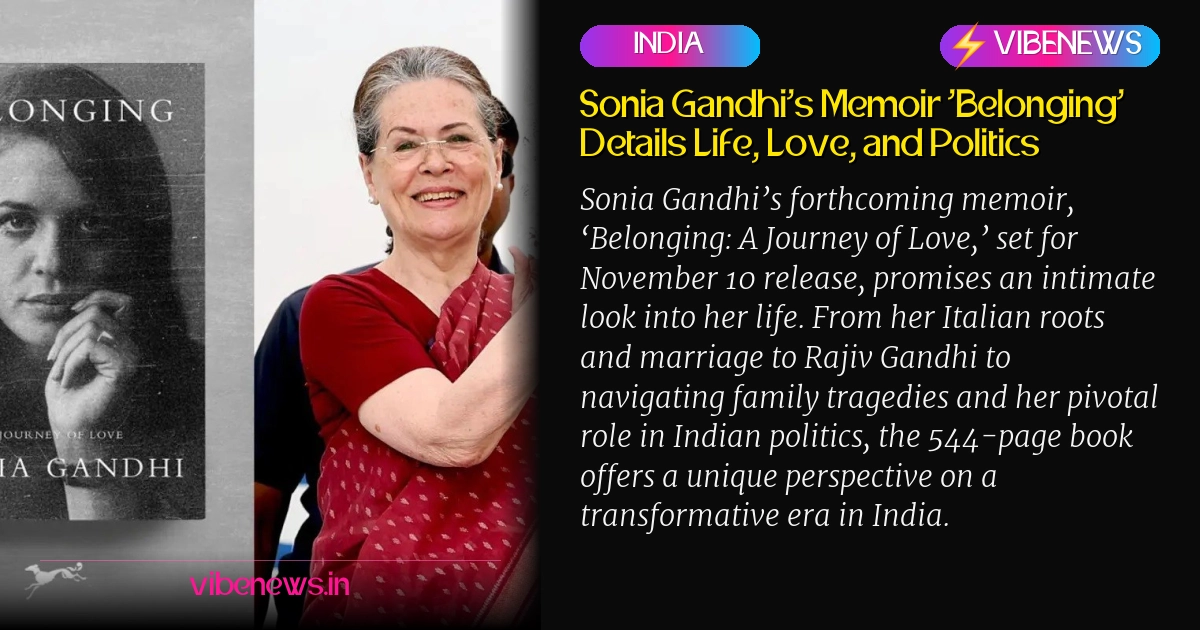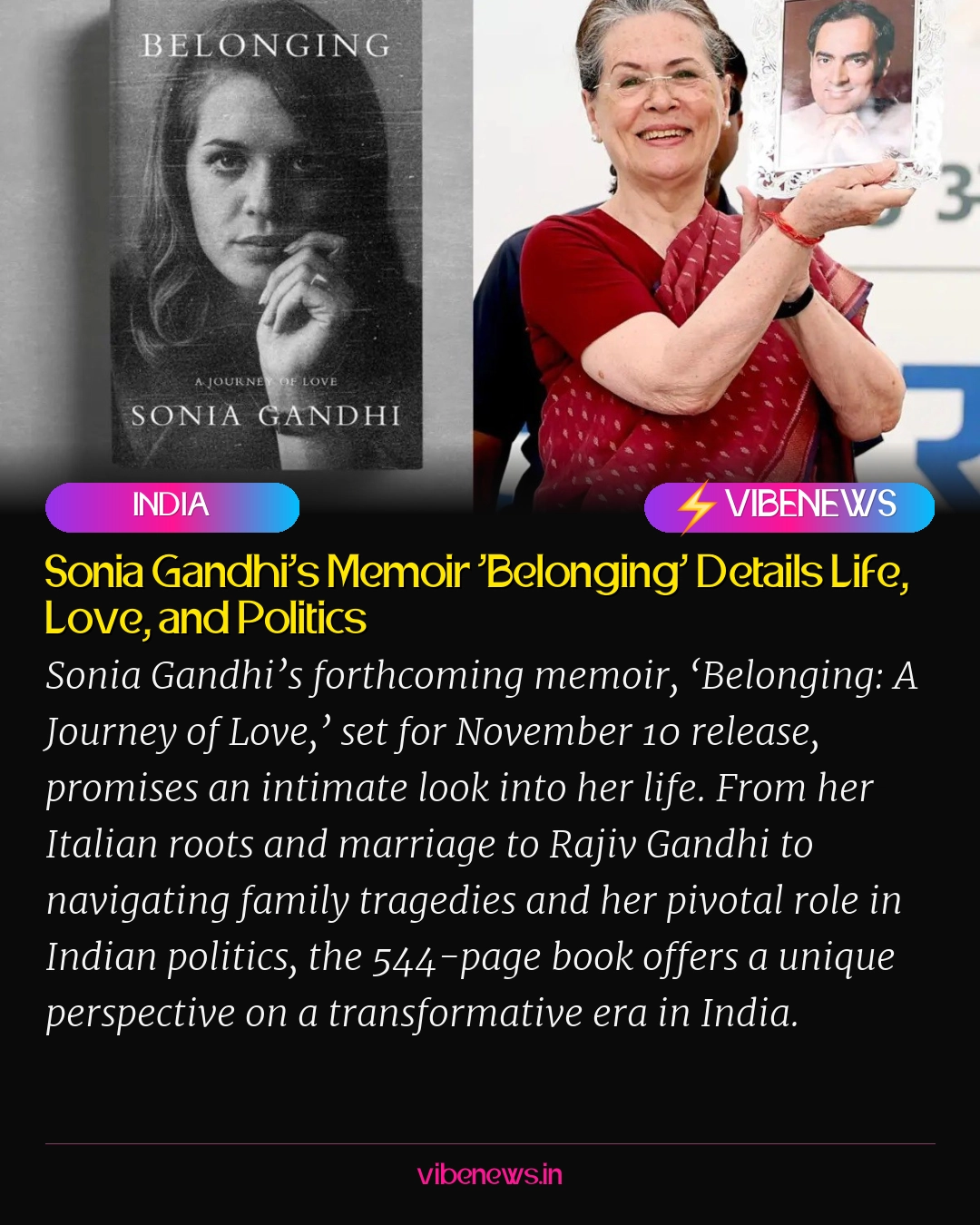
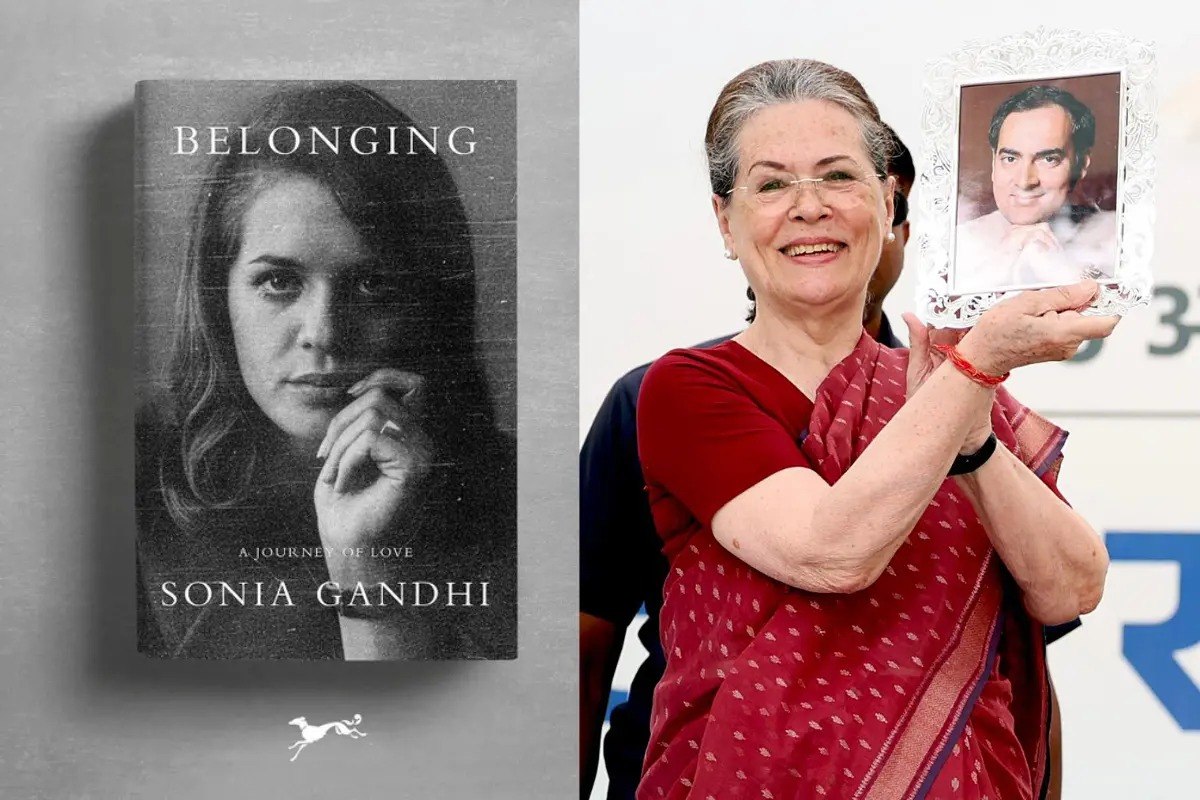
Sonia Gandhi, a towering figure in Indian politics and the longest-serving president of the Indian National Congress, is set to release her much-anticipated memoir, "Belonging: A Journey of Love," on November 10. This 544-page book, published by Alfred A. Knopf, an imprint of the prestigious Knopf Doubleday Publishing Group, promises an intimate and revelatory account of her life, spanning from her early years in post-war Italy to her profound immersion in India’s complex political landscape.
The memoir is described as a deeply personal and political narrative, tracing her extraordinary journey through love, loss, and leadership. It offers readers a unique lens through which to view not only her private joys and hardships but also the tumultuous post-independence history of India, its evolving political struggles, and significant socio-economic transformations over six decades.
A Personal Odyssey Begins
The narrative commences in Cambridge, England, in 1965, where a nineteen-year-old Sonia Maino encountered Rajiv Gandhi, the grandson of India’s first Prime Minister, Jawaharlal Nehru. Their immediate connection blossomed into a profound love story, setting the stage for Sonia’s eventual move to India and her integration into one of the world’s most prominent political dynasties.
Upon her arrival in India, the memoir recounts her introduction to her formidable mother-in-law, Indira Gandhi, then a rising star in Indian politics who would soon become Prime Minister. Sonia’s early years in India were marked by a dedicated effort to assimilate, learning Hindi, embracing traditional saris, and developing a fondness for Indian cuisine, all while gaining confidence by Rajiv’s side.
This period highlights her transition from a young Italian woman to a member of the Nehru-Gandhi family, a process that involved navigating cultural differences and the immense public scrutiny that came with her new identity. Her adaptation speaks volumes about her resilience and commitment to her adopted home and family.
Navigating Political Storms and Personal Loss
The memoir delves into the series of devastating tragedies that profoundly impacted the Gandhi family and, by extension, the nation. It recounts the untimely death of Rajiv Gandhi’s younger brother, Sanjay Gandhi, in a plane crash, an event that first brought the specter of loss close to the family’s public life.
This was followed by the assassination of Prime Minister Indira Gandhi in 1984, a seismic event that plunged India into a period of intense grief and political uncertainty. Despite Sonia’s deep-seated fears and reluctance, Rajiv Gandhi was compelled to step into the political arena, assuming the mantle of Prime Minister in the wake of his mother’s death, a decision that irrevocably altered their lives.
Seven years later, the family was struck by another unspeakable tragedy when Rajiv Gandhi himself was assassinated by a suicide bomber during an election campaign. These successive losses, detailed with raw emotion in "Belonging," underscore the immense personal sacrifices demanded by public life in India and the heavy toll it took on Sonia Gandhi.
Reluctant Entry into Public Life
Following Rajiv’s assassination, Sonia Gandhi resisted immense pressure to enter politics for several years, preferring to protect her children and maintain a private life away from the public glare that had claimed her husband and mother-in-law. However, the deteriorating fortunes of the Indian National Congress and a sense of duty eventually led her to take the plunge.
Her entry marked a significant turning point for the party, which she revitalized, eventually becoming its longest-serving president. The memoir is expected to shed light on the internal deliberations and personal struggles that underpinned this momentous decision, offering insights into her leadership style and her vision for the Congress party.
One of the most "astonishing decisions" highlighted in the book is her refusal to accept the Prime Ministership in 2004, despite the Congress-led alliance securing a mandate. Instead, she chose to lead the United Progressive Alliance (UPA) from behind the scenes, a move that shaped India’s coalition politics for a decade and demonstrated a unique form of political renunciation.
A Unique Lens on India
Beyond the personal narrative, "Belonging" promises to offer a comprehensive perspective on India’s journey since its independence. Through Sonia Gandhi’s eyes, readers will gain insights into the nation’s post-independence challenges, its evolving political struggles, and the profound economic and social changes that have swept across the country over the past six decades.
Her unique vantage point, as an outsider who became an insider, provides a fresh perspective on the intricacies of Indian democracy, its vibrant political culture, and the aspirations of its diverse populace. The memoir is poised to become an important historical document, contributing to the understanding of modern India’s trajectory.
Editorial Context
Sonia Gandhi’s memoir holds significant long-term importance for several reasons. Firstly, it offers an unparalleled, first-person account from a central figure in India’s most influential political family, providing crucial historical context to events that have shaped the nation. Her perspective on the inner workings of the Congress party and the dynamics of coalition politics will be invaluable for historians and political scientists.
Secondly, the book is expected to humanize a figure often seen through the prism of political discourse, revealing the personal sacrifices and emotional resilience required to navigate such a public and often tragic life. This personal dimension can foster a deeper understanding of leadership and the human cost of political power.
Finally, "Belonging" will serve as a vital primary source for understanding the evolution of India’s democratic institutions and the challenges of nation-building. It will undoubtedly spark renewed discussions about the Nehru-Gandhi legacy, the role of dynastic politics, and the future direction of India, making it a seminal contribution to contemporary Indian history.
TL;DR
- Sonia Gandhi’s memoir, "Belonging: A Journey of Love," is scheduled for release on November 10.
- The 544-page book chronicles her life from post-war Italy to India, detailing her personal journey and political evolution.
- It covers her love story with Rajiv Gandhi, her introduction to Indira Gandhi, and the profound family tragedies she endured.
- The memoir explores her initial reluctance to enter politics, her eventual leadership of the Indian National Congress, and her decision to decline the Prime Ministership in 2004.
- Published by Alfred A. Knopf, the book offers a unique perspective on India’s post-independence history, political struggles, and socio-economic changes.