India’s Sweet Dilemma: Rising Sugar Prices and Purchase Limits
As India gears up for its vibrant festive season, a crucial kitchen staple, sugar, is becoming both costlier and harder to acquire in desired quantities. This dual challenge is casting a shadow over traditional preparations, impacting millions of households and businesses that rely heavily on sugar for sweets and celebratory foods.
Consumers are encountering purchase restrictions across various retail channels, from the convenience of quick-commerce platforms to the aisles of large supermarkets. This unprecedented situation highlights underlying pressures in the domestic sugar market.
Retailers Implement Purchase Limits
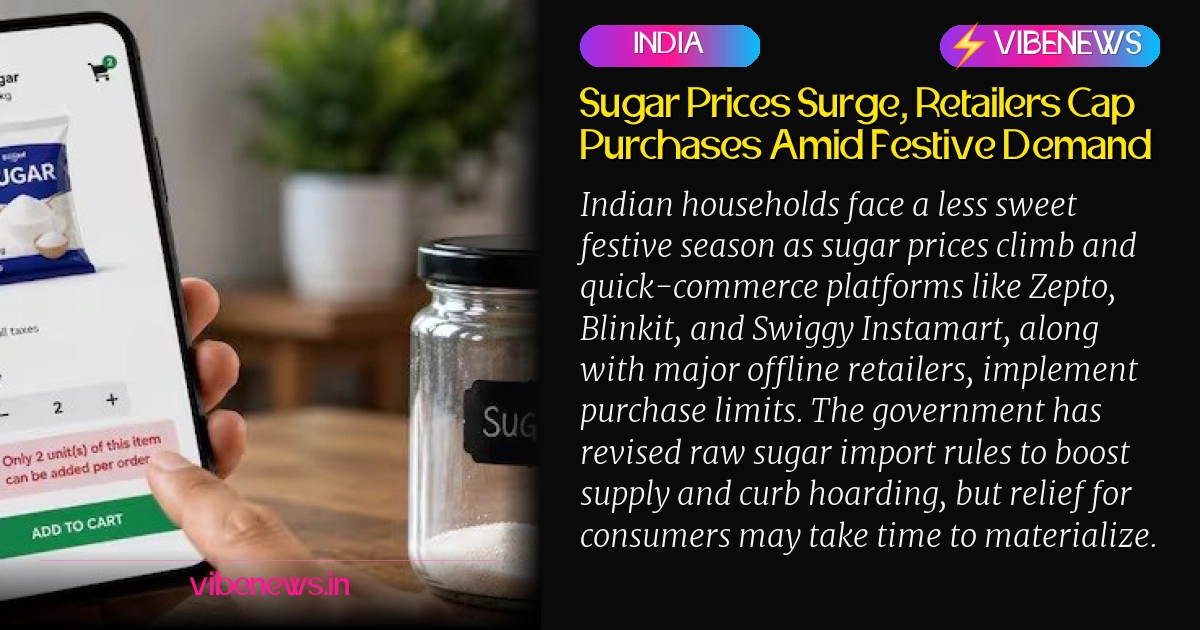
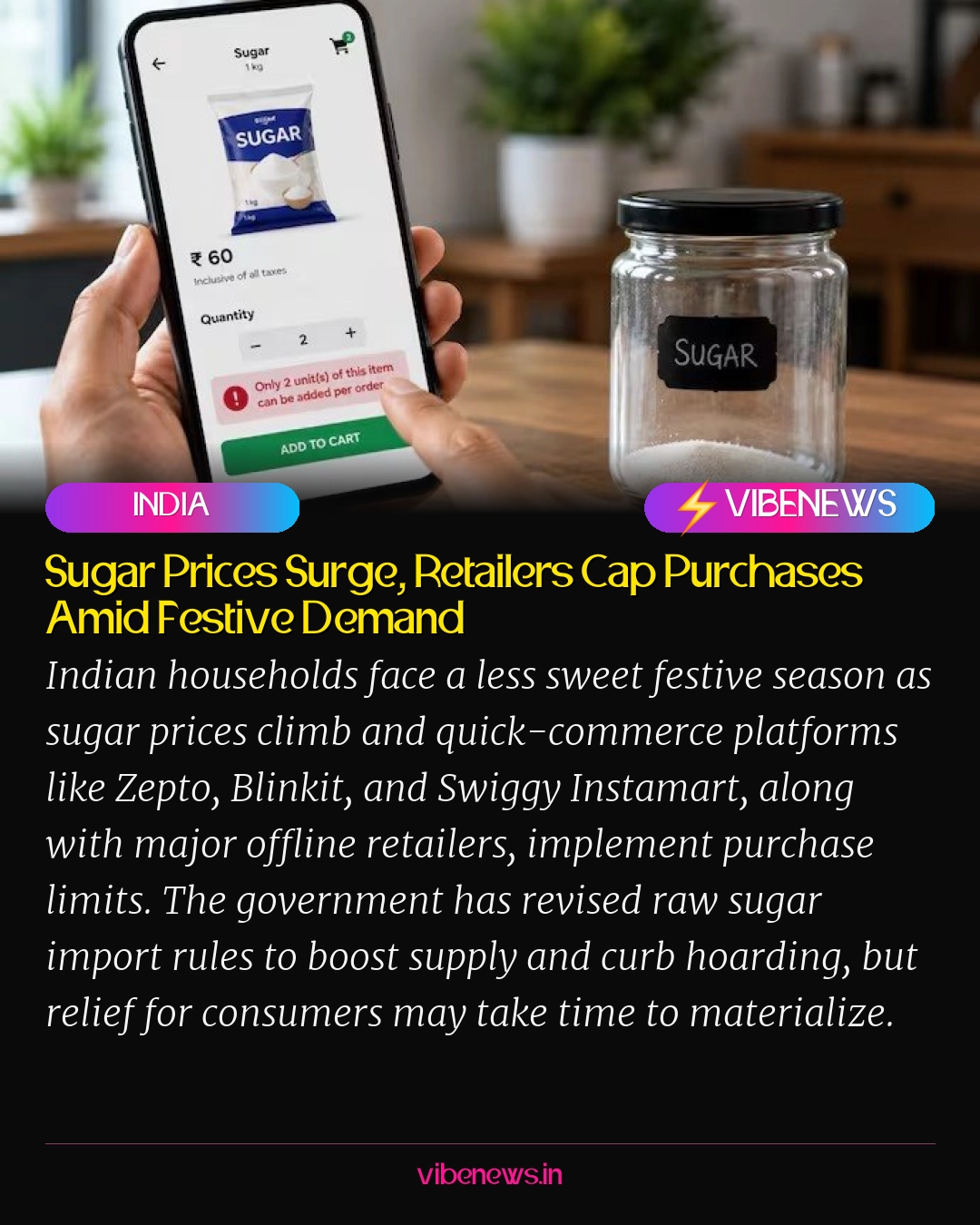
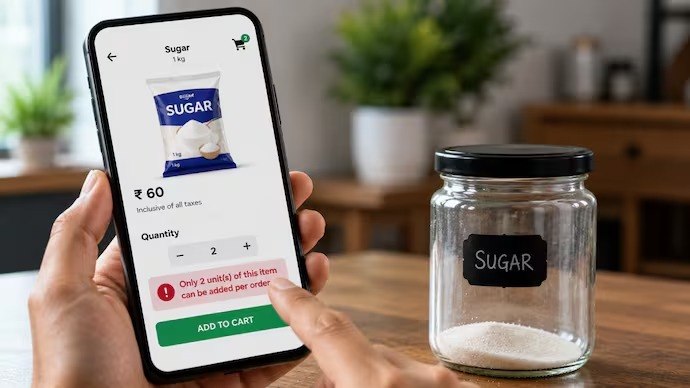
Major quick-commerce platforms, which have become integral to urban household shopping, have begun imposing strict limits on sugar purchases. A review of services like Zepto, Blinkit, and Swiggy Instamart reveals that customers are often restricted to buying only a few packs of sugar per order.
For instance, some sugar products on Zepto display quantity caps and flag limited availability. Similarly, Blinkit has implemented purchase limits on specific sugar packs, while Swiggy Instamart listings, such as for Supreme Harvest Crystal Sugar, show a cap of two 1-kg packs per order.
This trend is not confined to online platforms. Prominent offline retail chains, including DMart and Reliance, have also reportedly capped sugar purchases at approximately 2-3 kg per customer in several of their stores. This widespread restriction means consumers face limitations regardless of their preferred shopping method.
The Looming Festive Sweetness Challenge
The timing of these restrictions is particularly significant. The festive season, which typically spans several months, witnesses a substantial surge in sugar demand. Households stock up for traditional sweets and desserts, while sweet shops, bakeries, and other food businesses significantly increase their procurement to meet heightened consumer demand.
This seasonal spike usually places natural pressure on supply chains. However, the current scenario, marked by rising prices and enforced limits, suggests a more acute supply-demand imbalance than in previous years, potentially disrupting festive preparations across the country.
Government Intervenes with Import Revisions
In response to the escalating prices and concerns over availability, the Indian government has stepped in with measures aimed at stabilizing the market. A key intervention involves revising the rules for duty-free imports of raw sugar, signaling a proactive approach to augment domestic supplies.
Initially, the government had allowed the duty-free import of 1 million tonnes of raw sugar under a tariff-rate quota (TRQ) until October 31, 2026. Importers were required to convert this raw sugar into refined sugar and sell it in the domestic market by the same date.
Recognizing the need for greater flexibility and to expedite market entry, the government has now amended this requirement. Under the revised rules, importers will have up to two months from the date of filing the Bill of Entry to process the raw sugar into refined sugar and make it available for sale in the Indian market.
This adjustment aims to provide refiners with more operational leeway, encouraging quicker processing and distribution. The broader objective behind these imports is to inject additional sugar into the domestic supply chain, thereby easing price pressures and curbing speculative buying and hoarding activities that often exacerbate shortages.
Impact on Consumers and Market Outlook
For an average household purchasing one or two packets of sugar for routine use, the current limits might not pose a significant inconvenience. However, for families preparing for large festive gatherings, or for those looking to make bulk purchases or stock up in anticipation of further price hikes, these restrictions could become a considerable hurdle.
While government measures are designed to improve availability, the full impact of these duty-free imports will take time to materialize in the retail market. The supply chain involves several stages, from shipping and refining to distribution, meaning immediate relief for consumers might not be forthcoming.
The effectiveness of these interventions will depend on how swiftly additional supplies enter the market and whether they are sufficient to counter the rising demand and ease both price pressures and purchase restrictions. The coming weeks, coinciding with the peak festive period, will be crucial in determining the success of these government-led initiatives.
Editorial Context
The current situation surrounding sugar prices and availability in India underscores a broader challenge in managing essential commodity supplies, particularly during periods of heightened demand. Sugar, being a staple in Indian diets and cultural practices, holds significant economic and social importance. Fluctuations in its price and availability directly impact household budgets, small businesses, and the overall sentiment during festive seasons.
This development highlights the delicate balance governments must strike between market forces and consumer welfare. Interventions like duty-free imports, while necessary to stabilize prices and ensure supply, also reflect the vulnerabilities within domestic production and supply chain resilience. Over the long term, sustained efforts towards improving agricultural productivity, optimizing storage, and enhancing distribution networks will be critical to prevent such recurring challenges.
Furthermore, the reliance on quick-commerce platforms and their subsequent implementation of caps reveal the evolving dynamics of retail and consumer behavior. As digital platforms become primary channels for essential goods, their role in managing supply shocks and communicating market realities to consumers becomes increasingly vital. The government’s response and the market’s adaptation will serve as a significant case study in managing food inflation and ensuring commodity security in a rapidly growing economy.
TL;DR
- Sugar prices are sharply rising across India, coinciding with the peak festive season demand.
- Quick-commerce platforms (Zepto, Blinkit, Swiggy Instamart) and offline retailers (DMart, Reliance) have imposed purchase limits on sugar.
- The government has allowed duty-free import of 1 million tonnes of raw sugar under a tariff-rate quota (TRQ).
- Import rules have been revised, giving importers two months from the Bill of Entry date to process and sell raw sugar, aiming to boost supply and curb hoarding.
- Consumers face a double squeeze: higher prices and restricted quantities, impacting festive preparations.
- The effectiveness of government measures and the time taken for imports to reach consumers will determine market stability in the coming weeks.