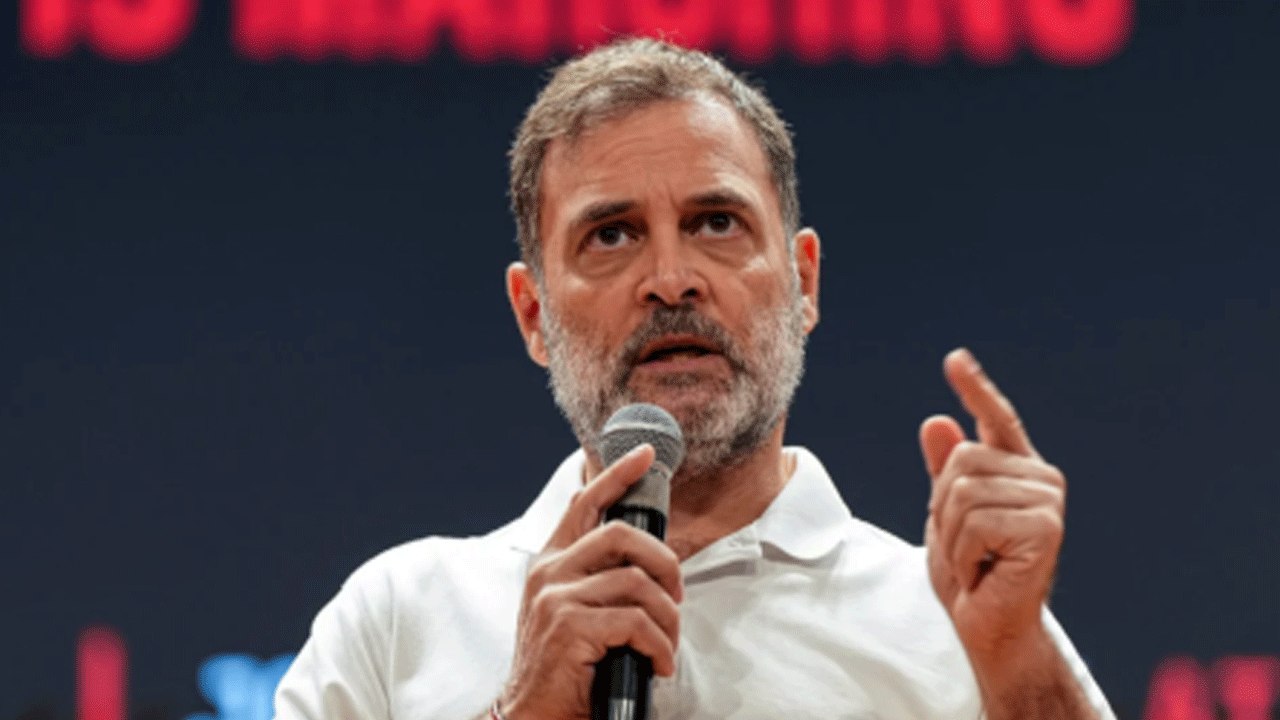
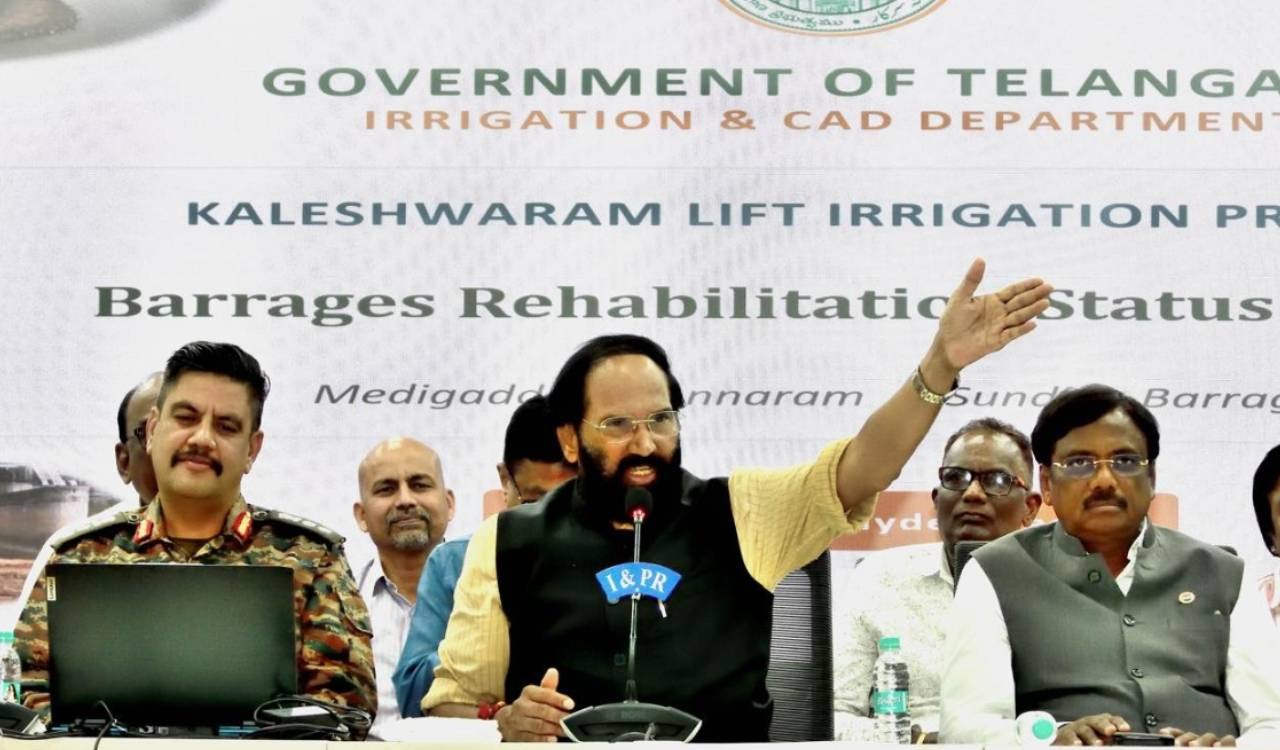
Telangana Irrigation Minister N Uttam Kumar Reddy on Saturday blamed the previous BRS government and the construction of the Kaleshwaram Lift Irrigation Scheme for the state’s reduced ability to cope with drought during the El Nino period.
Speaking at a press conference in Hyderabad, Reddy said Telangana would have been better equipped to withstand the prevailing drought conditions but for the construction of the Kaleshwaram Lift Irrigation Scheme (KLIS). His central claim is simple. Water could not be lifted from the Medigadda barrage because the National Dam Safety Authority (NDSA) had specifically instructed the state to keep the gates of the Medigadda, Sundilla and Annaram barrages open.
The pump house, he said, could not operate while those gates stayed open.
That explanation runs into a problem on the record. The NDSA had told the High Court that the decision to lift water from the barrages rested with the State government. That is a direct contrast to the Minister’s statement, and it puts the state’s own handling of the barrages under the same spotlight it is trying to direct at its predecessor.
The repair clock. Reddy laid out a broad timeline for rehabilitating the three barrages. Conceptual designs were completed by the end of September. Estimates and government approvals are targeted for the end of October. Agencies are expected to be mobilised by the end of November, with work scheduled to begin by the end of December.
The final deadline is the one that matters most. Reddy set the overall goal for the next monsoon season, with a clear condition attached to it.
“The overall target is to complete rehabilitation before the next monsoon in 2027, subject to technical clearances and implementation progress,” Uttam Kumar said.
Oversight layers. A coordination committee has been constituted to run the programme. It includes technical experts and senior officials from the Irrigation and CAD Department, the Central Designs Organisation and the State Dam Safety Organisation. The committee will coordinate the rehabilitation work in line with NDSA recommendations.
The designs will not go straight to the field. Reddy said the rehabilitation designs and additional works will undergo technical scrutiny by the Technical Oversight Committee and the Central Water Commission (CWC). Those are two separate checkpoints before construction moves forward, and each one can slow the timeline if it finds problems.
The department is also planning an integrated instrumentation and monitoring system. Its job is to track seepage, uplift pressures and structural behaviour during and after the rehabilitation work. For barrages that have already drawn scrutiny from the NDSA, that monitoring layer will be watched closely.
What the engineering changes look like. The proposed designs call for extending the stilling basins. At Medigadda and Annaram, the basins would grow to 66 metres each, up from existing lengths of 46.8 metres and 45 metres. At Sundilla, the basin would extend to 58 metres, up from 30 metres. Those numbers show how much structural work the current plan involves, even though the source material does not give cost or contractor details.
Why this matters for Telangana. This is a Telangana story at its core. The Medigadda, Sundilla and Annaram barrages are part of the state’s irrigation system, and the drought conditions Reddy described are hitting the state now. The question for residents is whether the rehabilitation plan can move from paper to concrete on the timeline announced, and whether the lifting decisions are clear enough to avoid another dispute between the state and the dam safety body.
The political charge. Reddy’s argument frames the drought response as a legacy problem. He points to KLIS and to the NDSA gate instructions as the reasons water stayed out of reach. The source material carries no direct response from the BRS, so the attack stands unanswered in this report. That silence will not last long in a state where irrigation has become a central political battleground.
The biggest pressure point is the gap between the two accounts. Reddy says the gates were kept open on NDSA instruction. The NDSA told the High Court that the decision to lift water rested with the state. Both versions cannot carry the full weight of the drought story. Anyone tracking the barrages will need to check the High Court filing against the minister’s press conference remarks, and then check both against what the engineers actually do between now and the 2027 monsoon.
TL;DR
- Telangana Irrigation Minister Uttam Kumar Reddy blamed BRS and the Kaleshwaram Lift Irrigation Scheme for drought struggles during El Nino.
- Reddy said NDSA instructions to keep barrage gates open stopped water lifting from the Medigadda barrage.
- The NDSA told the High Court that the decision to lift water from the barrages rested with the state government.
- Rehabilitation of the Medigadda, Sundilla and Annaram barrages is targeted for completion before the 2027 monsoon.
- Work is scheduled to begin by the end of December, subject to technical clearances and implementation progress.
- A coordination committee and Central Water Commission scrutiny will oversee the barrage rehabilitation programme.