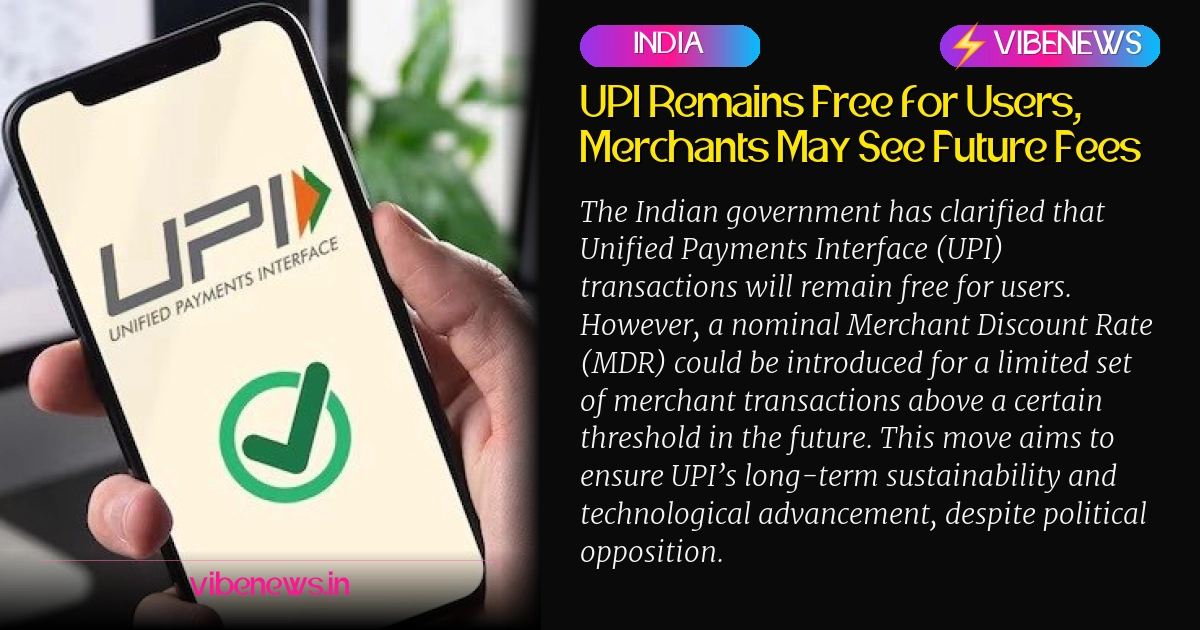
The Indian government has issued a definitive clarification regarding the future of the Unified Payments Interface (UPI), assuring millions of users that their transactions will continue to be free of charge. This statement comes amidst growing public discussion and political debate following recent legislative changes.
While individual users are guaranteed a free experience, the Ministry of Finance indicated that a nominal Merchant Discount Rate (MDR) could be introduced for a specific, limited set of merchant transactions in the future. This potential charge would only apply above a certain transaction threshold, ensuring the vast majority of daily merchant interactions remain unaffected.
The Legislative Framework
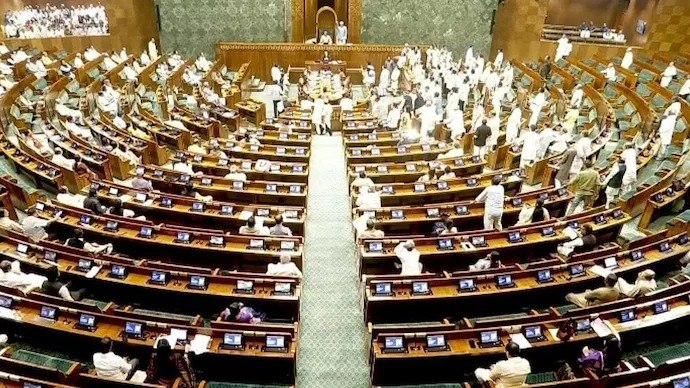
This clarification follows the recent passage of a Bill in the Lok Sabha, which amends the Payment and Settlement Systems Act, 2007. This amendment provides the government with the authority to permit banks and other service providers to levy charges on payments made through UPI and other designated electronic payment modes.
Crucially, the Ministry of Finance emphasized that Person-to-Person (P2P) UPI transactions will remain entirely free. Any potential MDR, if implemented, would be significantly lower than rates applicable to debit or credit card transactions, and would not be a blanket charge across all UPI transactions.
Ensuring Long-Term Sustainability
The government articulated several reasons for considering such a framework, primarily focusing on UPI’s long-term sustainability and technological advancement. The exponential growth in UPI transaction volumes necessitates continuous and substantial investments in cybersecurity, fraud prevention, and infrastructure upgrades.
Relying solely on subsidies is not deemed a viable long-term strategy for sustaining UPI’s rapid expansion and ensuring its resilience. The proposed framework aims to foster greater competition and innovation within the digital payments sector by creating a self-sustaining revenue model, encouraging more companies to invest and expand their operations.
Political Reactions and Public Debate
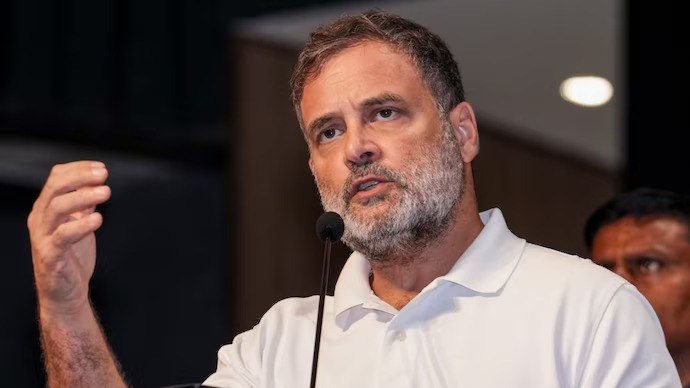
The potential introduction of any charges, however nominal, has drawn criticism from political quarters. Congress leader Jairam Ramesh voiced strong objections, arguing that while MDR is technically levied on merchants, its costs are invariably passed on to consumers through higher prices or differential pricing, mirroring credit and debit card payments.
Ramesh highlighted that ‘merchants’ include small and medium businesses, kirana stores, and street vendors, who have been instrumental in UPI’s widespread adoption. The Ministry of Finance, in response, firmly rejected claims suggesting external influences were driving these policy considerations, asserting UPI is an indigenous Indian innovation.
UPI’s Transformative Journey
Launched in 2016 by the National Payments Corporation of India (NPCI), UPI quickly transformed India’s digital payment landscape. Its interoperable, real-time payment system allowed for instant money transfers between bank accounts, democratizing digital transactions across urban and rural areas.
The initial decision to keep UPI free for users and merchants was a strategic move to accelerate adoption and foster financial inclusion. This policy significantly contributed to India’s push towards a less-cash economy, enabling millions to participate in digital transactions without the burden of transaction fees. The unprecedented growth, processing billions of transactions monthly, presents significant operational and financial challenges, requiring substantial and ongoing investment for a robust, secure, and evolving infrastructure.
Balancing Accessibility and Viability
The government’s current stance reflects a delicate balancing act: preserving UPI’s accessibility and affordability for the common citizen while ensuring its long-term financial viability. The proposed threshold-based MDR for a limited segment of merchant transactions is an attempt to generate revenue from the ecosystem’s most active commercial users without burdening everyday transactions or small vendors, thereby creating a sustainable funding mechanism for future innovations and security enhancements.
Editorial Context
The government’s clarification on UPI charges marks a pivotal moment in India’s digital payments journey. While immediate relief for individual users is significant, the long-term implications of potentially introducing a nominal Merchant Discount Rate (MDR) for certain merchant transactions are profound.
This development underscores the inherent challenge of sustaining a massive, free public digital infrastructure in a rapidly evolving technological landscape. It highlights the government’s strategic shift from a purely subsidy-driven model to one that seeks to balance widespread accessibility with financial self-sufficiency and continuous innovation. The debate surrounding MDR also brings to the forefront critical questions about who ultimately bears the cost of digital transactions and the potential impact on small businesses and consumers.
TL;DR
- UPI transactions will remain completely free for individual users across India.
- A nominal Merchant Discount Rate (MDR) may be introduced for a limited set of merchant transactions, specifically those above a certain threshold, in the future.
- The government justifies this potential change to ensure UPI’s long-term sustainability, enhance cybersecurity, and fund continuous infrastructure upgrades.
- A recent amendment to the Payment and Settlement Systems Act, 2007, enables the government to permit levying such charges.
- Congress leader Jairam Ramesh criticized the move, arguing that any MDR will inevitably be passed on to consumers, impacting small businesses and street vendors.
- The Ministry of Finance refuted claims of external influence, emphasizing UPI as an indigenous Indian innovation committed to remaining free for citizens.