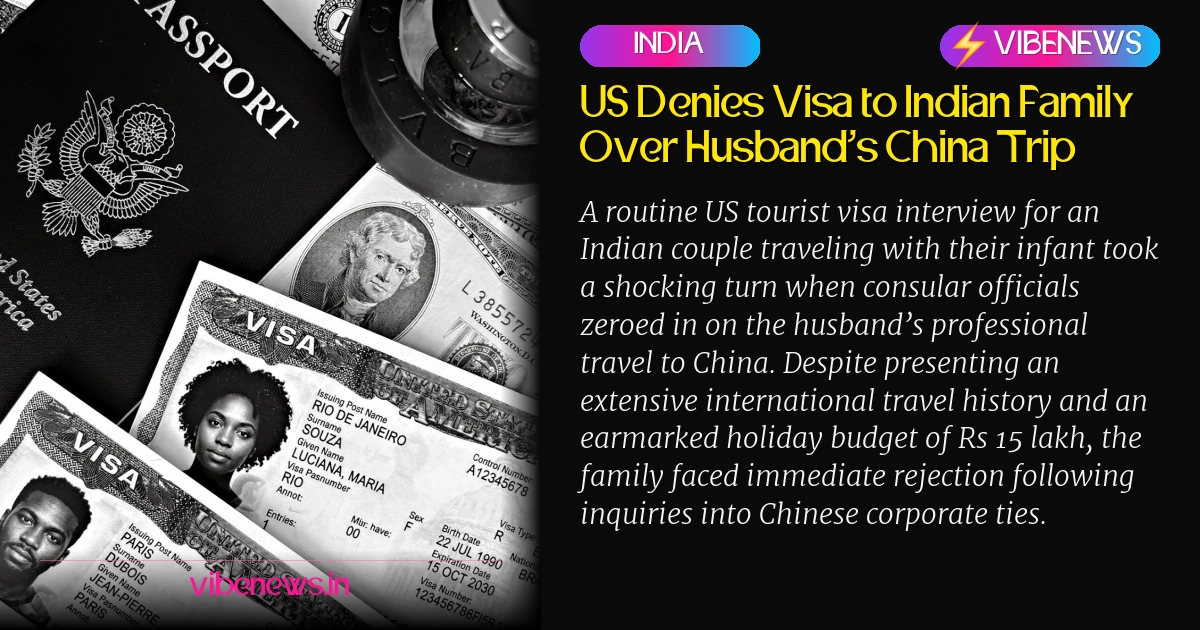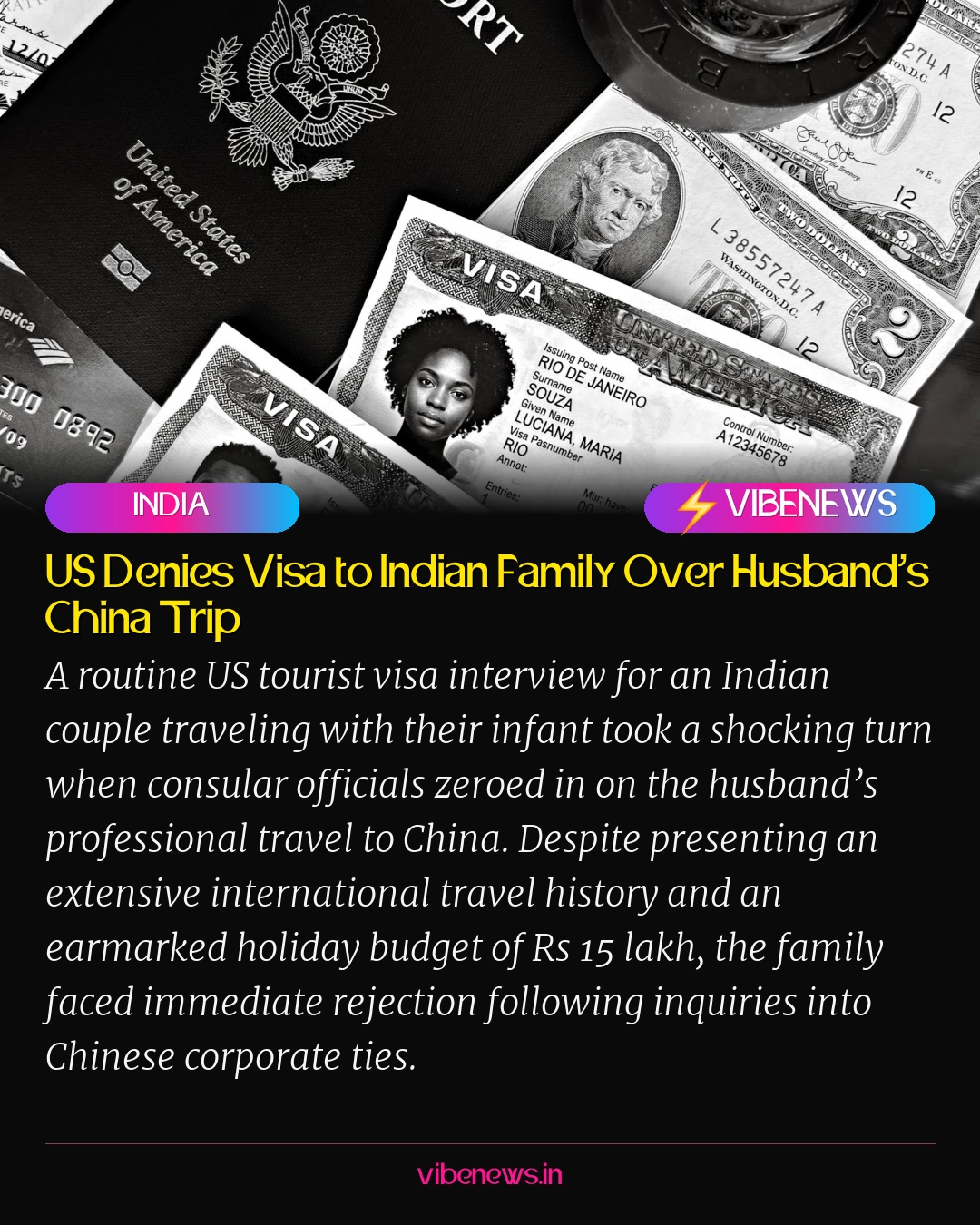
A consular officer at a United States embassy rejected the B1/B2 tourist visa application of an Indian family traveling with an infant following pointed questioning regarding the husband’s prior professional travel to China. The woman recounted the distressing outcome on Reddit, explaining how an ordinary holiday screening transformed into an abrupt rejection despite the couple demonstrating substantial financial backing and an established international travel record.
Interrogation Over Corporate Ties to Beijing
The couple appeared for their scheduled visa interview alongside their infant, intending to secure approval for a self-funded holiday organized through an external travel agency. During the standard interview procedure, the consular officer questioned whether the applicants held any fear of returning to their home country—a routine measure implemented by immigration officials to rule out prospective asylum petitions. The couple presented their employment credentials, individual roles, and corporate background, confirming an allocated travel budget of Rs 15 lakh to finance the vacation.
The discussion shifted radically when the adjudicating officer examined the husband’s passport stamps and travel history. While the family had already completed international trips to destinations including Australia, Thailand, the Maldives, and Bali, consular attention abruptly fixed on his previous entry into Chinese territory.
“Why have you traveled to China?”
The husband explained that the journey had been strictly work-related, clarifying that his corporate employer maintains its global headquarters in China. Consular officials offered no immediate follow-up clarification on the company, but the atmosphere inside the interview booth changed instantly. The officer asked whether the infant was their only child and whether they maintained family connections or acquaintances in the United States. Upon hearing that they had only one child, knew nobody residing in the US, and intended to stay exclusively in hotels, the officer refused the B1/B2 visa applications on the spot.
Stringent Scrutiny Rattles Prospective Travelers
The unexpected denial illustrates the escalating administrative barriers and travel scrutiny confronting Indian tourists attempting to visit the United States. Indian travelers frequently navigate prolonged appointment backlogs and exhaustive documentation checks, but the injection of geopolitical sensitivity into a private family holiday has shocked prospective applicants. Rather than reviewing holiday logistics or financial stability, consular authorities appear increasingly sensitive to corporate footprints that intersect with rival geopolitical jurisdictions like China.
Online immigration analysts and observers reviewing the case highlighted multiple procedural friction points that likely triggered suspicion under US immigration law. Legal commentators noted that applicants carrying an infant on an overseas vacation without local personal contacts often face skepticism from adjudicators, who evaluate whether applicants possess legitimate tourist motivation or undisclosed immigrant intent.
Itinerary Details and Red Flags Under the Spotlight
Commentators examining the interview noted that relying on vague outlines from an intermediary agency often damages an applicant’s profile. US consular adjudicators expect applicants to demonstrate specific knowledge regarding their daily accommodations, specific hotel names, and detailed local itineraries, such as visits to the Empire State Building or the Brooklyn Bridge. Vague answers can lead an interviewer to suspect illegal immigrant intent, especially when applicants lack strong anchor itineraries.
The applicant’s corporate link to a Beijing-headquartered firm evidently compounded these vulnerabilities. In an era marked by heightened technological and trade rivalry between Washington and Beijing, Indian professionals employed by multinational firms with Chinese roots find their routine travel subjected to extraordinary diplomatic and security filters. For this family, having an Rs 15 lakh budget and a clean visa record across Southeast Asia and Australia proved insufficient to overcome the consular officer’s doubts, underscoring the unforgiving nature of current US entry screening.
TL;DR
- US consular officials denied B1/B2 tourist visas to an Indian couple and their infant.
- The refusal occurred after the officer questioned the husband’s prior work travel to China.
- The husband explained his employer maintains corporate headquarters in China.
- The family had budgeted Rs 15 lakh and previously visited Australia and Bali.
- Consular staff questioned asylum intent, family ties in the US, and child count.
- Observers cited vague itineraries, lack of US contacts, and Chinese ties as red flags.