A Diplomatic Endorsement
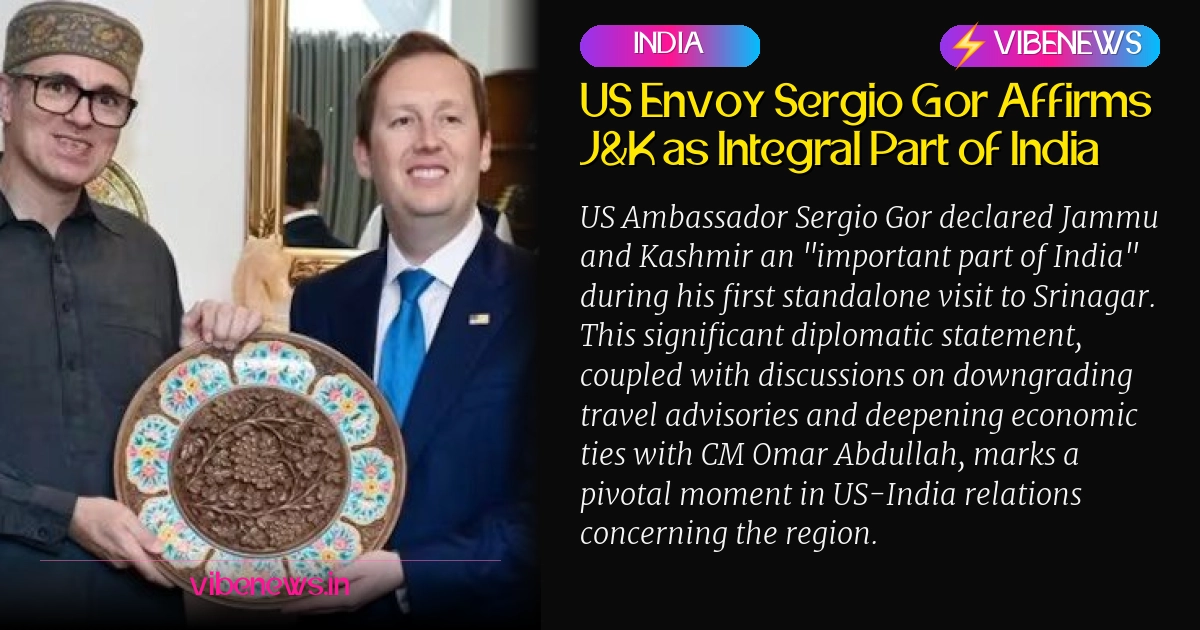
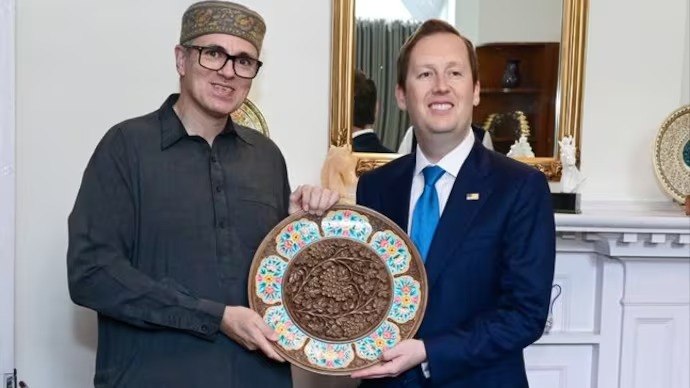
US Ambassador Sergio Gor made a significant diplomatic statement during his inaugural standalone visit to Srinagar, unequivocally declaring Jammu and Kashmir an "important part of India." This remark, delivered after a meeting with J&K Chief Minister Omar Abdullah, marks the first such trip by a US envoy to the Union Territory since the abrogation of Article 370 and follows a recent incident in Pahalgam.
Gor’s statement is widely interpreted as a strong endorsement of India’s long-held position that J&K is an inalienable and integral part of the country. It comes amidst ongoing geopolitical complexities and Pakistan’s persistent claims regarding the region, lending considerable weight to India’s narrative on the international stage.
Reconsidering Travel Advisories
A key focus of Ambassador Gor’s visit was the potential reconsideration of the US’s highest-level travel warning for Jammu and Kashmir. Currently, the US maintains a Level 4 "do not travel" advisory due to terrorism concerns, a classification that significantly impacts tourism and economic activity in the region.
Gor indicated that the US would assess whether this advisory should be downgraded, acknowledging the substantial steps taken to enhance safety and security in the area. He expressed optimism that a revised advisory could encourage more American tourists to experience the natural beauty and opportunities Kashmir offers, providing a much-needed boost to the local economy.
Hours before Gor’s arrival, former Chief Minister Mehbooba Mufti had publicly appealed for the withdrawal of the strict US travel advisory, highlighting the thousands of families in the Valley whose livelihoods depend on tourism. An easing of the advisory would undoubtedly bolster Kashmir’s image as a secure destination for international visitors.
Economic Prospects for the Valley
During his bilateral talks with Chief Minister Omar Abdullah, Ambassador Gor discussed avenues for deepening economic collaboration. Gor, who is credited with improving US-India ties after a period of strain, emphasized creating opportunities that would mutually benefit both nations.
Chief Minister Abdullah confirmed that discussions centered on enhancing engagement with the US across critical sectors such as tourism, horticulture, and the burgeoning new economy. He expressed hope for a widening and deepening of ties between the US and J&K in the coming years, acknowledging that certain legacy issues would require time and effort to resolve.
Historical Context of Engagement
Ambassador Gor’s visit is historic on multiple fronts. It represents the first meeting between a serving US ambassador and a sitting J&K chief minister in over 15 years, with the last such interaction occurring in 2011 with then-envoy Timothy Roemer. Furthermore, it marks the first standalone visit to Kashmir by a US envoy since Kenneth Juster’s trip in 2018, signaling a renewed direct engagement between the US diplomatic mission and J&K’s government.
The visit gains additional significance as it occurs seven years after the Indian government revoked J&K’s special status under Article 370 and bifurcated the erstwhile state into two Union Territories. This diplomatic outreach underscores a shifting international perspective on the region’s status and future.
Following his engagements in Srinagar, Ambassador Gor is scheduled to travel to Ladakh. This will be another first for a US envoy, visiting the region after the 2020 Galwan clashes and the ongoing border standoff with China, highlighting the strategic importance of the broader Himalayan region.
Broader Strategic Implications
This high-profile visit unfolds against the backdrop of a rapidly deepening India-US strategic partnership. It follows recent interactions between Ambassador Gor and Union Home Minister Amit Shah on counter-terrorism efforts, underscoring the growing convergence of interests between the two democracies.
The timing is also notable given the unrest in neighboring Pakistan-Occupied Kashmir (POK), where residents have been protesting alleged excesses by the Pakistani army. While not directly addressed, the stability and economic development of the Indian side of Kashmir stand in stark contrast to the reported conditions across the Line of Control.
Chief Minister Omar Abdullah, while welcoming the visit, maintained a pragmatic stance, emphasizing that Washington would not solve Kashmir’s problems, but rather the Centre. He reiterated his focus on domestic solutions and his persistent demand for the restoration of J&K’s statehood, choosing to listen rather than lodge complaints with a foreign envoy.
Editorial Context: A Shifting Geopolitical Landscape
Ambassador Sergio Gor’s visit to Jammu and Kashmir transcends a mere diplomatic courtesy; it signifies a profound recalibration in international perceptions and engagements concerning the region. For decades, the status of J&K has been a contentious issue, often viewed through the prism of India-Pakistan rivalry and historical disputes. Gor’s explicit affirmation of J&K as an "important part of India" represents a significant diplomatic victory for New Delhi, solidifying its position on a global stage where narratives are often contested.
Beyond the symbolic weight, the discussions around downgrading the US travel advisory hold tangible long-term implications. A safer travel designation could unlock Kashmir’s immense tourism potential, fostering economic growth and stability that has been hampered by security concerns. This economic revitalization is crucial for integrating the region more fully into India’s national development trajectory, offering opportunities for local populations and potentially mitigating grievances.
Furthermore, the renewed direct engagement between a US envoy and the J&K government, after a considerable hiatus and the abrogation of Article 370, indicates a pragmatic acceptance of the changed ground realities. It suggests a US foreign policy that prioritizes strategic partnership with India, recognizing its growing geopolitical influence and its role in regional stability, particularly in the Indo-Pacific. This visit, therefore, is not just about Kashmir; it is a testament to the evolving dynamics of the India-US relationship and its broader implications for regional security and economic cooperation.
TL;DR
- US Ambassador Sergio Gor declared Jammu and Kashmir an "important part of India" during his first standalone visit to Srinagar.
- The statement is a strong endorsement of India’s long-held position on J&K, coming after the abrogation of Article 370.
- Gor indicated the US would reconsider downgrading its Level 4 "do not travel" advisory for J&K, potentially boosting tourism.
- He met with J&K Chief Minister Omar Abdullah to discuss deepening economic collaboration in tourism, horticulture, and the new economy.
- This marks the first meeting between a US ambassador and a sitting J&K CM in over 15 years, signaling renewed direct engagement.
- Gor’s visit to Ladakh, a first for a US envoy post-Galwan, underscores the strategic importance of the broader region.