Former Actor Questions Waqf Board’s Endorsement
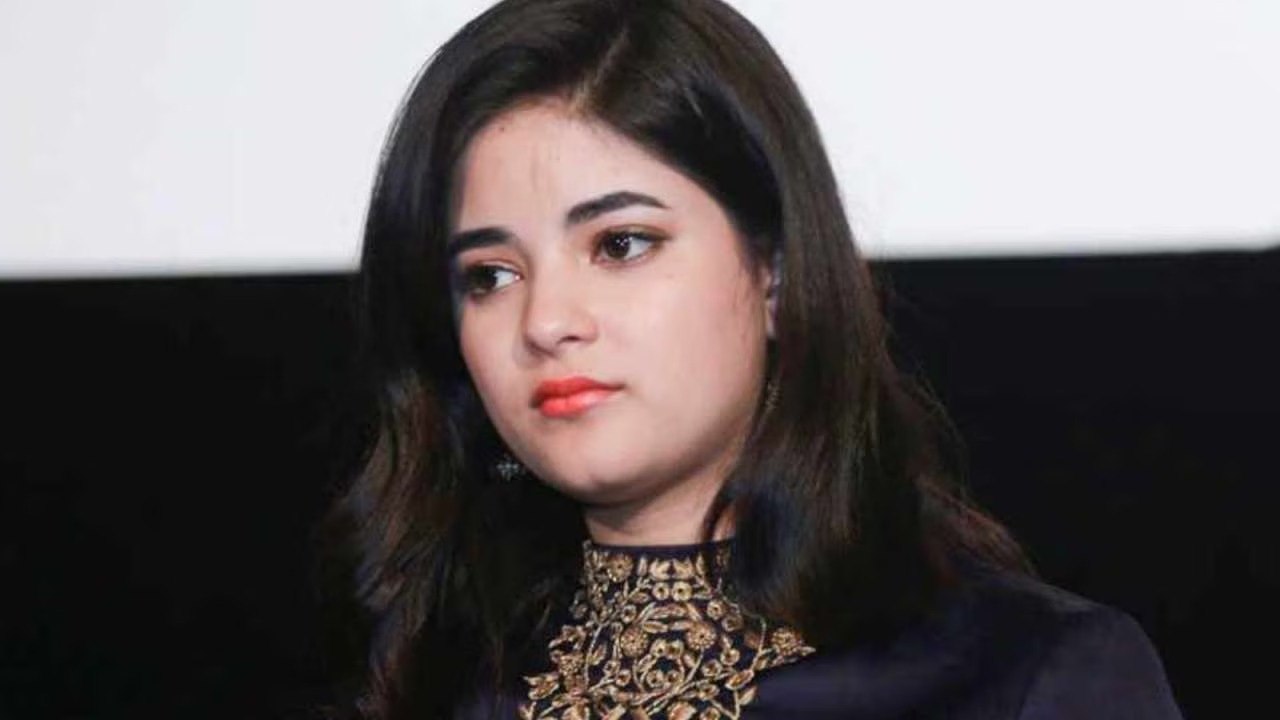
Former Bollywood actor Zaira Wasim has ignited a significant debate by publicly questioning the Jammu and Kashmir Waqf Board. Her concerns arose after a video circulated showing young girls dancing during Independence Day celebrations at a school reportedly affiliated with the Waqf Board in Kashmir.
Wasim, known for her roles in films like ‘Dangal’ and ‘Secret Superstar’, took to social media to voice her apprehension. She specifically questioned whether a religious institution, entrusted with serving the Muslim community, should endorse or facilitate events that, in her view, do not align with Islamic values.
The Actor’s Concerns
In her detailed post, Zaira Wasim articulated that the core issue was not with the children themselves, who often participate in activities presented by their schools. Instead, her criticism was directed squarely at the choices made by institutions and what they decide to facilitate or place under their banner.
She posed a critical question: "Why is the default way of involving children — and particularly girls — in public celebrations to make them dance to irrelevant songs?" Wasim suggested that educational institutions should instead offer opportunities for children to "think, create, learn, discuss, build or contribute," fostering intellectual and spiritual growth.
Wasim also referenced Kashmir’s rich educational, intellectual, and cultural legacy. She highlighted that the region has historically produced individuals who viewed education as a means to enlighten minds, cultivate character, and equip people with knowledge and spirituality. She questioned what current institutions were doing to preserve and build upon this profound legacy.
The Waqf Board’s Mandate
The Jammu and Kashmir Waqf Board is a statutory body responsible for the administration of Waqf properties and institutions in the region. Waqf, an Arabic term, refers to an endowment made by a Muslim individual or a group for religious, educational, or charitable purposes, typically a building or parcel of land. These boards are generally tasked with managing these assets in accordance with Islamic law and the specific objectives of the endowment.
In India, Waqf Boards operate under the Waqf Act, 1995, and are expected to safeguard and utilize Waqf properties for the welfare of the Muslim community, often including the running of schools, mosques, and other social welfare initiatives. Their role inherently carries a responsibility to uphold the religious and cultural sensitivities of the community they serve.
Kashmir’s Cultural Tapestry
Kashmir, a region with a unique and complex socio-cultural fabric, has long been a crucible of diverse traditions and spiritual practices. Its history is marked by a strong emphasis on Sufi traditions, intellectual pursuits, and a distinct cultural identity that blends local customs with Islamic tenets. Educational institutions in the valley have historically played a crucial role in shaping this identity, often balancing modern education with traditional values.
The incident, therefore, touches upon a sensitive nerve regarding the interpretation and preservation of cultural and religious identity in public spaces, especially within institutions that are explicitly linked to religious endowments.
Online Discourse and Official Silence
The video and Wasim’s subsequent remarks have sparked considerable debate across social media platforms. Many users have weighed in, some supporting Wasim’s stance on the role of religious institutions, while others have defended cultural expression and the participation of children in public celebrations, irrespective of the institution’s affiliation.
As of now, Darakhshan Andrabi, the chief of the Jammu and Kashmir Waqf Board and a prominent BJP leader, has not issued a public statement in response to Zaira Wasim’s criticism. This silence has further fueled discussions online, with many awaiting an official clarification or stance from the Board.
Zaira Wasim’s Consistent Stance
Zaira Wasim’s current intervention is consistent with her past decisions. In 2019, she famously announced her departure from the film industry, stating that her acting career was conflicting with her religious beliefs and faith. Since then, she has largely maintained a private life, occasionally sharing her views on social media, particularly on matters she perceives as related to religious and moral principles.
Her latest comments underscore a continued commitment to her personal convictions and a willingness to engage with issues she believes impact the spiritual and moral fabric of her community, particularly concerning the upbringing of children and the responsibilities of religious bodies.
Editorial Context
This development transcends a mere celebrity comment; it highlights a deeper, ongoing societal conversation about the evolving role of religious institutions in contemporary public life, particularly in the context of education and cultural expression. In a diverse nation like India, and especially in a region as culturally and politically sensitive as Jammu and Kashmir, the balance between upholding religious values, fostering modern education, and allowing for cultural celebrations is perpetually under scrutiny.
The incident prompts a critical examination of how religious bodies, like the Waqf Board, interpret their mandate in a secular framework. It raises questions about the extent to which they should influence curriculum and extracurricular activities in schools under their purview, and how they navigate the expectations of both traditionalists and those advocating for more progressive forms of expression. Over the long term, such debates contribute to shaping public discourse on identity, education, and the delicate interplay between faith and modernity in India’s diverse social landscape.
TL;DR
- Former actor Zaira Wasim questioned the J&K Waqf Board over a video of girls dancing at an Independence Day event in a Waqf-run school.
- She argued that a religious institution like the Waqf Board should uphold Islamic values and questioned the choice of activity for children.
- Wasim clarified her criticism was directed at the institution’s choices, not the participating children.
- The incident has sparked an online debate regarding cultural expression and religious tenets in educational settings.
- J&K Waqf Board chief Darakhshan Andrabi has not yet responded to Wasim’s remarks.
- Wasim previously left her acting career citing conflicts with her religious beliefs.