
Dying in Kashi, the holy city also known as Varanasi, is believed by many Hindus to bring moksha, the release from the endless cycle of birth and death. That belief is the main reason some devotees move to the city in the final stage of their lives, and it keeps drawing curiosity from across India.
Kashi is not just a city of temples. It is treated as a sacred place tied to life, death and spiritual liberation. The Ganga river, the Kashi Vishwanath temple and Manikarnika Ghat hold special importance in that belief system.
The Belief Behind Moksha in Kashi
In Hindu philosophical traditions, moksha means freedom from repeated birth and death. Death is not seen only as the end of life. It is seen as one part of the soul’s journey.
Believers who accept ideas of karma and rebirth consider it spiritually auspicious to be in Kashi at the end of life. The faith has been passed down for generations, and that is why some people make the journey to the city in their last years.
Devotion over certainty. The belief is religious, not scientific. Dying in Kashi has not been scientifically proven to guarantee moksha. For devotees, though, the idea is more than a thought about death.
Dying in Kashi has not been scientifically proven to guarantee moksha. For devotees, though, it is not merely a thought about death.
Many who come to the city spend their last days in prayer, remembrance of God and spiritual calm. They want to finish their final journey in a sacred setting.
Shiva and the Taraka Mantra
Kashi is widely revered as the city of Lord Shiva. The Kashi Vishwanath temple is counted among the twelve Jyotirlinga shrines, and it is one of the most famous places in the city.
A central belief is that Shiva never abandons Kashi. Traditional faith holds that Shiva gives the Taraka mantra to a person who dies in the city, freeing the soul. This belief is one of the main reasons Kashi is called a city of moksha.
The story belongs to the mythological and scriptural tradition. Devotees accept it as a matter of spiritual faith, not as a claim that can be tested in a lab.
Manikarnika Ghat and the Rituals of Death
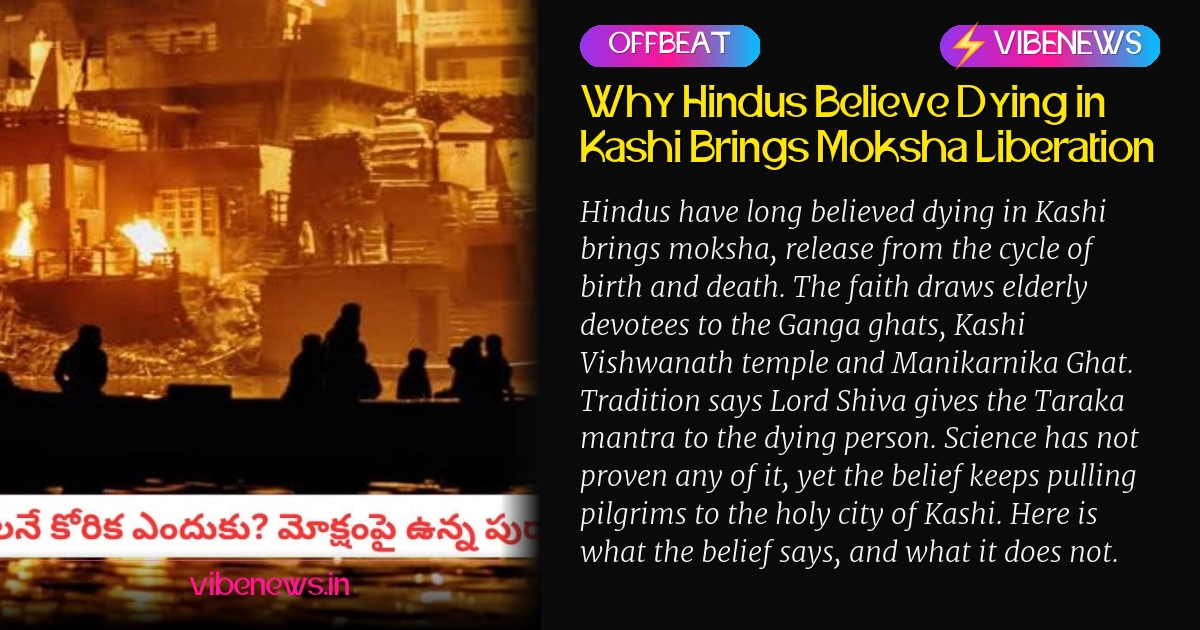
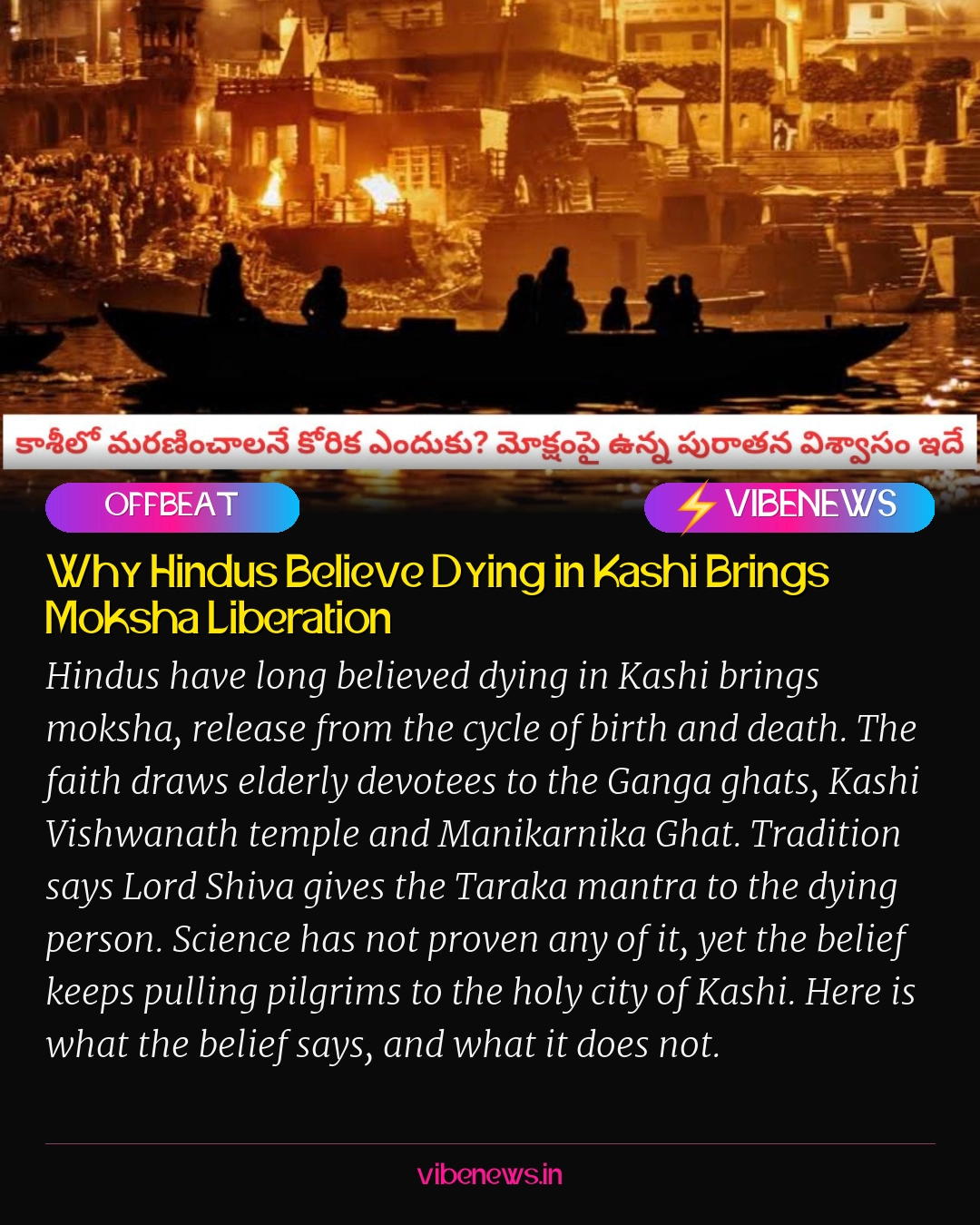
Manikarnika Ghat, on the banks of the Ganga, holds a unique place in Hindu funeral traditions. Cremations take place at the ghat, and the site is closely linked with ideas of death, final rites and the liberation of the soul.
Talking about death is uncomfortable for many people. In Kashi, though, death is treated as a natural part of the journey of life, seen through a spiritual lens. Visitors also take part in rituals such as Ganga bathing, prayers and ancestral rites.
The ghat remains a key part of the city’s spiritual life. It is not a side attraction. It sits at the heart of how Kashi understands death.
Mukti Bhawan and the Final Stay
Kashi has guest houses set up for people in the last stage of life who want a peaceful environment. These are commonly known as Mukti Bhawan or Mumukshu Bhawan. The word mumukshu is used for those who seek moksha.
Elderly residents spend their final days in these places. They join prayers, devotional singing and spiritual programmes.
The rules are not the same everywhere. Entry conditions, length of stay and available facilities can vary from one guest house to another. These places should not be assumed to be open to everyone without limits.
Visitors should also not assume everyone who comes to Kashi is there to die. Many people visit for temple darshan, the Ganga aarti, spiritual practice, sightseeing and ancestral rites.
What the Belief Means, and What It Does Not
To understand why Kashi is so special, it helps to look beyond temple worship. Indian philosophical ideas about life and death shape the belief too. Traditions that hold the soul’s journey continues after the body dies place the highest value on moksha.
Reaching that liberation is linked to divine grace, spiritual discipline and the idea of karma. Kashi is seen as a symbol of those ideas. For some, the city offers calm and a sacred setting at the end of life.
Different Hindu philosophical traditions explain moksha in different ways. Not everyone agrees that dying in one particular place is a guarantee of liberation.
The belief that dying in Kashi brings moksha comes from Hindu religious faith and mythological tradition. It is not presented here as a proven fact. This article describes the spiritual beliefs in an informational way, so readers can understand why the city holds such a powerful place in the hearts of devotees.
TL;DR
- Dying in Kashi is believed to bring moksha, freedom from the cycle of birth and death.
- Tradition holds that Lord Shiva gives the Taraka mantra to a person who dies in Kashi.
- Manikarnika Ghat on the Ganga is central to Hindu funeral rites in the city.
- Mukti Bhawan and Mumukshu Bhawan shelter elderly people seeking a peaceful final stay.
- Science has not proven that dying in Kashi guarantees moksha; the belief is religious.
- Many visitors come for temple darshan, Ganga aarti and rituals, not only to die.