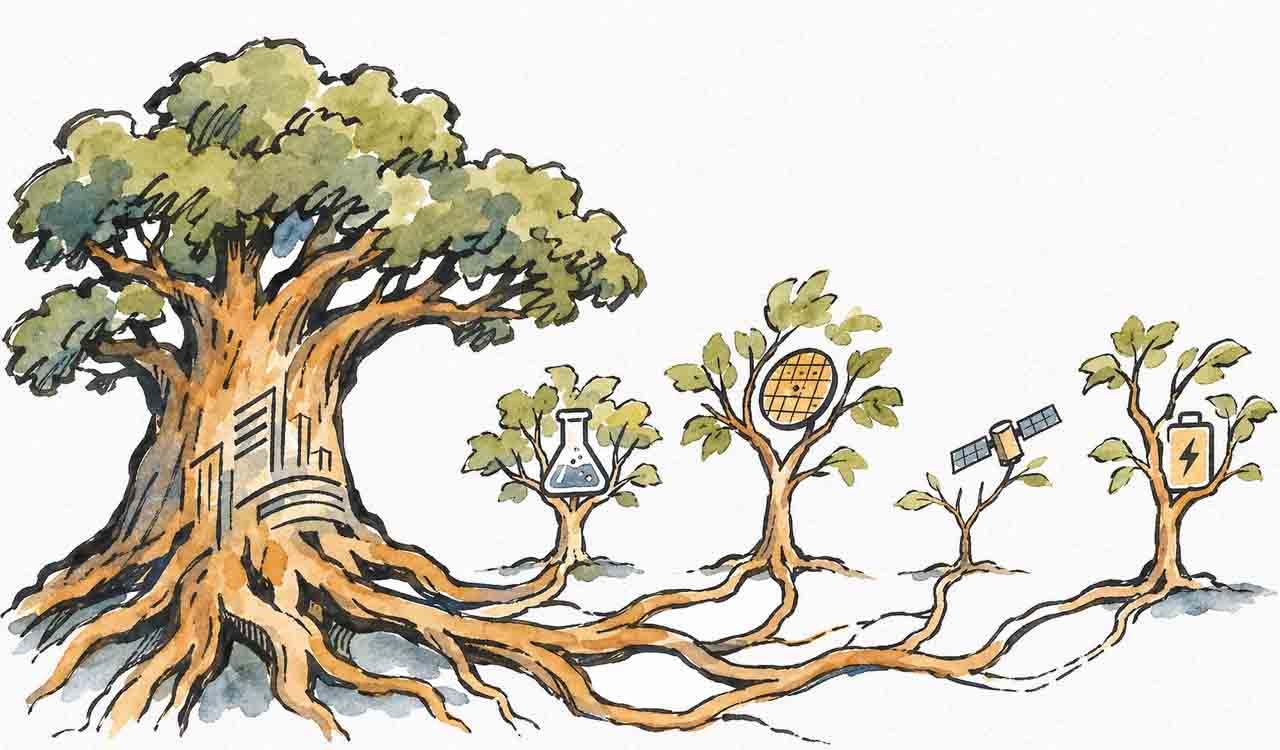
Telangana wants its technology boom to reach well beyond Hyderabad’s HITEC City, and the real test will be whether companies that move to new locations can build lasting local networks. Kalyan Sivalenka, managing partner of Hyderabad Angels Fund, makes that case in an opinion piece published on 8 November 2026.
For years, the city’s growth story has revolved around HITEC City and the IT corridor around it. Global capability centres and skilled professionals helped put Hyderabad among India’s leading technology hubs. Now the state is asking a harder question: can that success seed new centres of investment, innovation and jobs elsewhere in Telangana?
The government’s plans go past IT services. They include life sciences, data centres, electronics, semiconductors, electric mobility and advanced manufacturing. Each of these sectors needs something different, from scientific research and specialised engineering to reliable power and industrial supply chains. Sivalenka’s central argument is that attracting a company is only the first step. The economic payoff depends on whether workers, research institutions and suppliers can grow up around those companies.
Genome Valley as the template
Sivalenka points to Genome Valley as proof that focus pays off. Established in 1999, the cluster now houses more than 200 companies and a scientific workforce of around 15,000 professionals. Pharmaceutical and biotechnology firms, vaccine manufacturers and research facilities operate there, with access to specialised laboratories, scientific talent and industry expertise.
The wider life sciences sector has grown to more than 2,000 companies, according to the article, and accounts for about a third of global vaccine production. That scale is the reason Sivalenka believes other industries will need their own specialised ecosystems rather than a copy of the Hyderabad model.
That is where the piece gets pointed. Data centres need reliable power, fibre connectivity and cooling. Electronics and semiconductor plants depend on technical talent, testing facilities and specialised suppliers. Battery and electric vehicle manufacturing relies on component makers and engineering capabilities that can support production at scale.
“A single technology hub is unlikely to serve all these needs equally well.”
In Sivalenka’s view, some industries may be better placed outside Hyderabad, as long as they can still tap the talent, research and business networks the city has built. That idea sits at the heart of the regional shift he describes.
Data centres bring the power and the pressure
Data centres are one of the biggest pieces of this expansion. Hyderabad’s existing technology base gives it an edge as demand for cloud computing and artificial intelligence grows. The state has around 200 MW of live IT capacity, with another 4.7 GW in the committed or early-stage pipeline. If those projects move ahead, they could expand the state’s data-centre capacity significantly in the coming years.
The State is identifying locations such as Chandanvelly and Bharat Future City for data-centre development. The article does not say how far along those sites are, so the timeline remains open.
The jobs question is less comfortable. Building a data centre takes a large workforce, but the facilities employ far fewer people once they are running. Sivalenka argues that the lasting gains will depend on whether these projects create steady demand for engineering services, equipment suppliers and technical maintenance firms. Without that spillover, the investment could look bigger on paper than it feels on the ground for ordinary workers.
Space, deep tech and chips
Space tech and deep tech offer another route away from conventional IT services. Hyderabad is home to Skyroot Aerospace, which is developing launch vehicles, and Dhruva Space, which builds satellite systems. Sivalenka says their presence points to a bigger role for the city in India’s private space industry.
Semiconductors are the third bet. Telangana already has a base in chip design and research, and it is looking to move into semiconductor manufacturing and advanced packaging. Taken together, these sectors could diversify the state’s technology economy and put its engineering expertise to wider use.
Talent and networks decide whether clusters survive
Sivalenka’s strongest point is about people. When companies in the same industry draw from a shared talent pool, they can hire more easily, and workers can build expertise without leaving the region. He credits several existing institutions with laying groundwork for that.
T-Works provides electronics testing, PCB fabrication and prototyping, so startups and smaller manufacturers can develop products without buying every piece of equipment themselves. A training partnership between TASK and Dell Technologies, announced in September 2026, aims to train 5,500 students across 25 centres in AI, cloud computing and electronics manufacturing.
Research links matter too. The Research and Innovation Circle of Hyderabad, known as RICH, connects research institutions with companies and startups, including medical-device and diagnostics businesses trying to test products and move them toward commercialisation. Sivalenka suggests similar links could help firms in newer industrial locations solve technical problems and bring products to market.
Extending these facilities to emerging industrial locations could help companies recruit locally and build a stronger supplier base. If it works, the know-how concentrated in Hyderabad would support industries developing elsewhere in Telangana, rather than pulling every opportunity into one city.
What comes next
The piece ends on an optimistic note but stops short of promising results. Sivalenka writes that with the right mix of infrastructure, skills and industry partnerships, new locations can grow into centres of expertise. Whether that happens will depend on execution across power, talent, research and supplier networks, and the article does not measure progress on any of those yet.
For residents of cities and towns outside Hyderabad, the question is practical. Will the next data centre, chip plant or biotech lab bring steady work, or will it mostly bring construction crews and a handful of permanent jobs? The answer will show whether Telangana’s push beyond HITEC City creates new opportunities for businesses and professionals across the state.
TL;DR
- Telangana is trying to build technology clusters beyond Hyderabad’s HITEC City, with data centres, semiconductors, space tech and life sciences in focus.
- Genome Valley, established in 1999, houses more than 200 companies and around 15,000 scientific professionals.
- The state’s data-centre pipeline includes around 200 MW of live IT capacity and another 4.7 GW in committed or early-stage projects.
- The author argues that new locations need local talent, research links and supplier networks, not just investment.
- A TASK and Dell Technologies training partnership, announced in September 2026, aims to train 5,500 students across 25 centres.