A breeding pair of threatened Swainson’s hawks has successfully established a nest and reared two chicks in Shasta County, marking the first confirmed nesting of the species in the area in roughly three decades.
A Triumphant Return to Reclaimed Riverlands
The milestone was documented by wildlife biologist Tobias Felbeck, who spotted the raptors perched within a towering sycamore tree during field surveys. Through his binoculars, Felbeck confirmed a female occupying the nest alongside an adult male and two young birds. The sighting represents a historic ecological breakthrough for Shasta County, where the raptors—listed as threatened under the California Endangered Species Act—had not been recorded breeding for approximately thirty years.
Historically forced southward into agricultural corridors between Sacramento and Stockton due to severe habitat degradation, the presence of these hawks offers compelling physical proof of ecological recovery. While scientists caution that a single documented nest does not instantly signal a total species-wide rebound, the development stands as an inspiring victory for frontline conservationists working along the Sacramento River system.
“Seeing a little bit of range expansion into Shasta County could be some evidence that they are recolonizing more of their historic range.”
Turning Neglected Farmland into Thriving Ecosystems
The nesting success unfolded at Rancho Breisgau, an expansive 306-acre parcel situated at the vital ecological junction where Battle Creek flows into the Sacramento River. Previously utilized as commercial walnut orchards, sections of the property fell into abandonment over time, becoming completely overgrown with aggressive weeds and non-native grasses. This dense carpet of invasive growth suffocated native flora, severing critical movement corridors and denying shelter to native wildlife.
To reverse decades of decay, conservation nonprofit River Partners joined forces with the U.S. Bureau of Land Management in autumn 2023 to revive the landscape. Launching an ambitious initial phase across 150 acres, field crews worked alongside the Shasta Chapter of the California Native Plant Society to plant more than 32,000 native trees and vegetation species by October 2024. The initiative was engineered not only to re-establish canopy and brush for terrestrial species, but also to fortify the adjoining waters of Battle Creek, one of the state’s rare riverways supporting all four seasonal runs of Chinook salmon alongside steelhead trout.
The Food Web Awakens Across the Floodplain
As native root systems took hold and greenery surged across Rancho Breisgau, the biological food chain responded with remarkable speed. Thriving populations of dragonflies and grasshoppers populated the emergent flora, creating a rich hunting ground that biologist Felbeck notes likely drew the predatory hawks back to their ancestral territory. The abundance of prey, paired with mature sycamores providing secure canopy perches, delivered the exact combination needed for the raptors to lay eggs and raise their young.
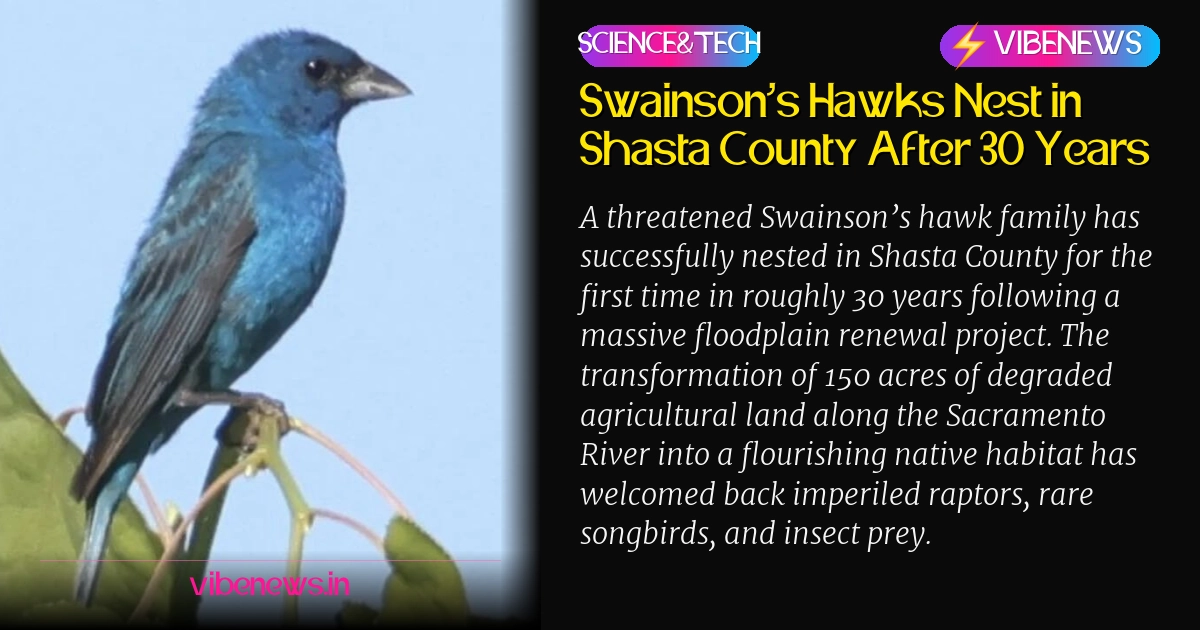
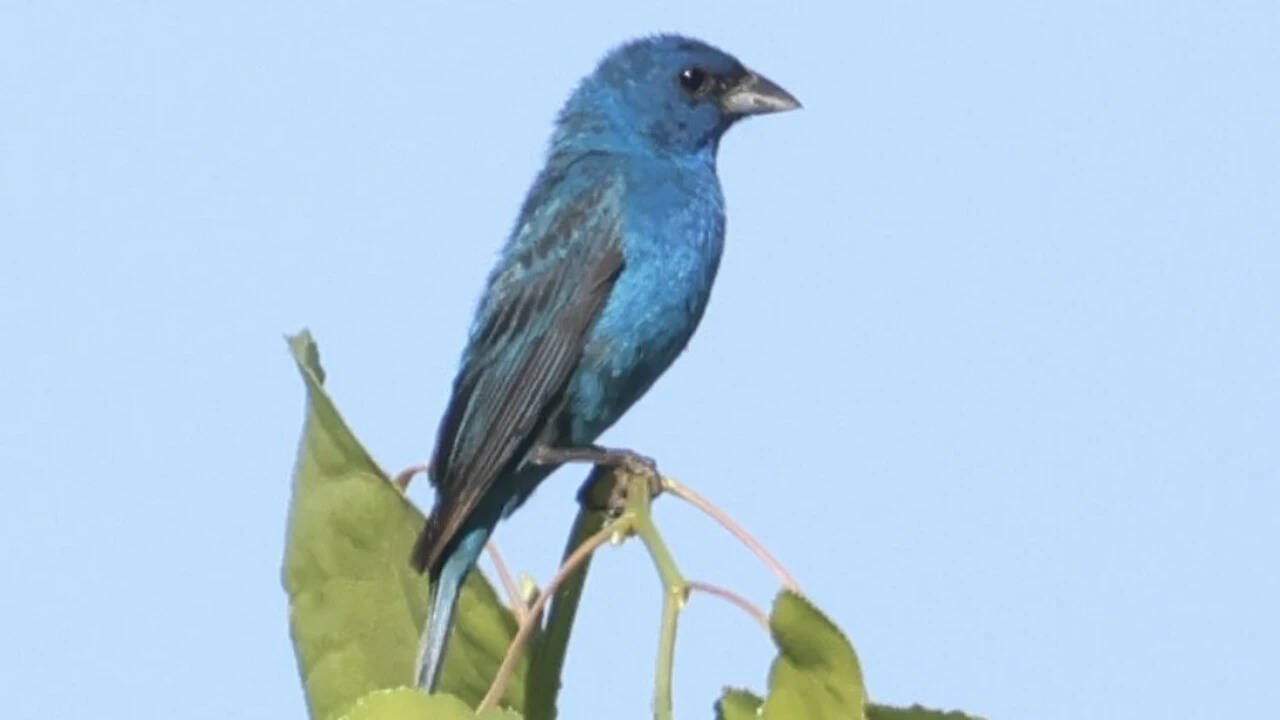
The hawks were not the only remarkable avian arrival celebrating the renewed floodplain. Later that same summer, Felbeck identified the distinctive calls of indigo buntings, a songbird predominantly found across eastern North America. Further field observation revealed a breeding pair nesting at Rancho Breisgau, approximately 500 miles beyond their documented natural range. The sighting registered as only the fifth county observation on record and the single first confirmed breeding pair in Shasta County history.
Broader Victories for California Wildlife
The renewal at Rancho Breisgau mirrors a string of environmental triumphs across restored California river valleys. Further south in San Diego County, endangered least Bell’s vireos—species driven toward extinction by riparian loss and parasitic brown-headed cowbirds—were documented in July 2026 across two restored sites: Otay Delta, where 19,000 native plants were established over 55 acres in 2014, and the San Dieguito River Park, rejuvenated with 20,000 plants in 2018.
Complementary successes have emerged within the San Joaquin River National Wildlife Refuge, where endangered riparian woodrats were observed flourishing inside restored woodlands in 2024, accompanied by positive population trends for riparian brush rabbits. Together, these resurgences demonstrate the power of habitat reclamation, proving that when degraded landscapes are systematically healed, wildlife will seize the opportunity to reclaim its ancestral home.
TL;DR
- Swainson’s hawks have nested in Shasta County for the first time in roughly 30 years.
- Biologist Tobias Felbeck documented a nesting female, adult male, and two young in a sycamore.
- The return follows the planting of over 32,000 native plants across 150 acres since 2023.
- Rancho Breisgau also recorded its first breeding pair of rare indigo buntings.
- The renewed habitat supports river vitality for steelhead and four runs of Chinook salmon.