YouTube Music has begun rolling out automated in-app labels to identify tracks created with generative artificial intelligence, embedding visual disclosures directly inside the streaming audio player.
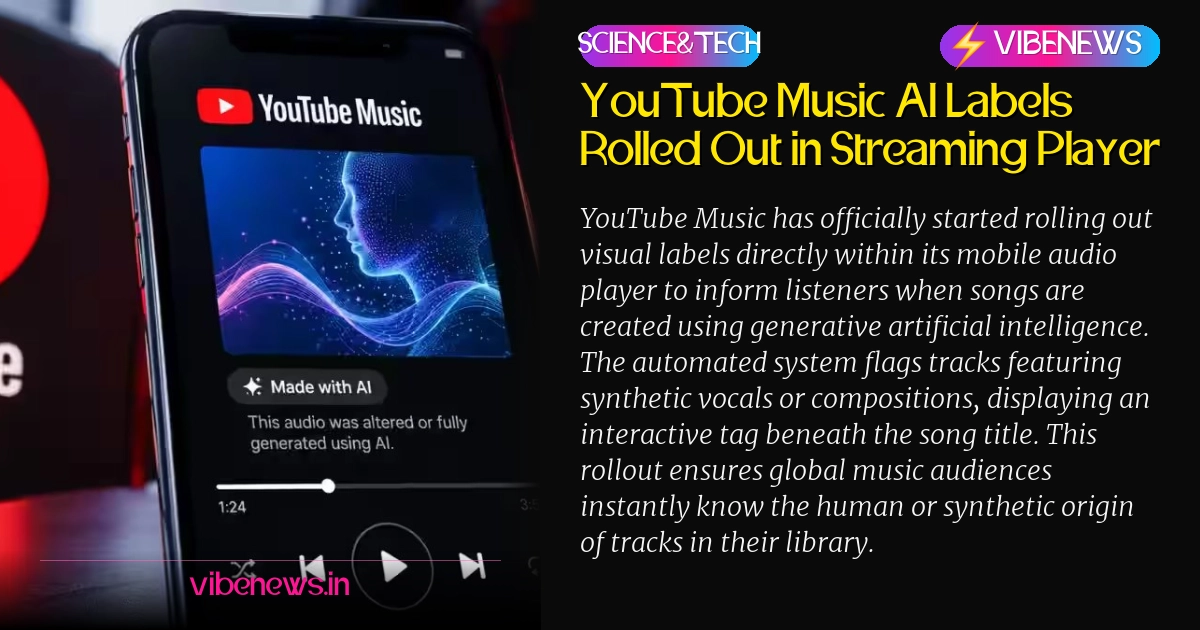
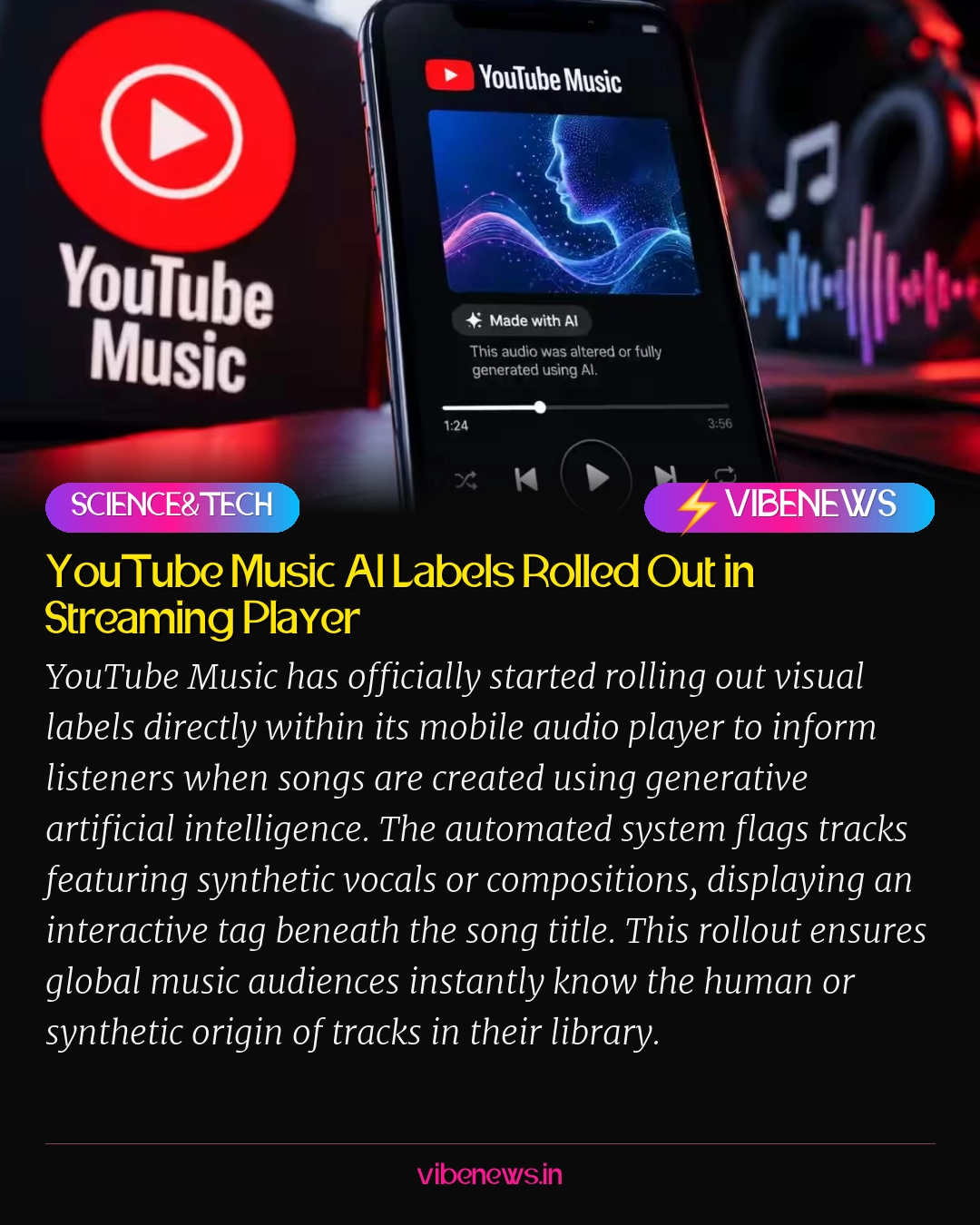
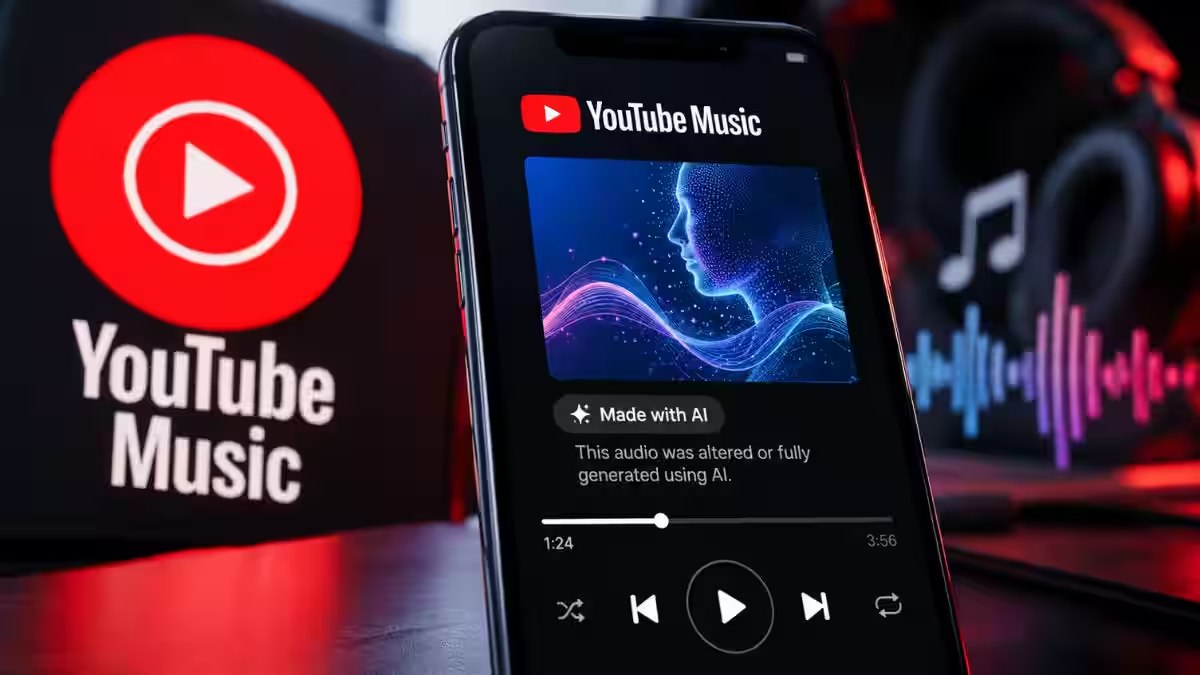
The feature places an explicit visual tag directly on the playback screen, situated just beneath the song and artist title and resting above the standard audio controls. Tapping on the indicator opens an informative pop-up window designed to remove ambiguity surrounding synthetic creation, presenting listeners with a clear message:
“Made with AI. This audio was altered or fully generated using AI.”
The update marks an important shift in how streaming audiences interact with synthetic media. Millions of global listeners will now instantly know whether their favorite tracks are made by humans or AI, transforming casual listening into a more transparent experience. Whenever an algorithmic tune appears in a playlist or queue, the listener is immediately clued into the nature of the production without needing to dig through external credits or press statements.
Automated Scans and Music Industry Collaboration
To power the new labeling system, the US-based technology company is relying on its proprietary automated AI detection mechanisms alongside direct collaboration with record labels and music partners. The audio streaming platform is specifically targeting tracks that feature musical compositions or vocal performances primarily generated using generative AI models.
Because the platform shares infrastructure across formats, any AI disclosure applied to a song on YouTube Music will automatically mirror across the primary YouTube video application for the exact same track. This unified ecosystem ensures consistency whether an audience member is listening via background audio or watching an uploaded visualizer.
The Evolution of Platform Disclosures
The arrival of musical tags represents an expansion of policies YouTube first enacted for video creators. In 2024, the video streaming service introduced voluntary labels requiring creators to self-disclose when generative tools were used to build their content. That mechanism evolved significantly in May, when YouTube deployed automated artificial intelligence detection capabilities capable of identifying synthetic media even when creators neglected to report it.
Within the video framework, detection tools examine uploads for synthetic signatures created by YouTube’s own creative tools, such as Dream Screen and Veo. The automated systems are also built to inspect incoming files for standard C2PA metadata, which provides cryptographic verification that digital media was synthetically produced or modified.
Under the music platform’s guidelines, artists will retain the ability to request updates to their disclosure status if the automated detection tools accidentally misidentify a human-made track as synthetic. The company noted, however, that in specific determined circumstances, these generative disclosures will remain permanent on the catalog entry.
Streaming Services Respond to Synthetic Media
The push toward algorithmic transparency reflects an industry-wide challenge across digital audio catalogs. YouTube Music is not the sole platform addressing the rise of synthetic creators. In August, competing service Spotify initiated its own labeling initiative, establishing dedicated badges that mark non-human artist accounts as "Likely AI Persona" or "AI Persona."
As music libraries increasingly absorb automated productions, the immediate disclosure placed inside the YouTube Music interface invites audiences to pay closer attention to the boundary between synthesized melodies and human musicianship.
TL;DR
- YouTube Music is rolling out visual labels inside the player interface for AI-generated audio tracks.
- The interactive label sits below the song title and alerts users if audio was altered or generated by AI.
- YouTube’s proprietary detection technology flags synthetic vocals and compositions alongside music partner disclosures.
- Artists can adjust their disclosure status if tracks are falsely flagged, though certain tags remain permanent.
- The feature expands YouTube’s earlier AI video policies and follows Spotify’s August rollout of AI persona badges.