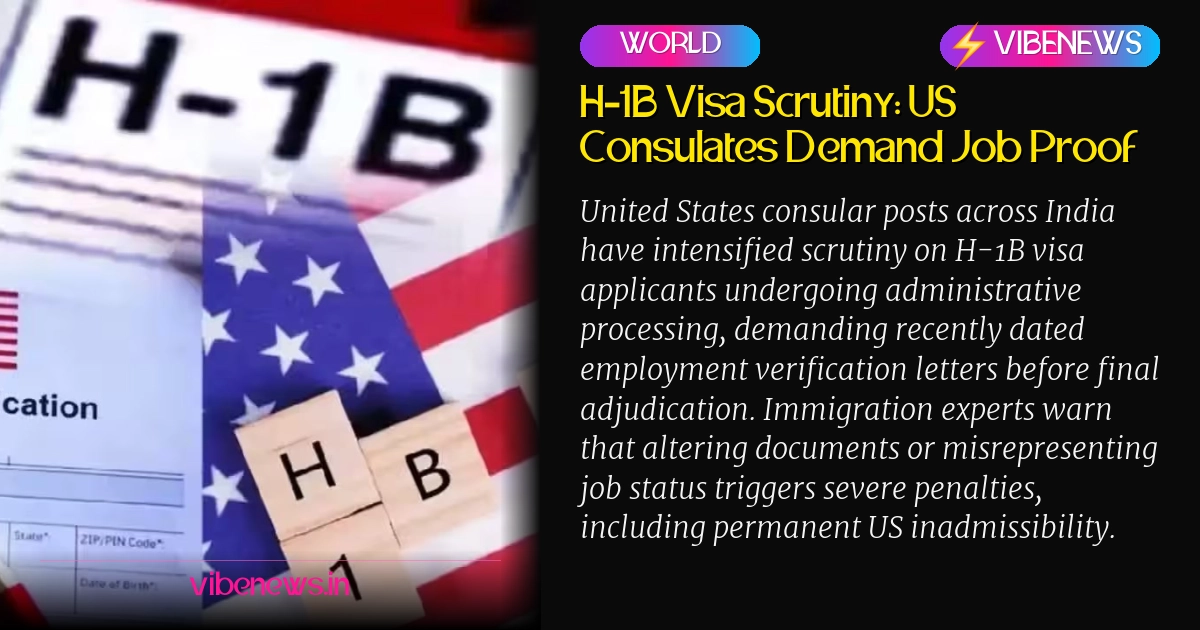
United States consular posts across India are demanding recently dated employment verification letters from H-1B visa applicants trapped in extended administrative processing before recalling passports for final visa adjudication.
Heightened Scrutiny on Pending Petitions
Immigration attorney Gnanamookan Senthurjothi alerted Indian H-1B candidates that American diplomatic missions have significantly tightened compliance verification over recent months. Consular officers are specifically requesting affirmative confirmation that petitioning employers still have active, authentic positions waiting for the candidates. This heightened evidentiary threshold catches applicants during the final transition stage, where consular posts demand their physical passports alongside updated documentation to finish visa processing.
The administrative shift places immense pressure on foreign specialty workers who may have encountered corporate restructuring, hiring freezes, or position cancellations while their applications remained queued in lengthy administrative processing. Officials are actively screening these submissions against company records to confirm that the underlying role has not evaporated during administrative delays.
Zero Tolerance for Document Fabrication
Legal advisers caution that submitting manipulated records to salvage an H-1B stamping can permanently derail an applicant’s career. If an underlying job offer has been rescinded or is no longer available, candidates must never present a fraudulent or altered employment letter. Senthurjothi stressed that applicants facing changed job circumstances should retain qualified legal representation rather than submitting falsified confirmations.
Every employment verification letter must originate directly from an authorized company official or human resources representative. The correspondence must bear a current date and accurately validate the professional’s current job standing and immediate availability. Furthermore, where documentation arrives electronically, applicants must preserve the original email transmission intact and provide physical printouts of that transmission record during submission.
Willful, material misrepresentation to obtain a U.S. visa can trigger inadmissibility under INA § 212(a)(6)(C)(i), with potentially serious long-term consequences. A request for updated employment verification does not itself indicate a fraud finding. However, applicants must ensure every submission is genuine, accurate and verifiable.
Compliance Traps and Legal Penalties
The legal consequences of submitting flawed paperwork are severe and lasting under federal immigration statutes. When an applicant engages in willful material misrepresentation, consular officers apply statutory bars under INA § 212(a)(6)(C)(i), which effectively strips the worker of future United States immigration eligibility. While an administrative request for fresh verification documents does not automatically suggest fraud, any inconsistency between corporate payroll filings, internal company rolls, and consular paperwork invites immediate rejection.
Beyond workplace records, consular posts enforce strict review of public digital footprints. Mandated since last December, the requirement for H-1B applicants to disclose complete social media profile links provides adjudicators with another cross-referencing tool. Visa seekers must provide fully operational and accessible web addresses across designated submission portals, ensuring their publicly listed employment history precisely reflects the claims made in petition dossiers.
Essential Action Steps for Applicants
To safely navigate consular administrative requests, legal specialists instruct H-1B candidates to execute three rigorous safeguards before submitting any paperwork to Indian visa posts:
Direct Employer Validation
Workers must actively liaise with their corporate sponsors to ensure corporate readiness to substantiate the job offer if contacted by consular fraud prevention units. Verification documents must never be sourced from unauthorized colleagues or intermediaries.
Digital Audit Trails
Applicants must archive complete communication chains, retaining original electronic mail files, headers, and official correspondence demonstrating that paperwork was generated legitimately by corporate human resources personnel.
Immediate Counsel for Status Changes
If corporate retrenchment, layoffs, or organizational adjustments eliminate the petitioning role, professionals must seek qualified legal intervention to explore lawful alternatives instead of attempting to backdate or modify existing paperwork.
TL;DR
- US consulates in India demand newly dated job verification letters before issuing H-1B visas.
- Applicants undergoing administrative processing must confirm underlying job roles remain open and valid.
- Lawyers warn backdating or altering employment documentation triggers permanent US visa bans.
- Mandatory social media disclosure rules established last December remain strictly enforced.
- Applicants facing eliminated positions must seek legal counsel rather than misrepresenting facts.