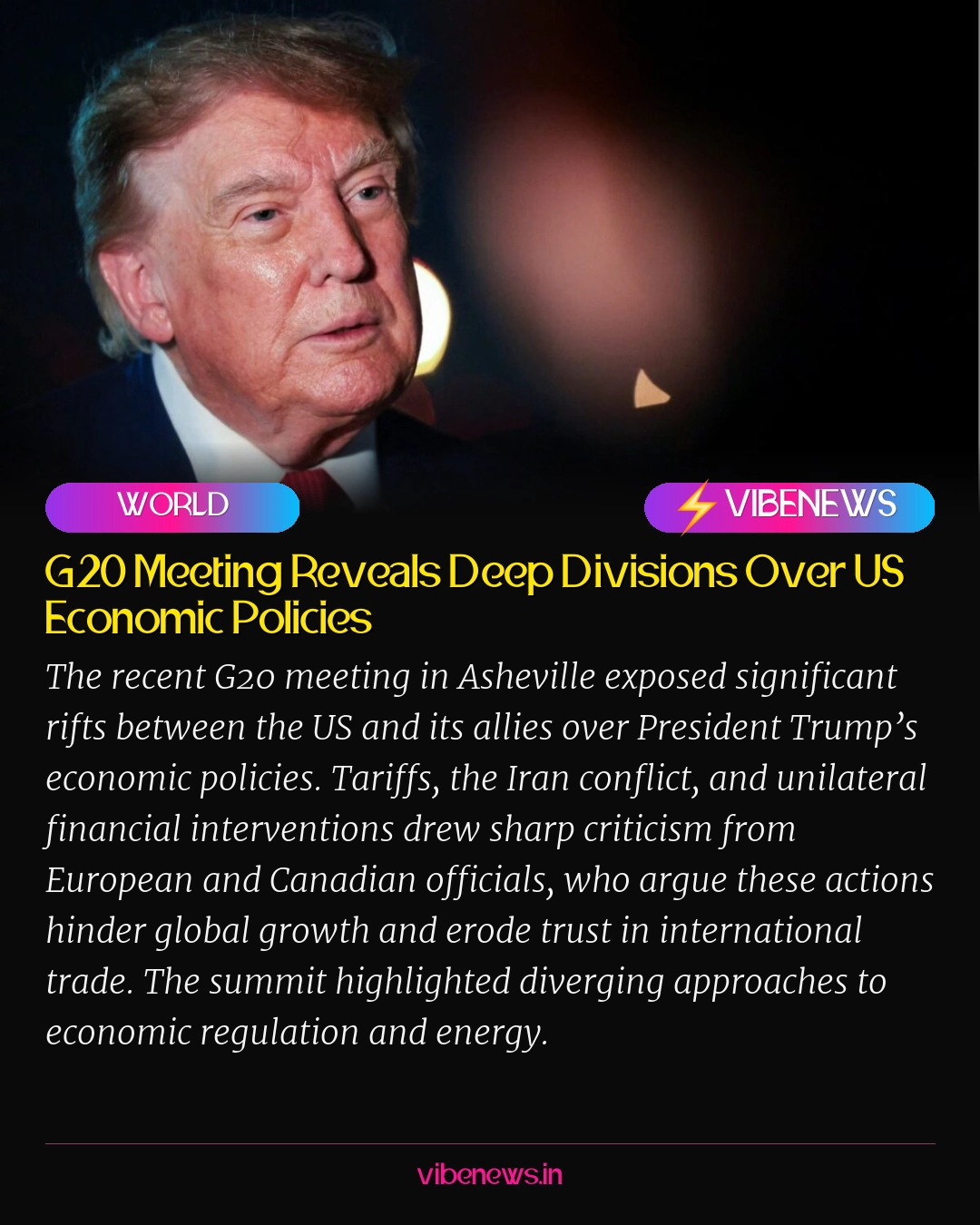
G20 Meeting Reveals Deep Divisions Over US Economic Policies
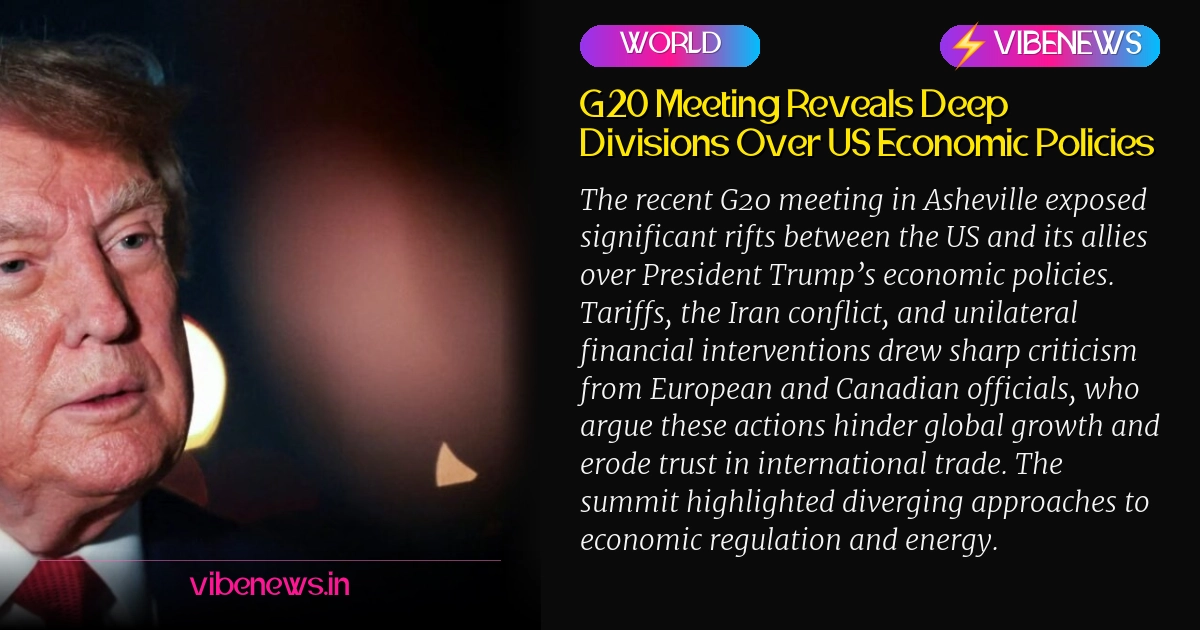
The recent gathering of G20 finance ministers and central bankers in Asheville, North Carolina, brought to light significant and growing differences between the United States and many of its traditional allies. The summit, intended by Washington to showcase the strength of the American economy under President Donald Trump, instead became a forum for sharp criticism regarding several of the administration’s key economic policies.
Throughout the sessions, US Treasury Secretary Scott Bessent consistently highlighted the robust performance of the American economy, urging other nations to adopt similar models. However, representatives from Europe, Canada, and other friendly nations expressed considerable reservations, arguing that specific US policies were actively detrimental to their own economies and global stability.
The Asheville Summit’s Tensions
The core of the friction stemmed from a range of issues, including the ongoing conflict involving Iran, which has caused considerable disruption in global energy markets and shipping lanes. Allies also questioned a surprising decision by Secretary Bessent to sell US holdings of euros to bolster the Japanese yen, a move that was perceived as unilateral and uncoordinated.
Furthermore, the escalating trade disputes, particularly the war of words and tariffs between the US and Canada, emerged as a major point of contention. While discussions remained largely diplomatic, the underlying frustration among European and other leaders regarding Washington’s stewardship of the global economy was palpable.
Eswar Prasad, a Cornell University economist and former head of the China division at the International Monetary Fund, observed that even traditional US allies among the G20 were openly at odds with the Trump administration’s priorities, despite what he termed “U.S. strong-arm tactics.” This sentiment underscored a broader erosion of trust in international economic cooperation.
Economic Policies Under Scrutiny
A significant area of divergence lay in fundamental approaches to economic policy. The Trump administration has championed deregulation across various sectors, including the burgeoning artificial intelligence industry, and has actively promoted increased fossil fuel production. In contrast, European leaders have adopted a more cautious stance on AI and deregulation, maintaining a stronger commitment to transitioning towards renewable energy sources like wind and solar.
German Vice Chancellor Lars Klingbeil articulated these differences, pointing specifically to America’s tariff conflicts. He warned that such disputes were eroding trust in the global trading system and would ultimately inflict harm on all parties involved, not just those directly targeted.
Unilateral Financial Interventions and Trade Wars
The decision by the US to sell euro holdings to support the yen drew particular ire from European officials. They complained that Bessent had not provided prior notification, a move that effectively depressed the value of Europe’s currency while safeguarding the dollar. Joachim Nagel, head of Germany’s central bank, indicated that US officials eventually understood the European lack of enthusiasm for this uncoordinated action.
The trade conflict with Canada exemplified the direct impact of US policies on its closest neighbors. Canadian Finance Minister François-Philippe Champagne defiantly stated his intention to defend Canadian workers and industries against US tariffs, signaling a readiness for retaliatory measures. This stance highlighted the significant strain placed on long-standing economic relationships.
Beyond bilateral disputes, Klingbeil also raised concerns about China’s state-subsidized exports, which he noted were flooding wealthy nations and distorting global competition. He emphasized that uncertainty, fueled by the Iran conflict, ongoing tariff disputes, and competitive distortions, was “poison for economic growth.”
Global Economic Outlook and Challenges
While the US economy has shown robust growth, outpacing many of its peers, the International Monetary Fund (IMF) has noted that the conflict involving Iran has already begun to slow global economic expansion. German economists have also attributed a weakening of Germany’s potential growth since 2022 to the US conflict and tariffs on Europe.
The renewed strikes in West Asia, coupled with the potential for further disruptions to critical infrastructure and the strategic Strait of Hormuz, pose a serious threat to global energy supplies and financial markets. Analysts warn that sustained closure of the strait could lead to a deeper energy crisis and wider economic shocks, exacerbating existing tensions.
Editorial Context
The G20 meeting in Asheville was more than just a routine gathering of financial leaders; it served as a stark indicator of a fundamental shift in global economic governance. The open disagreements between the United States and its traditional allies signal a potential fragmentation of the post-World War II economic order, which has largely been underpinned by multilateral cooperation and shared principles. Washington’s ‘America First’ approach, characterized by unilateral tariffs, currency interventions, and a more isolationist stance on global conflicts, risks alienating key partners whose collective economic weight is crucial for addressing global challenges.
Over the long term, this erosion of trust and coordination could lead to a more volatile international trade environment, increased protectionism, and a weakening of institutions designed to manage global financial stability. The diverging philosophies on regulation, technology, and energy policy also suggest a future where major economic blocs pursue increasingly independent paths, potentially hindering collective action on climate change, technological governance, and sustainable development. The ability of the G20, and indeed the broader international community, to navigate these deep-seated divisions will be critical for the trajectory of global economic prosperity and geopolitical stability in the coming decades.
TL;DR
- The G20 meeting in Asheville revealed deep divisions between the US and its allies over economic policies.
- Allies criticized US tariffs, the Iran conflict’s economic impact, and unilateral currency interventions.
- US Treasury Secretary Scott Bessent promoted the American economic model, but faced resistance.
- European leaders expressed concerns over trust erosion in global trade and divergent economic philosophies.
- The IMF and German economists noted that US policies, particularly the Iran conflict, have slowed global growth.
- Canada vowed to defend its industries against US tariffs, highlighting strained bilateral relations.