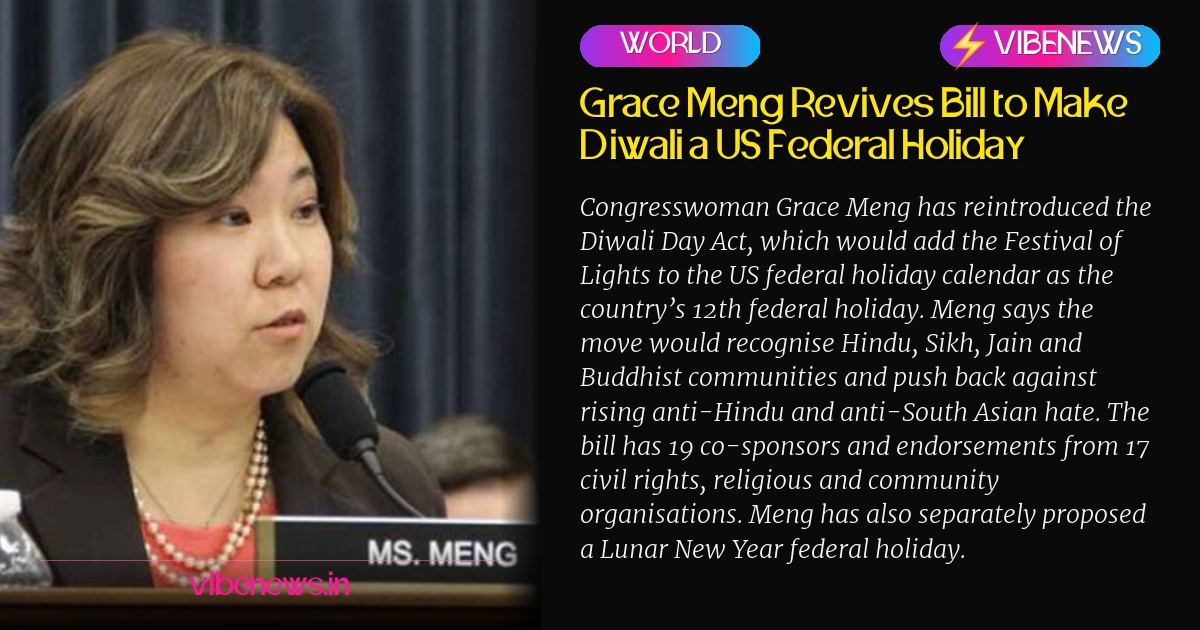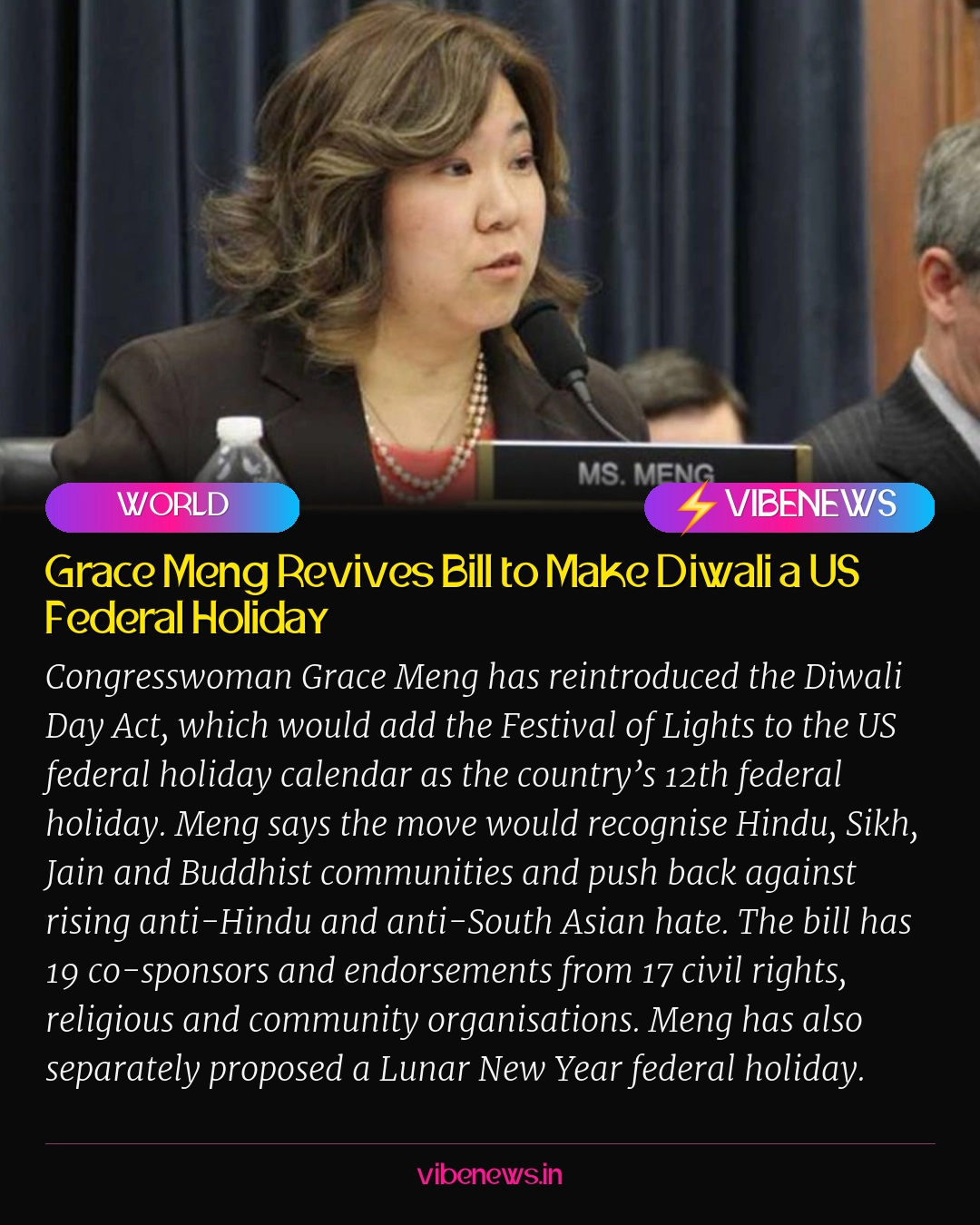
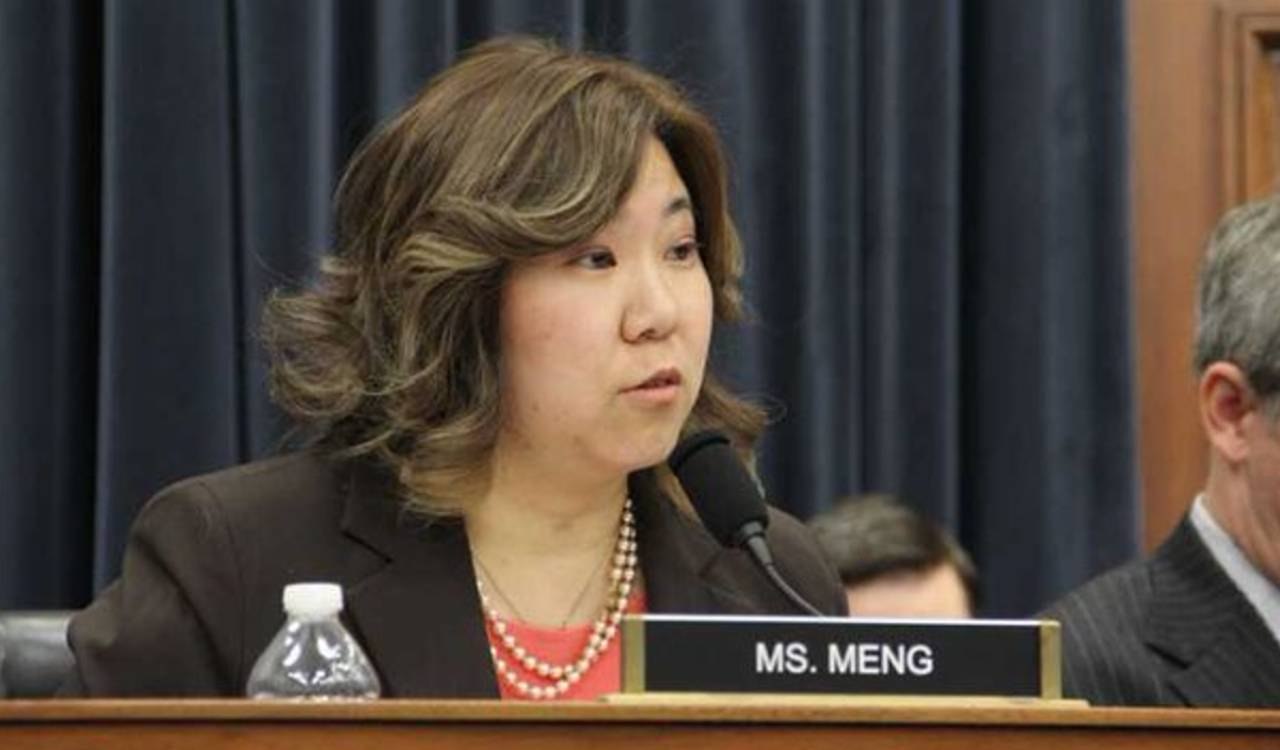
US Congresswoman Grace Meng has reintroduced legislation that would make Diwali a federal holiday in the United States. The Diwali Day Act would add the Festival of Lights to the federal holiday calendar, and Meng says it would make Diwali the country’s 12th federal holiday.
Meng announced the bill on November 10, 2026, and tied it directly to concerns about hate aimed at Hindu and South Asian Americans. She chairs the Congressional Asian Pacific American Caucus (CAPAC), and she framed the proposal as a way to affirm the place of the community’s diverse faiths in American life.
“Diwali represents the triumph of good over evil and knowledge over ignorance,” Meng said in her announcement. It is one of the most direct statements in the release, and it sets the tone for the case she is making.
The legislation would amend Section 6103(a) of Title 5 of the US Code by adding “Diwali Day” to the list of legal public holidays. That is the specific legal change at the center of the bill, and it is the reason the proposal has drawn attention beyond the Indian-American community.
Who is behind the push
The bill has 19 co-sponsors. Among them are Indian-American lawmakers Ami Bera, Ro Khanna, Raja Krishnamoorthi, Suhas Subramanyam and Shri Thanedar. Other co-sponsors include Nanette Barragán, Wesley Bell, André Carson, Judy Chu, Suzan DelBene, Josh Gottheimer, Timothy Kennedy, Stephen Lynch, Deborah Ross, Lateefah Simon, Tom Suozzi, Mark Takano, Rashida Tlaib and Bonnie Watson Coleman.
Meng’s office also listed endorsements from 17 civil rights, religious and community organisations. Those groups add weight to the proposal, though the source does not detail what each organisation has committed to beyond endorsing the bill.
The hate concerns behind the bill
CAPAC linked the proposal to a series of incidents that it said show growing religious intimidation. Its announcement pointed to vandalism at Hindu places of worship, an alleged mass-shooting plot targeting a Hindu gathering in Illinois, and the recent disruption of a Diwali celebration in Washington state.
The caucus said these incidents should be taken seriously and investigated by federal authorities. It also described anti-Hindu and anti-South Asian hate as rising. That claim is central to the argument, but the statement did not include statistical evidence to back up the trend. Readers should keep that gap in mind when weighing the case.
Meng made the argument in more personal terms as well. “At a time when anti-Hindu and anti-South Asian hate is on the rise, recognizing Diwali as a federal holiday sends a powerful message that Hindus, as well as Sikhs, Jains, and Buddhists, are valued members of our society,” she said.
Why supporters say a federal holiday matters
Meng said federal recognition would give families and communities more room to celebrate and mark their traditions. She pointed to her own district, saying, “Here in Queens, I see firsthand how meaningful Diwali is to so many families and communities.”
She also said the bill would help other Americans learn what the day means. “My Diwali Day Act will help educate Americans about the importance of this day, and I will continue working to create a more inclusive nation that honors the rich cultural traditions of its people,” Meng said.
A federal holiday would have a practical effect beyond symbolism. Federal holidays shape the official calendar that government offices follow, which is why proponents often treat them as a formal form of recognition. The source material does not describe how the holiday would be observed in practice, so those details remain open.
Will the bill pass?
The source does not say when the bill will receive a vote, whether leadership has signaled support, or how it would fare in Congress. Reintroduction signals that Meng and her co-sponsors intend to keep pushing, but it does not, on its own, change the odds.
The effort also sits alongside another proposal from Meng. She has separately proposed legislation to establish Lunar New Year as a federal holiday. Taken together, the two bills show a broader push to add holidays linked to Asian American communities to the federal calendar, though the source does not describe a formal link between them.
For now, the Diwali Day Act is a reintroduced bill with a clear legal target, a list of co-sponsors, and a stated reason rooted in incidents that CAPAC says demand federal attention. Whether it becomes law will depend on what happens next in Congress, and the source does not offer a timeline for that.
TL;DR
- US Congresswoman Grace Meng has reintroduced the Diwali Day Act to make Diwali a federal holiday.
- The bill would add Diwali to the federal holiday calendar as the country’s 12th federal holiday.
- The legislation has 19 co-sponsors, including several Indian-American lawmakers.
- Meng’s office listed endorsements from 17 civil rights, religious and community organisations.
- CAPAC cited vandalism, an alleged mass-shooting plot in Illinois and a disrupted Diwali event in Washington state.
- The caucus described anti-Hindu hate as rising but did not provide statistical evidence.