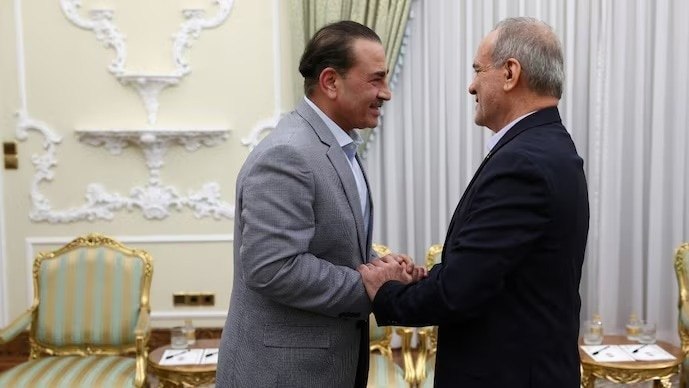
Iran will not permit any enriched uranium to be transported out of its borders, Secretary of the Supreme National Security Council Mohsen Rezaei informed visiting Pakistani military chief Asim Munir in Tehran on Tuesday. The definitive declaration arrived as international observers in the United States, Europe, and Asia watch with rising alarm, wary that an uncompromising deadlock between Tehran and Washington could violently spill beyond the region’s borders.
Defiance Over Strategic Nuclear Assets
Rezaei characterized the stockpile of enriched nuclear material as an uncompromisable sovereign asset that belongs exclusively to the nation. Addressing the Pakistani delegation, he stated unequivocally that the stockpile constitutes a major asset and national wealth for the Iranian people, shutting down any prospect of transferring fissile inventory overseas as part of potential diplomatic concessions. Tehran maintains that its nuclear activities do not pursue weaponization, despite Washington’s relentless push to force an absolute halt to the program.
The Iranian security leadership conditioned any prospective diplomatic breakthrough on sweeping structural concessions from the United States. Rezaei insisted that negotiations remain completely frozen until Washington executes verifiable trust-building measures, which he asserted must begin with the total fulfillment of Iranian terms. Central to these stipulations are lifting the sweeping embargo against Iranian oil exports, dismantling the operational maritime blockade imposed on Iranian ports, and ending hostile operations across all active fronts.
"Today, our nation does not trust America. It believes that if we enter the negotiations, they will attack us again."
Pakistani Mediation Confronts Hardened Realities
General Munir’s high-stakes mission to Tehran marked his fifth diplomatic intervention in Iran since June, highlighting Islamabad’s urgent effort to broker peace and prevent a disastrous regional implosion. Accompanied by Pakistan’s Interior Minister Mohsin Naqvi, the military chief conducted top-level discussions across the Iranian power structure, meeting directly with Iranian President Masoud Pezeshkian and Parliament Speaker Mohammad Bagher Ghalibaf.
The diplomatic outreach yielded little compromise from Iranian officials. Ghalibaf, who functions as one of Tehran’s principal strategic negotiators, reiterated Rezaei’s uncompromising stance regarding the lack of confidence in American promises. Speaking on the discussions, Ghalibaf pointed to specific breaches by Washington regarding an earlier ceasefire pact agreed upon in June. He reinforced that the United States must comprehensively satisfy Iran’s seven established demands, warning that external intimidation and military pressure will fail to alter Tehran’s strategic calculations.
An Eight-Month War of Attrition
The confrontation between Washington and Tehran has ground on for eight volatile months, having originated with joint American-Israeli military strikes targeting Iranian territory. While international mediators facilitated an initial ceasefire framework during June, the fragile arrangement collapsed within four weeks. Irreconcilable differences centered primarily on free navigation rights across the vital Strait of Hormuz alongside the unresolved parameters of Iran’s nuclear program—the exact concern cited by Donald Trump when initiating military campaigns.
Now locked in an entrenched stalemate, the standoff threatens international energy arteries and global commerce. The economic pressure campaign waged through unilateral sanctions has met hardened resistance rather than capitulation. Washington continues to press for the total dissolution of Iran’s nuclear capabilities, while Iranian authorities insist that negotiations cannot proceed under economic siege and physical containment.
Looming Threat of Military Escalation
The diplomatic freeze is compounded by the looming prospect of catastrophic military escalation. Reports from American officials indicate that Washington has weighed deploying its heaviest conventional ordnance—the massive GBU-43/B bomb, colloquially designated the "mother of all bombs"—should Trump direct a resumption of expanded military strikes against Iranian infrastructure.
With Iran refusing to transfer enriched material or entertain dialogue without pre-conditions, the peace architecture crafted over months of mediation appears near total collapse. Markets and capitals across Asia, Europe, and North America remain on heightened alert, as the fragile balance between stalled diplomacy and full-scale regional warfare grows increasingly tenuous.
TL;DR
- Iran refused to transfer enriched nuclear material abroad during high-level meetings in Tehran.
- Pakistan army chief Asim Munir led his fifth diplomatic mediation mission since June.
- Tehran demands an end to the US port blockade and full lifting of oil sanctions.
- Iranian officials cited Washington’s alleged violations of the June ceasefire framework.
- US officials reportedly considered deploying the massive non-nuclear bomb against Iran.