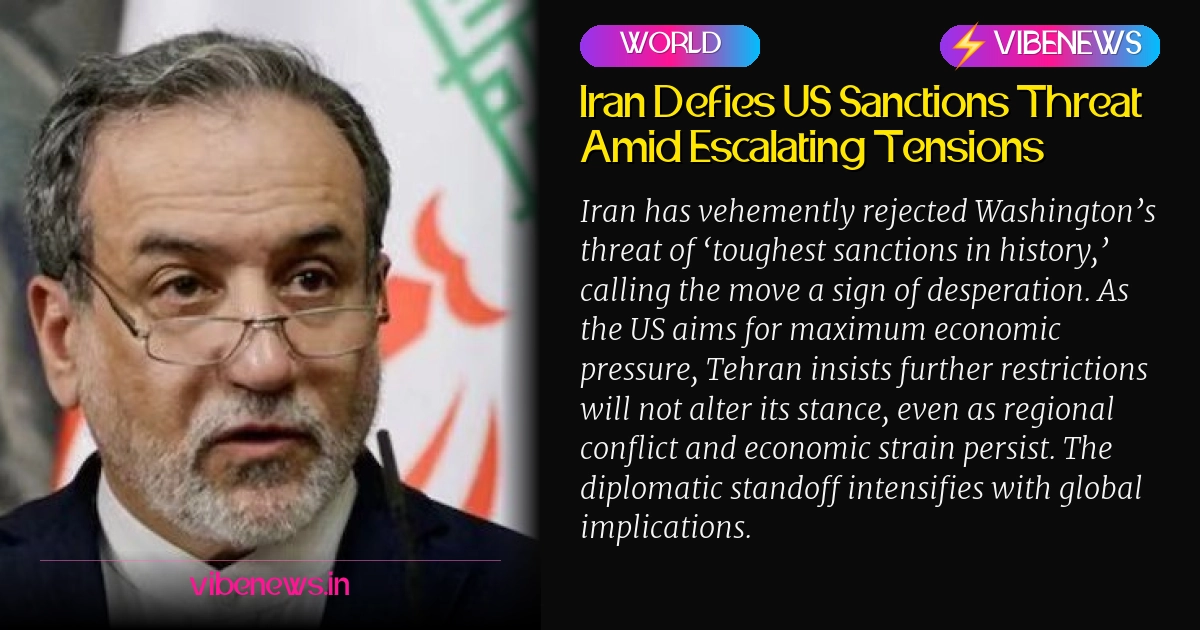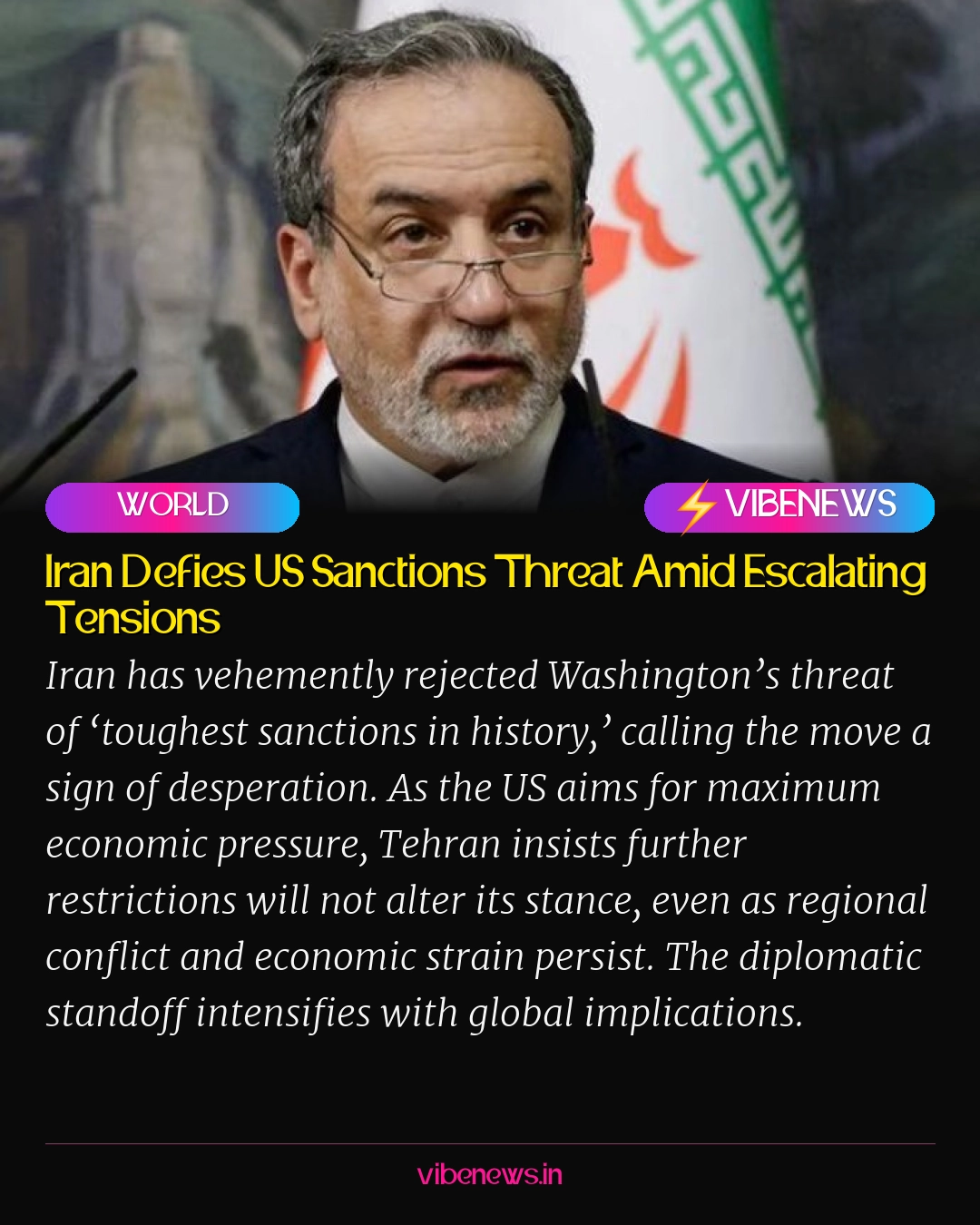
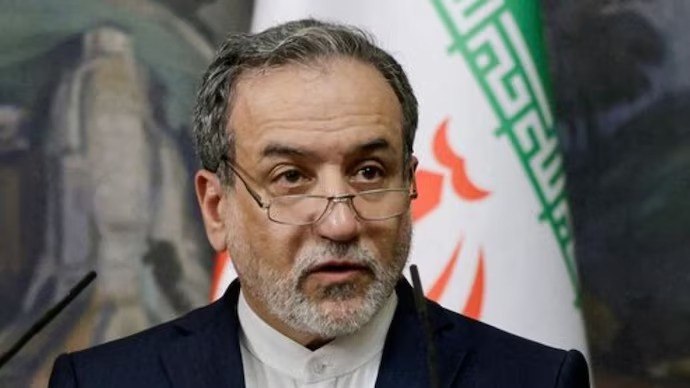
Tehran has vehemently dismissed Washington’s latest threat to impose what US Treasury Secretary Scott Bessent described as "the toughest sanctions in history," branding the move a clear sign of desperation. Foreign Minister Abbas Araqchi asserted that the United States’ renewed pressure campaign is destined to fail in compelling Iran to yield to its demands.
In a video statement released on Sunday, Araqchi articulated that Washington appears to be reverting to familiar strategies after its military endeavors against Iran failed to achieve their intended outcomes. He characterized these as "repetitive scenarios," suggesting that the shift from military operations back to economic pressure underscores a deep-seated desperation within US leadership. Araqchi urged Washington to adopt a new approach, advocating for engagement with Tehran on terms that uphold respect, justice, and honor.
Washington’s Economic Offensive
The Iranian rebuttal follows days after Bessent’s announcement of an unprecedented sanctions package targeting Tehran. The Treasury Secretary is slated to unveil the specifics of these measures, which are designed to exert "maximum economic pressure" on Iran. Bessent indicated that this strategy aims to mitigate the necessity for another significant US military intervention in the region.
Describing the approach as a "one-two punch," Bessent referenced an existing US naval blockade on Iran, which was initiated in April and briefly paused in mid-June. He confidently stated that this combined strategy would succeed in Iran, asserting that it was time for US allies and the international community to align with Washington’s stance. President Donald Trump had previously amplified these threats, warning of "Economic Warfare and Isolation on an unprecedented scale" against any nation or entity providing a "lifeline" to Iran.
Iran’s Enduring Resilience
Despite the escalating rhetoric, Iran has a long history of enduring international sanctions, consistently maintaining that further restrictions will not alter its fundamental position. The nation’s economy has been under severe strain for years due to international limitations and months of ongoing conflict. Iranian infrastructure has sustained repeated attacks, and thousands of lives have been lost since the latest US and Israeli military campaign against the Islamic Republic commenced on February 28.
The protracted conflict has also significantly disrupted global energy markets and shipping routes, particularly through the strategic Strait of Hormuz. Iran has effectively brought traffic in the waterway to a near standstill by refusing passage to unauthorized oil tankers. Bessent reiterated Washington’s preference for maximizing economic pressure over a return to large-scale kinetic action, despite the recent volatility in oil prices. Previous ceasefire agreements in April and June, intended to restore shipping and pave the way for peace, quickly collapsed.
International Repercussions and Diplomatic Efforts
The US pressure campaign extends to countries that maintain trade relations with Iran, with a particular focus on China. Analytics firm Kpler reported that China purchased over 80 percent of Iran’s shipped oil in 2025, making it the largest buyer. Any punitive measures against Chinese entities could therefore have significant ramifications for broader US-China relations. Bessent has called for Beijing’s cooperation, highlighting China’s vulnerability to regional energy disruptions.
However, China has firmly rejected the efficacy of additional sanctions, with its embassy in Washington stating that "Sanctions and pressure do not help resolve the problem." Beijing has urged all parties to adopt responsible actions and pursue political and diplomatic solutions. This stance underscores the complex international dynamics at play, where major global powers hold differing views on resolving the Iranian issue.
Amidst this diplomatic standoff, signals of potential de-escalation and regional cooperation have emerged. Pakistan’s army chief, Field Marshal Asim Munir, is scheduled to visit Tehran to discuss regional peace and security. Pakistan has actively engaged in mediation efforts as the conflict continues to destabilize the region and impact energy supplies. Iranian officials, while maintaining a defiant posture, have also indicated an openness to diplomacy.
Parliament Speaker Mohammad Baqer Qalibaf recently revealed that Tehran has received "numerous messages" from neighboring countries regarding potential new regional security arrangements and economic cooperation. Qalibaf, without naming specific nations, accused Washington of jeopardizing its regional allies in support of Israel. He emphasized Iran’s preference for an independent, "homegrown" regional security structure, believing it could foster lasting peace and stability in the volatile Middle East.
Editorial Context
The escalating rhetoric and actions between Iran and the United States represent a critical juncture in global geopolitics, with profound long-term implications. Washington’s intensified "maximum pressure" campaign, coupled with Iran’s steadfast defiance, risks further entrenching a cycle of confrontation that has already destabilized the Middle East. The economic measures, while intended to avoid direct military conflict, carry the potential for severe humanitarian consequences within Iran and ripple effects across global energy markets.
The involvement of major powers like China, which openly opposes sanctions and advocates for diplomatic solutions, highlights a growing divergence in international approaches to complex geopolitical challenges. This divergence could reshape alliances and trade relationships, potentially leading to a more fragmented global order. Furthermore, the conflict’s impact on the Strait of Hormuz, a vital chokepoint for global oil supplies, underscores the fragility of international trade routes and the interconnectedness of regional stability with global economic health.
In the long run, the success or failure of this pressure campaign will not only determine the future trajectory of US-Iran relations but also set a precedent for how international disputes are resolved. It will test the limits of economic coercion as a foreign policy tool and the resilience of nations under sustained pressure. The emerging regional diplomatic efforts, particularly from countries like Pakistan and Iran’s neighbors, offer a glimmer of hope for de-escalation and the potential for new, independent security architectures in the Middle East, moving away from external interventions towards homegrown solutions for lasting peace.
TL;DR
- Iran has vehemently rejected the US threat of "toughest sanctions in history," labeling it a sign of desperation.
- The US aims to apply "maximum economic pressure" on Iran, hoping to avert large-scale military action.
- Despite severe economic strain and ongoing conflict, Iran maintains that further sanctions will not alter its stance.
- The protracted conflict has significantly disrupted global energy markets and shipping, particularly through the Strait of Hormuz.
- China, Iran’s largest oil buyer, opposes new sanctions and advocates for political and diplomatic resolutions.
- Regional diplomatic efforts, including Pakistan’s mediation and Iran’s openness to new security arrangements, are underway.