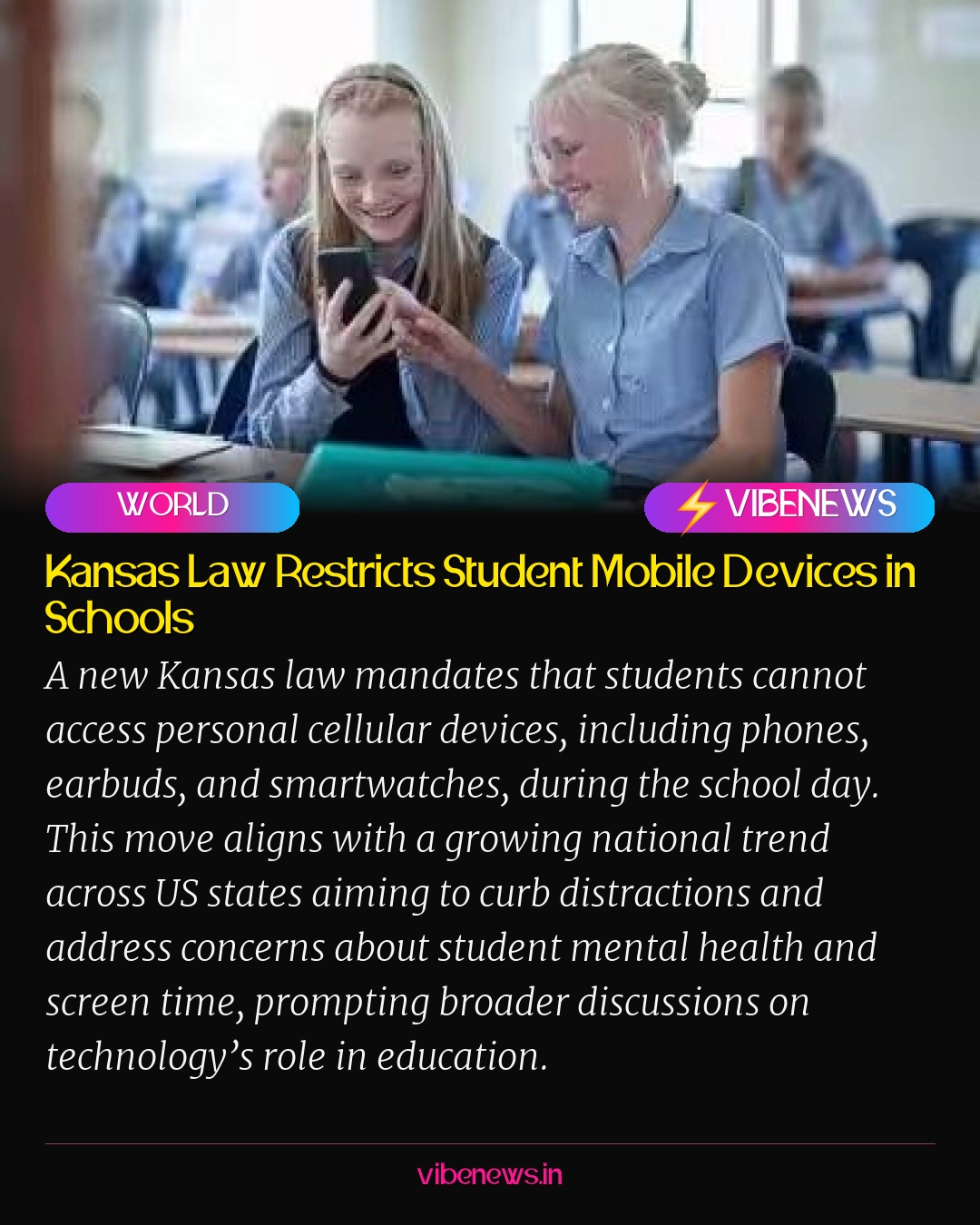

Kansas Leads with Comprehensive Device Ban
When students across Kansas return to classrooms later this month, they will encounter a significant shift in school policy. A new state law will strictly prohibit the access of personal cellular communication devices, including smartphones, earbuds, and smartwatches, throughout the entire school day. This legislative action reflects a burgeoning national movement to address the pervasive influence of technology in educational environments.
The mandate extends beyond mere classroom hours, encompassing the full bell-to-bell duration. This comprehensive approach aims to create a learning atmosphere free from digital distractions, fostering improved focus and engagement among students. The law’s implementation is a direct response to growing concerns from educators and parents alike regarding the impact of constant connectivity on student well-being and academic performance.
A National Trend Towards Digital Disconnection
Kansas is not an isolated case in its efforts to regulate student device use. At least 35 states, along with the District of Columbia, have already implemented some form of smartphone restriction in schools. Among these, 24 states enforce a complete bell-to-bell ban, meaning devices are not permitted from the moment school begins until dismissal. States like Alabama, California, Texas, and New York have adopted such stringent measures.
Other states, including Florida, Georgia, and Hawaii, apply the bell-to-bell ban specifically for younger students in grades K-8, recognizing the particular developmental vulnerabilities of this age group. A further 10 states, such as Indiana, Utah, and Nevada, restrict smartphone use only during instructional time, allowing for limited access during breaks or lunch periods. This varied landscape underscores the ongoing debate about the optimal balance between student access to technology and the need for focused learning environments.
The Rationale Behind Device Restrictions
The impetus for these bans stems from multiple concerns. Educators frequently report that personal devices are a significant source of distraction, diverting students’ attention from lessons and peer interactions. Beyond academic performance, there is substantial data and research indicating that excessive screen time and constant digital engagement can negatively impact the mental and developmental health of young users.
Parents, initially divided on the issue due to safety concerns, are increasingly supporting these bans. The perceived need for students to have phones for emergencies is being weighed against the documented detriments to their learning and psychological well-being. Advocacy groups, often formed by concerned parents, are playing a crucial role in pushing for stricter regulations and greater oversight of technology in schools.
Beyond Smartphones: Scrutiny on Classroom Devices
The debate is not limited to personal smartphones. There is also a growing apprehension about the use of school-issued technology, such as iPads, and the amount of screen time children are exposed to through these devices. Parents are questioning the appropriateness of digital tools for certain activities and age groups, particularly when they are used for non-instructional purposes.
In the Shawnee Mission School District, for instance, parent advocates like Gretchen Shanahan expressed dismay over elementary-aged children consistently being given iPads during indoor recess. Shanahan highlighted concerns about developmentally inappropriate content accessible through pre-installed news apps, citing instances where her children encountered stories unsuitable for their age. This incident underscores the need for careful curation and monitoring of content on school-issued devices.
Shawnee Mission District Responds to Parental Concerns
Responding to the rising tide of parental concerns, the Shawnee Mission School District is implementing significant changes. Superintendent Dr. Michael Schumacher acknowledged that the district had perhaps ‘lost track’ of the issues surrounding devices going home with students. Consequently, elementary-aged students will no longer take school-issued iPads home unless for a specific, assigned task.
Furthermore, iPads are now prohibited for use during indoor recess or reward time, ensuring their application is strictly instructional. The district is also actively developing new policies around instructional technology and artificial intelligence, inviting community participation in this crucial policy development process. This collaborative approach aims to align technology use with educational goals and parental expectations.
Editorial Context: Shaping Future Learning Environments
The widespread adoption of device bans and stricter technology policies in schools, exemplified by Kansas’s new law, marks a pivotal moment in the evolution of modern education. This trend signifies a collective re-evaluation of the role technology plays in student development and academic success. For decades, there has been a push for digital integration, often with the promise of enhanced learning and preparation for a tech-driven future. However, the pendulum now appears to be swinging towards a more cautious, regulated approach.
Over the long term, these policies could reshape classroom dynamics, potentially leading to a resurgence of traditional teaching methods that emphasize direct instruction, collaborative group work, and hands-on activities, rather than individual screen-based learning. The focus on reducing distractions and improving mental health could foster environments where students develop stronger interpersonal skills and a deeper capacity for sustained attention. This shift also places a greater onus on schools to provide engaging, screen-free alternatives for recreation and learning, challenging them to innovate beyond digital solutions.
Moreover, the ongoing dialogue about appropriate screen time and content for different age groups will likely influence curriculum development and teacher training, ensuring that technology, when used, serves a clear pedagogical purpose. The involvement of parent advocacy groups highlights the critical role of community engagement in shaping educational policy, ensuring that decisions reflect broader societal values regarding child development and well-being. Ultimately, these measures are not just about banning phones; they represent a fundamental rethinking of how best to prepare students for a complex world, balancing the undeniable benefits of technology with the imperative to protect their cognitive and emotional health.
TL;DR
- Kansas has enacted a new law banning student access to personal phones, earbuds, and smartwatches throughout the entire school day.
- This move aligns with a national trend, with 35 US states and D.C. having some form of smartphone restriction, and 24 states enforcing bell-to-bell bans.
- The primary reasons for these bans include reducing classroom distractions, addressing concerns about student mental health, and mitigating negative developmental impacts of excessive screen time.
- Parent advocacy groups, such as Schools Beyond Screens, are actively pushing for stricter regulations on all digital media in schools, including school-issued devices.
- The Shawnee Mission School District has responded by restricting elementary students from taking school-issued iPads home and prohibiting their use during recess or reward times.
- The district is also developing new policies on instructional technology and artificial intelligence, inviting community participation.