RSS Chief Redefines Hindutva on Global Stage
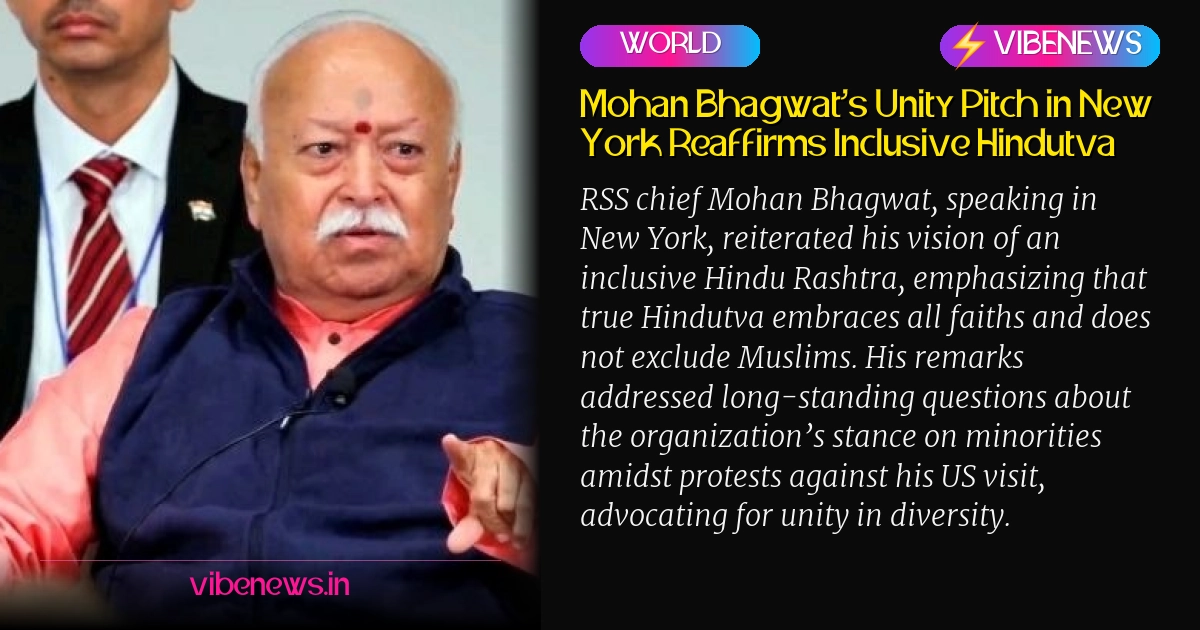
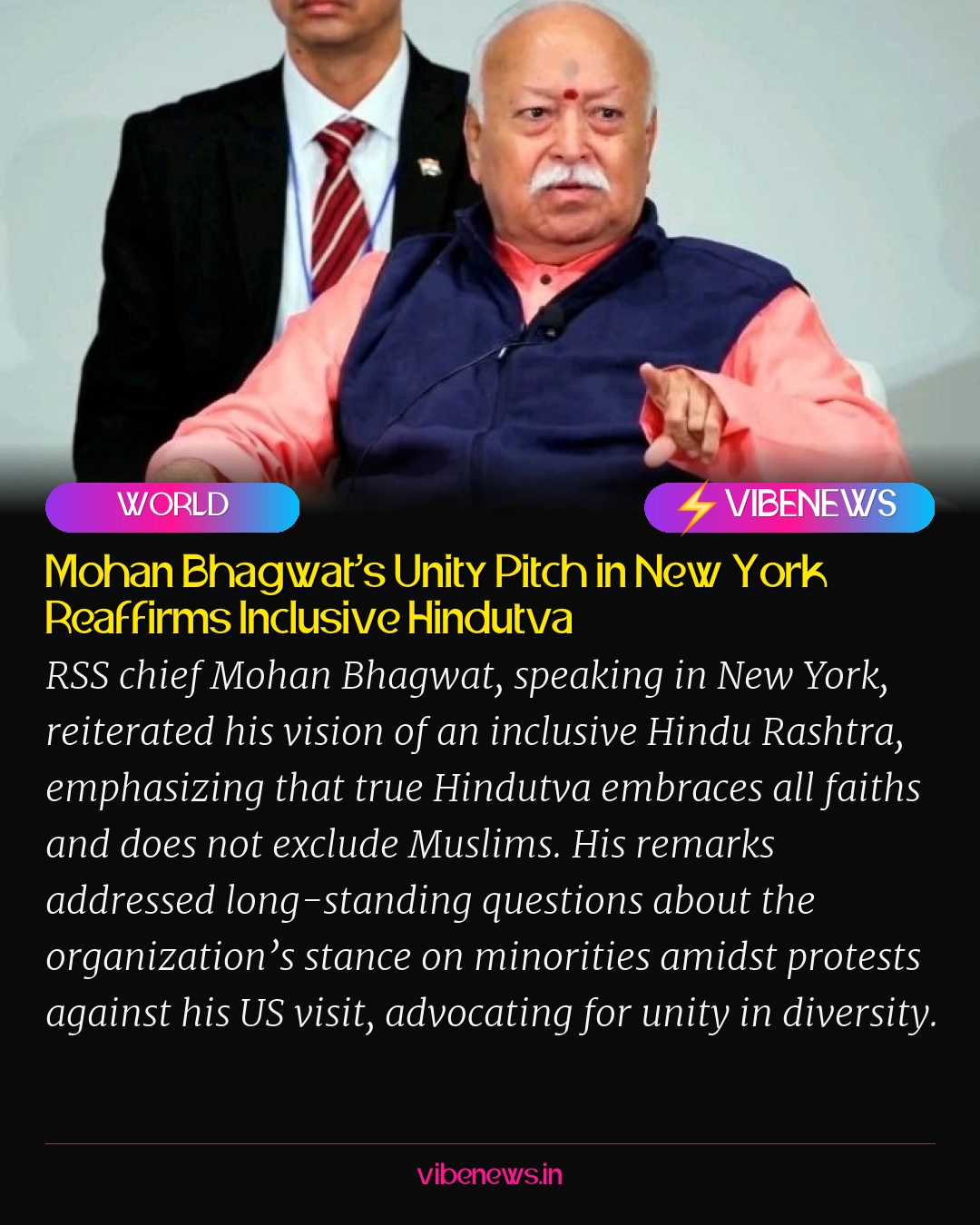
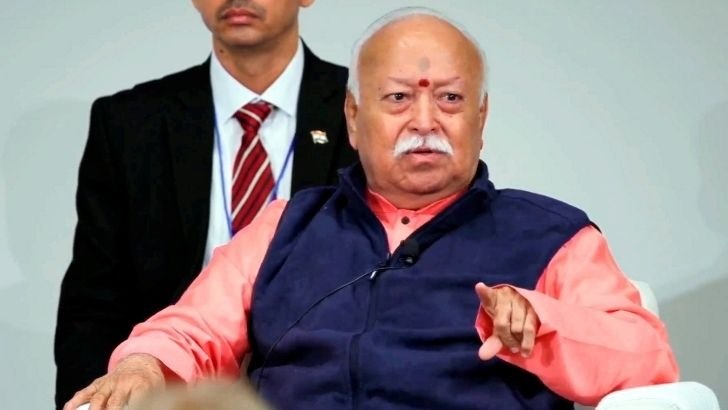
Rashtriya Swayamsevak Sangh (RSS) chief Mohan Bhagwat recently delivered a significant address in New York, advocating for unity in diversity and presenting a nuanced view of Hindutva. Speaking at the ‘One World, One Humanity’ event, Bhagwat asserted that India’s inherent strength lies in its respect for various faiths and ways of life.
His core message centered on the idea that the concept of a Hindu Rashtra, or Hindu nation, inherently includes Muslims, challenging prevailing perceptions and past criticisms of the organization.
The Inclusive Vision of Hindutva
Bhagwat directly addressed a question posed to him in 2018 by members of the Muslim community regarding whether the RSS’s vision of a Hindu Rashtra implied the expulsion of Muslims from India. His unequivocal response then, and reiterated now, was: "No, that is not Hindutva."
He elaborated, stating that if any Hindu harbored the thought of a Bharat devoid of Muslims, that individual could not truly be considered a Hindu. Bhagwat emphasized that a fundamental tenet of identifying as a Hindu is the belief that all spiritual paths ultimately converge towards the same divine truth.
Philosophical Underpinnings of Unity
The RSS chief delved into India’s traditional philosophical outlook, which, he noted, acknowledges differences between religions while simultaneously underscoring the fundamental unity of humanity. He articulated that while religions might manifest through distinct rituals and disciplines, their ultimate purpose remains the pursuit of truth.
Bhagwat used an analogy of pointing towards a light, where one first sees the finger before the light itself. He suggested that focusing solely on rituals (the finger) without seeking the underlying truth (the light) misses the essence of faith. This perspective aligns with the Advaita philosophy of non-duality, which posits that apparent differences are ultimately illusory and that an underlying oneness pervades existence.
India’s Historical Embrace of Pluralism
Bhagwat highlighted India’s long-standing history of providing refuge and shelter to people of diverse faiths. Despite numerous foreign invasions that led to the loss of many aspects of its heritage, he stressed that India’s tradition of viewing the world as ‘one family’ (Vasudhaiva Kutumbakam) has endured.
He maintained that people of all denominations have traditionally coexisted peacefully in India precisely because the nation has historically extended hospitality to everyone. This historical narrative forms a crucial backdrop to his contemporary call for unity.
The RSS’s Evolving Stance and Dialogue
The RSS chief’s remarks in New York were not entirely new; they echoed positions he articulated in 2018 in New Delhi. During that address, Bhagwat had explicitly stated that a Hindu Rashtra could not exist without Muslims and that any ideology seeking to exclude Muslims or Christians could not genuinely represent Hindutva.
He had also acknowledged that older RSS texts, which might have described religious minorities as internal threats, were no longer applicable, signaling an evolution in the organization’s thinking. Following his 2018 address, the RSS initiated dialogues with members of the Muslim and Christian communities, indicating a conscious effort towards greater engagement and understanding.
Challenges to Unity and the Role of Politics
While advocating for unity, Bhagwat also pointed to contemporary challenges, particularly in the realm of politics. He observed that politics has increasingly become a game driven by self-interest, where the focus on ‘me’ and ‘mine’ obstructs the discovery of collective solutions.
He suggested that for the constitutional vision of unity to be fully realized on the ground, change must originate within society, prioritizing collective well-being over narrow personal and political agendas. This critique underscores a perceived disconnect between national ideals and practical governance.
Protests and Counter-Narratives in the US
Bhagwat’s visit to the United States, part of the RSS’s centenary-year global outreach program, was met with protests from various interfaith and civil rights groups. Organizations like ‘Hindus for Human Rights’ opposed his appearance at the Universal Oneness Celebration, urging Madison Square Garden to cancel the event.
Critics argued that Bhagwat’s event, despite its theme of “Universal Oneness,” served to “spiritually sanitise” the RSS’s historical narrative and expand its influence in the United States. New York City Mayor Zohran Mamdani also expressed his disapproval of the program, though acknowledging the city’s limited authority over private events. The event’s organizer, the AHEAD Forum, countered that its purpose was to promote the message of “the world is one family” and encourage mutual respect and harmony.
Editorial Context
Mohan Bhagwat’s consistent articulation of an inclusive Hindutva, particularly on an international platform like New York, carries significant long-term implications for India’s socio-political landscape and its global image. As the head of the RSS, the ideological parent of India’s ruling Bharatiya Janata Party, his statements are closely watched and often shape the national discourse on identity, nationalism, and minority rights.
This reiteration of an inclusive stance, especially in the face of domestic and international criticism regarding the treatment of minorities in India, represents an attempt to redefine Hindutva as a broad, accommodating cultural nationalism rather than an exclusionary religious ideology. It signals a strategic effort to engage with and assuage concerns from minority communities and the international community, while also providing an ideological framework for supporters.
The ongoing dialogue initiated by the RSS with Muslim and Christian leaders, coupled with Bhagwat’s public pronouncements, suggests a calculated evolution in the organization’s approach. This development is crucial for understanding the future trajectory of India’s secular fabric and the evolving relationship between its majority and minority populations. It underscores the persistent tension between historical narratives, contemporary political realities, and the aspirational ideals of unity in diversity that Bhagwat champions.
TL;DR
- Mohan Bhagwat stated in New York that true Hindutva is inclusive and does not exclude Muslims from the idea of a Hindu Rashtra.
- He emphasized India’s strength lies in unity in diversity, where all religious paths are believed to lead to the same divinity.
- Bhagwat referenced his 2018 statements, affirming that a Hindu cannot wish for a Muslim-free India.
- He linked his message to India’s traditional philosophy, including Advaita, and the constitutional vision of unity.
- The RSS chief acknowledged the organization’s evolving stance, moving past older texts that described minorities as internal threats, and highlighted ongoing dialogues with Muslim and Christian communities.
- His visit to the US, part of RSS’s centenary outreach, faced protests from interfaith and civil rights groups, who criticized the event’s purpose.