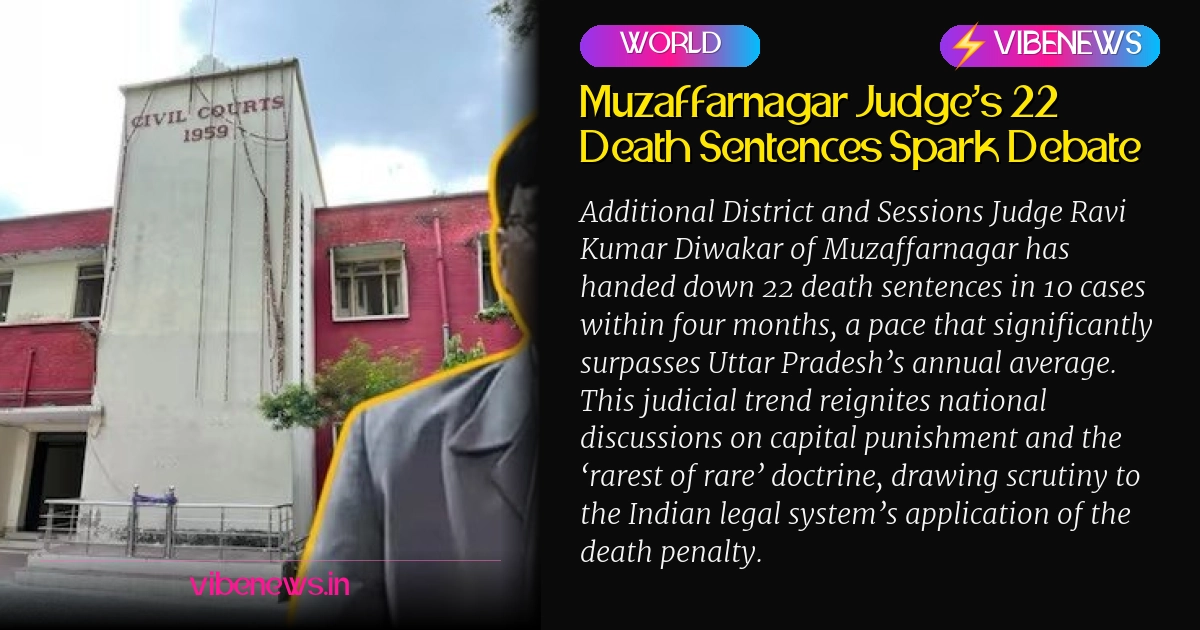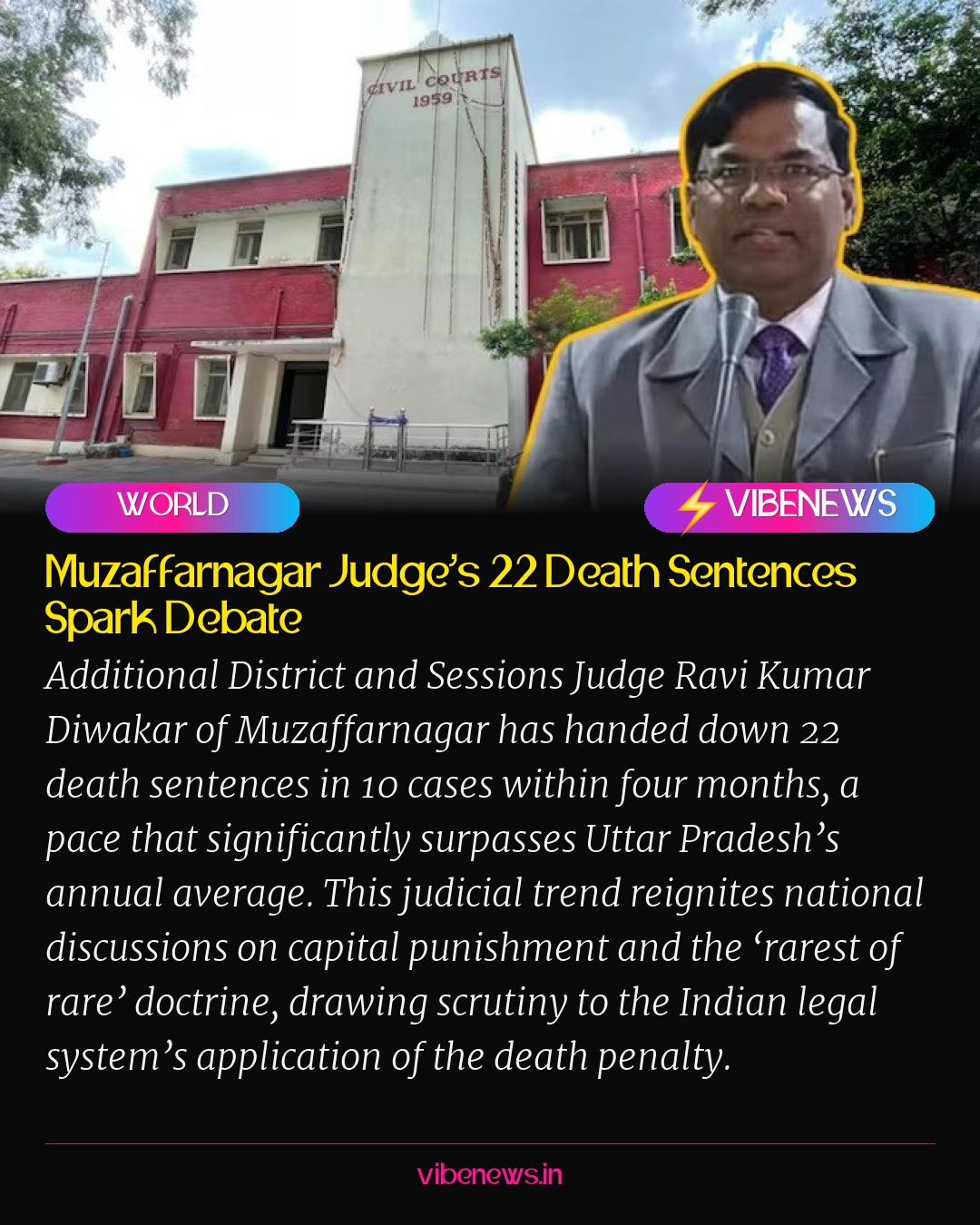
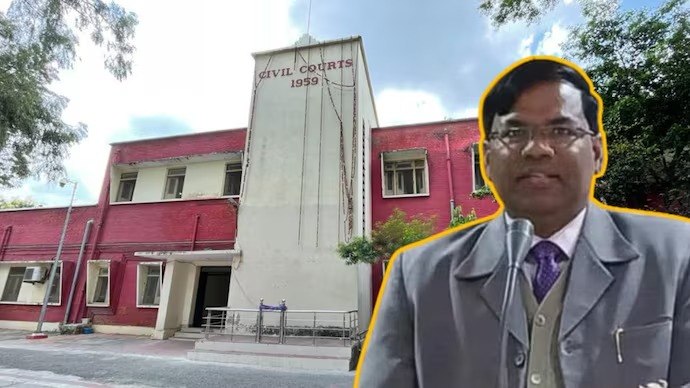
In an unprecedented judicial development, Additional District and Sessions Judge Ravi Kumar Diwakar, presiding over Fast Track Court No. 3 in Muzaffarnagar, Uttar Pradesh, has handed down 22 death sentences across 10 distinct cases within a mere four-month period. This remarkable pace, observed between April and August, has thrust the judge and the broader application of capital punishment in India into the national spotlight.
The frequency of these rulings stands in stark contrast to the state’s judicial trends. According to the ‘Death Penalty in India: Annual Statistics Report 2025’ by the Square Circle Clinic at NALSAR University of Law, Hyderabad, Uttar Pradesh’s trial courts collectively imposed 28 death sentences in 20 cases throughout the entirety of 2025. Judge Diwakar’s output in a fraction of that time has therefore prompted significant discussion among legal experts and the public alike.
The Judicial Trend in Muzaffarnagar
Judge Diwakar, who assumed his current posting in November 2025, has delivered these severe verdicts in a range of heinous crimes. Among the notable cases are the murders of a lawyer, a home guard, a farmer, and a highway robbery-murder incident. For instance, three individuals received the death penalty on April 6 for the 2019 murder of advocate Sameer Saifi, who was abducted and killed over a financial dispute.
Further sentences include four death penalties on April 28 in another murder case, two on June 20 for the murder of farmer Rajendra Saini, and one on July 2 for the killing of Home Guard personnel Ratiram while on duty. The court explicitly categorized these cases as falling within the "rarest of rare" doctrine, a critical legal threshold for capital punishment in India. Four more individuals were sentenced to death on July 17 in a 2011 highway robbery-murder case, with the remaining five sentences distributed across August.
Revisiting the ‘Rarest of Rare’ Doctrine
The rapid succession of these death sentences has inevitably revived intense debate surrounding the ‘rarest of rare’ doctrine. This legal principle, established by the Supreme Court of India, mandates that the death penalty should only be reserved for the most exceptional cases where the alternative of life imprisonment is demonstrably inadequate. Critics and proponents of capital punishment are now closely examining whether the circumstances of these 10 cases truly meet this stringent criterion.
The NALSAR report further underscores the broader national context, noting 128 death sentences across India in 2025, with Uttar Pradesh leading the states. However, the report also highlights a significant disparity between the number of death sentences imposed by trial courts and those ultimately confirmed by higher courts, suggesting a rigorous appellate review process often leads to commutation or acquittal.
Judge Diwakar’s Public Profile and Past Controversies
Born in July 1980, Ravi Kumar Diwakar began his judicial career as a civil judge in 2009, serving in various districts across Uttar Pradesh, including Sultanpur, Budaun, Varanasi, and Bareilly. His judicial career has not been without its moments of national attention and controversy, predating his current posting in Muzaffarnagar.
He first gained widespread recognition in 2022 while serving as a civil judge in Varanasi. It was then that he issued an order for a videographic survey of the Gyanvapi mosque complex, a decision that propelled the case into one of the country’s most closely watched religious disputes. Following this order, Judge Diwakar reported receiving malicious calls and death threats from international numbers, leading to heightened concerns about his security.
More recently, in March 2024, Judge Diwakar again drew public scrutiny for remarks made in an order related to the 2010 Bareilly riots. In that ruling, he referred to Uttar Pradesh Chief Minister Yogi Adityanath as an example of Plato’s "philosopher king." These specific remarks were subsequently expunged by the Allahabad High Court, indicating a degree of judicial oversight on his pronouncements.
The Path to Finality: Appellate Review
It is crucial to understand that a death sentence pronounced by a trial court in India is not final. Under Indian law, every death sentence imposed by a sessions court must be submitted to the High Court for confirmation. This process involves a thorough review of the trial proceedings, evidence, and legal arguments to ensure that justice has been served and that the ‘rarest of rare’ doctrine has been correctly applied.
Should the High Court confirm the sentence, further appeals can be made to the Supreme Court of India. This multi-tiered appellate system serves as a vital safeguard, ensuring that capital punishment, with its irreversible consequences, is only carried out after exhaustive legal scrutiny and confirmation at the highest judicial levels.
Editorial Context: Long-Term Implications
The actions of Judge Ravi Kumar Diwakar in Muzaffarnagar carry significant long-term implications for India’s judicial landscape and the ongoing debate surrounding capital punishment. The sheer volume of death sentences from a single judge in such a short span will undoubtedly intensify scrutiny on the functioning of fast-track courts and their adherence to established legal precedents, particularly the ‘rarest of rare’ principle.
This development will likely fuel calls for a deeper examination of judicial training, the psychological impact on judges presiding over capital cases, and the consistency of sentencing across different courts and regions. Furthermore, it provides fresh data and impetus for human rights organizations and legal scholars who advocate for the abolition or stricter regulation of the death penalty, prompting renewed discussions on its efficacy as a deterrent and its ethical dimensions within a democratic framework. The appellate courts’ eventual decisions on these 22 sentences will be closely watched, shaping future discourse on capital punishment in India.
TL;DR
- Additional District and Sessions Judge Ravi Kumar Diwakar of Muzaffarnagar sentenced 22 people to death in 10 cases within a four-month period (April-August).
- This judicial pace significantly surpasses Uttar Pradesh’s annual average of 28 death sentences in 20 cases for the entire year 2025, as per the NALSAR report.
- The rulings have reignited national debate on India’s ‘rarest of rare’ doctrine, which reserves capital punishment for the most exceptional cases.
- Judge Diwakar previously gained national attention in 2022 for ordering a videographic survey of the Gyanvapi mosque complex and for controversial remarks in 2024 that were later expunged by the Allahabad High Court.
- Under Indian law, all death sentences pronounced by trial courts require mandatory confirmation by the High Court, followed by potential appeals to the Supreme Court.
- The ‘Death Penalty in India: Annual Statistics Report 2025’ by NALSAR University highlighted 128 death sentences nationally in 2025, noting a significant gap between trial court impositions and higher court confirmations.