Himalayan Catastrophe Claims Hundreds of Lives
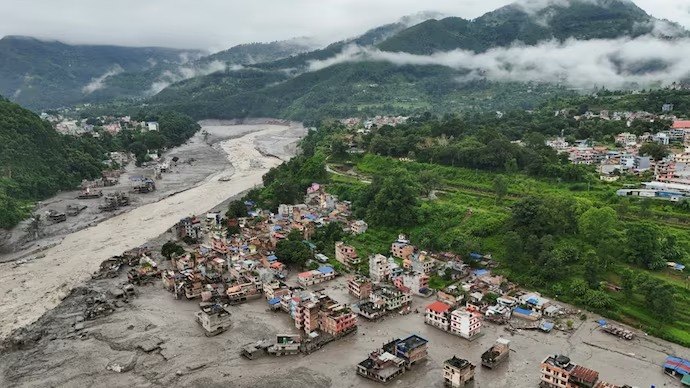
A catastrophic wave of flash floods has swept through Nepal and parts of Tibet, resulting in the deaths of 332 people and leaving nearly 1,500 individuals unaccounted for. Among the missing are at least 800 foreigners, including 288 Indian nationals, according to Nepal’s Foreign Minister Shishir Khanal. The disaster has caused widespread destruction, obliterating settlements, severing critical infrastructure, and severely damaging hydropower projects across the rugged Himalayan terrain.
The Ministry of External Affairs (MEA) in India confirmed that 21 Indian nationals, all from Tamil Nadu, have been successfully rescued and are being repatriated. However, the fate of 288 others remains uncertain. This group includes 73 individuals working on a power project in Trishuli, one of the hardest-hit areas in Nepal, underscoring the broad impact on various sectors.
The Unfolding Crisis for Indian Nationals
Beyond those directly missing, approximately 200 Indian nationals who are safe are actively seeking assistance for evacuation. This includes about 95 individuals stranded in Darchen, a small village in Tibet, who are attempting to reach Hilsa to cross into Nepal. Others are located in Jilong City, Zutulphuk, and various other transit points, highlighting the complex logistical challenges of rescue and repatriation in the remote border regions.
The Indian Embassy in Kathmandu swiftly issued emergency contact numbers for affected nationals, while the Embassy in Beijing also established a WhatsApp helpline. These efforts are part of a broader, coordinated response to ensure the safety and well-being of Indian citizens caught in the disaster.
Devastation Across Himalayan Valleys
The flash floods struck three districts of Nepal—Rasuwa, Dhading, and Nuwakot—following what is believed to be an avalanche or the collapse of a lower glacier section near a Himalayan river. This event blocked the flow of the Lhende tributary of the Bhote Koshi river, unleashing a torrent that first hit Timure near Rasuwagadhi, along Nepal’s border with Tibet, before cascading downstream.
The Gyirong Port, a crucial land border crossing and trade post between Tibet and Nepal, was among the initial areas to bear the brunt of the swelling waters. Videos circulating on social media depict massive torrents of water and debris engulfing the border area, washing away homes, roads, and vital power infrastructure. The Nepal Police have indicated that the death toll is likely to rise as search and recovery operations continue in the affected regions.
International Response and Relief Operations
India has rapidly escalated its humanitarian assistance to Nepal. External Affairs Minister S Jaishankar confirmed the dispatch of a second flight carrying 37.5 tonnes of humanitarian aid, including medicines and food packets. This followed an initial military relief flight by an Indian Air Force C-130J aircraft, which delivered 10 tonnes of emergency supplies such as temporary shelters, blankets, hygiene kits, and solar lamps.
On the ground, more than 5,000 army and police personnel from Nepal have joined the extensive rescue operations. These teams successfully retrieved 125 people, including 20 foreigners, in a single day. Helicopters are being utilized to drop essential supplies like tents, food, and other emergency provisions, many of which are provided by India, into the worst-hit and most inaccessible districts.
Nepal Prime Minister Balendra Shah undertook an on-site assessment of the damage in flood-hit Nuwakot, meeting with local administrators and security officials to coordinate immediate relief efforts, restoration work, and the reopening of blocked infrastructure. Meanwhile, Bihar, an Indian state bordering Nepal, remains on high alert, with authorities closely monitoring river levels and the flood situation, particularly concerning the Valmikinagar Barrage.
Editorial Context
The recent flash floods in Nepal and Tibet underscore the profound vulnerability of the Himalayan region to natural disasters, a susceptibility exacerbated by climate change. The suspected role of an avalanche or glacial collapse highlights the increasing instability of these fragile ecosystems, posing long-term threats to communities and critical infrastructure. This event serves as a stark reminder of the urgent need for robust early warning systems and resilient infrastructure development in mountainous terrains.
The swift and comprehensive humanitarian response from India reflects the deep-seated bilateral ties and the critical role of cross-border cooperation in disaster management. Such crises often test the limits of regional solidarity and logistical capabilities. The extensive damage to hydropower projects, a cornerstone of Nepal’s energy sector and economic development, will have lasting repercussions on the nation’s recovery and growth trajectory. The long-term challenge will involve not only rebuilding but also implementing sustainable, climate-resilient strategies to mitigate future risks and protect the lives and livelihoods of millions in this geologically active and climatically sensitive region.
TL;DR
- Flash floods in Nepal and Tibet have resulted in 332 confirmed deaths and nearly 1,500 people missing, including 288 Indian nationals.
- 21 Indian nationals from Tamil Nadu have been rescued and are being repatriated, while 73 Indians working on a power project in Trishuli remain out of contact.
- The disaster is believed to have been triggered by an avalanche or glacier collapse, blocking a tributary of the Bhote Koshi river.
- Extensive damage to roads, bridges, and hydropower projects has been reported across Nepal’s Rasuwa, Dhading, and Nuwakot districts.
- India has launched significant humanitarian aid, deploying multiple relief flights with emergency supplies and establishing helplines for affected citizens.
- Nepal’s Prime Minister has visited affected areas, and over 5,000 personnel are engaged in ongoing search and rescue operations.