A Race Against Time in Trishuli Valley
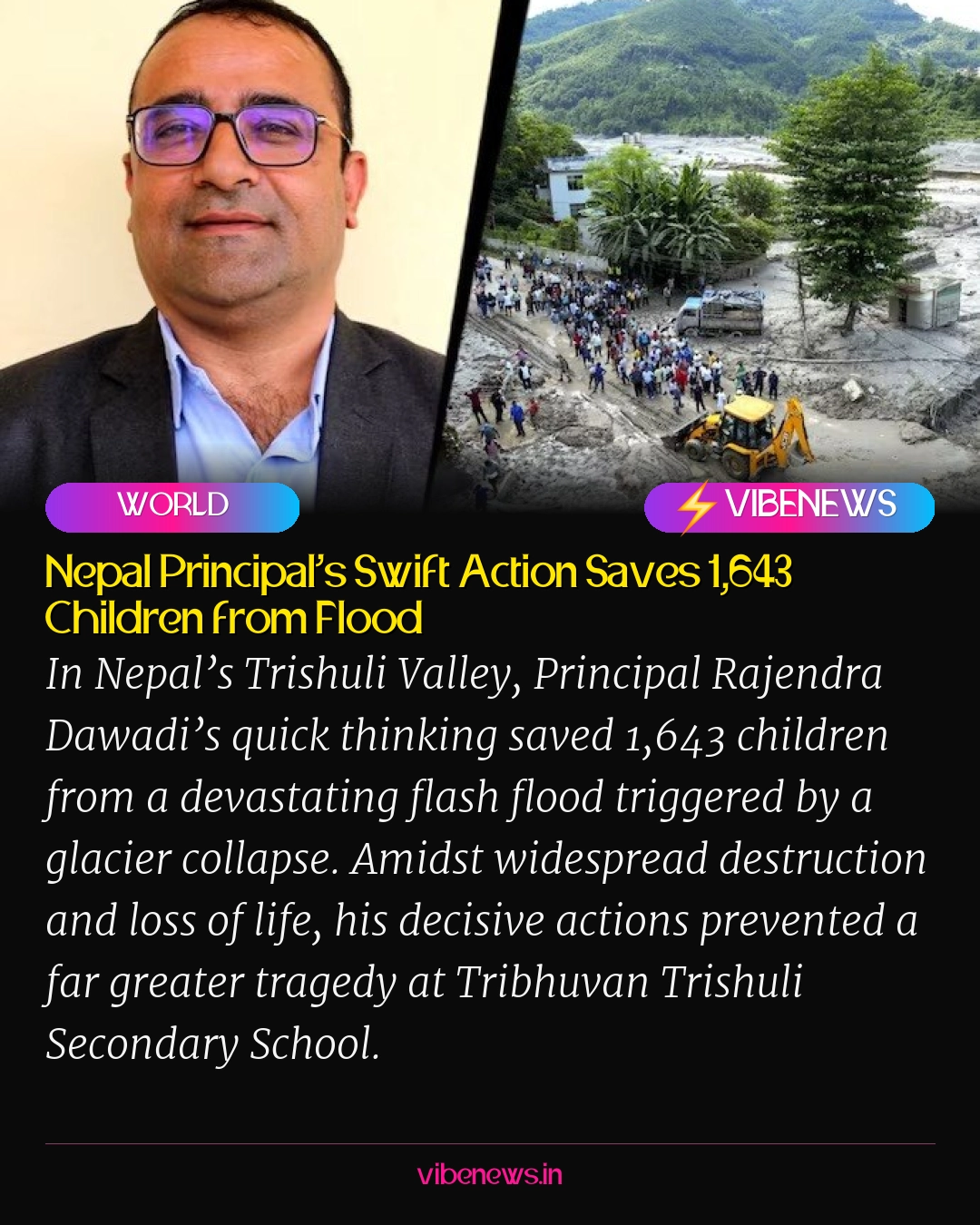
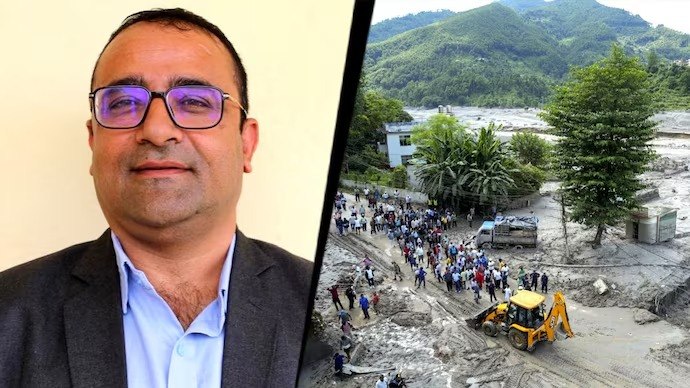
A chilling warning arrived at 9:20 am on a Wednesday for Rajendra Dawadi, principal of Tribhuvan Trishuli Secondary School in Nepal’s Trishuli Valley. A friend’s frantic call confirmed the unthinkable: the village was gone, swallowed by the river. Dawadi, a 47-year-old English teacher, suddenly faced the daunting task of protecting 1,643 children as a catastrophic flash flood, unleashed by a glacier collapse, tore through the region.
The devastating torrent of rock, ice, mud, and debris surged through mountain river systems, claiming over 750 lives in Nepal and 16 in Tibet. Buildings, bridges, and vital power stations were obliterated in moments. With 2,498 people reported missing in Nepal and another 546 in Tibet’s Gyirong County, the scale of the disaster was immense.
The Glacier’s Fury Unleashed
The flash flood originated from a colossal chunk of ice and rock that detached from the Langtang Lirung peak. This mass plunged approximately 1,200 meters into the steep upper gorge of the Lhende Khola river, near the Tibet border. Geomorphologist Daniel Shugar of the University of Calgary estimated the detached mass covered nearly 50 acres, an area comparable to London’s Green Park.
This event, characteristic of a glacial lake outburst flood (GLOF), rapidly transformed the tranquil river into a destructive force. The sudden influx of water and debris created an unstoppable wave, overwhelming everything in its path. The sheer volume and velocity of the floodwaters left little time for communities to react.
Decisive Leadership Under Duress
Initially, Dawadi believed the school, a three-storey concrete structure situated about 60 meters above the river, was safe. It stood on the same elevation as the steel bridge connecting the village to the eastern bank. However, a parent’s urgent arrival with news of rapidly rising waters shattered this illusion, demanding immediate action.
With precious minutes ticking away, Dawadi sprang into motion. He rang the school bell, a signal for teachers to evacuate classrooms without delay. He contacted school bus drivers, instructing all but one to turn back from the perilous route. Helplessly, he watched as the single bus he couldn’t reach crossed the bridge, moments before it was likely swept away.
As the children began to grasp the gravity of their situation, panic started to set in for some. One girl suffered a panic attack and was swiftly taken uphill on a motorbike. The vast majority, however, fled on foot, guided by their teachers and with Dawadi following closely behind. They eventually found refuge beneath a sturdy bodhi tree, a silent witness as the floodwaters consumed their school buildings.
Loss Amidst Widespread Rescue
Dawadi’s swift and decisive actions ultimately saved 1,643 children and all but one member of his teaching staff. Tragically, social history teacher Santos Pariyar, 32, was swept away after returning to his rented room beside the river to prepare breakfast. The school’s janitor, Sultan Lama, also perished, having gone back to close the school doors, a final act of duty.
Locals have hailed Dawadi as a hero for his extraordinary efforts in saving so many young lives. Despite the widespread praise, Dawadi remains humble, surveying the muddy ruins where his school once stood. “What else could I do?” he remarked, reflecting on the harrowing experience and the instinct that guided his decisions.
Understanding the Himalayan Threat
The Himalayan region is particularly susceptible to such natural disasters due to its unique geological and climatic conditions. Glacial retreat, exacerbated by global warming, leads to the formation and expansion of glacial lakes. These lakes, often dammed by unstable moraines, are prone to bursting, unleashing massive volumes of water and debris downstream. The Langtang Lirung event serves as a stark reminder of the increasing frequency and intensity of these phenomena.
The rugged terrain and remote settlements in areas like the Trishuli Valley make early warning systems and evacuation challenging. Infrastructure, often built along riverbanks, is highly vulnerable. The economic and social fabric of these communities is repeatedly tested by such catastrophic events, demanding robust and sustainable solutions for resilience.
Echoes of Past Disasters
This region of Nepal has endured profound tragedy before. In April 2015, a magnitude 7.8 earthquake devastated South Asia, claiming 8,962 lives. That seismic event triggered an avalanche that completely buried Langtang village, located in the flood-ravaged Rasuwa district, wiping out all 300 of its residents. The memory of such widespread loss remains fresh, underscoring the persistent vulnerability of these mountain communities to natural calamities.
The repeated cycles of destruction and rebuilding place immense strain on local resources and human spirit. Each disaster not only causes immediate loss of life and property but also disrupts livelihoods, displaces populations, and inflicts deep psychological trauma. The resilience of the Nepali people, however, continues to shine through these adversities.
Rebuilding and Resilience
The task of rebuilding the Tribhuvan Trishuli Secondary School and the affected communities will be monumental. It involves not just physical reconstruction but also restoring educational continuity and supporting the psychological well-being of the survivors. The experience of Dawadi and his students will undoubtedly become a powerful narrative of survival and community strength in the face of overwhelming odds.
The incident also highlights the critical role of local leadership and community networks in disaster response. Dawadi’s immediate communication with teachers and bus drivers, coupled with the community’s rapid response, proved instrumental in saving lives. These localized efforts are often the first and most effective line of defense when larger aid systems are still mobilizing.
Editorial Context: A Call for Enduring Vigilance
The heroic actions of Principal Rajendra Dawadi in the Trishuli Valley underscore a critical, long-term challenge facing Nepal and other Himalayan nations: the escalating threat of climate-induced disasters. While Dawadi’s quick thinking averted a larger catastrophe, the underlying causes of such flash floods—namely, glacial melt and instability—are intensifying. This incident is not an isolated event but a symptom of broader environmental shifts that demand sustained attention and proactive strategies.
Over the long term, Nepal must prioritize the development and implementation of advanced early warning systems, particularly for glacial lake outburst floods. This includes investing in remote sensing technologies, hydrological monitoring, and robust communication networks that can reach remote communities instantly. Furthermore, infrastructure development in vulnerable regions must incorporate climate-resilient designs, moving away from riverbanks where possible and reinforcing critical structures like bridges and schools.
Beyond immediate disaster response, there is an urgent need for comprehensive land-use planning and environmental conservation efforts. Reforestation, sustainable land management practices, and the protection of natural buffers can help mitigate the impact of floods and landslides. Education and community preparedness programs are also vital, empowering residents with the knowledge and skills to respond effectively when disaster strikes. The international community has a crucial role to play in supporting Nepal’s efforts through funding, technology transfer, and expertise in climate adaptation and disaster risk reduction. The story of Rajendra Dawadi is a testament to human courage, but it also serves as a powerful reminder that collective, long-term vigilance is the only sustainable path forward against the relentless forces of a changing climate.
TL;DR
- Principal Rajendra Dawadi saved 1,643 children from a flash flood in Nepal’s Trishuli Valley.
- The flood, triggered by a glacier collapse from Langtang Lirung peak, killed over 750 in Nepal and 16 in Tibet.
- Dawadi received a warning at 9:20 am, prompting him to ring the school bell and evacuate students within minutes.
- Two staff members, Santos Pariyar and Sultan Lama, tragically died after returning to the school/their rooms.
- The children took shelter under a bodhi tree as their school buildings were swept away.
- The incident highlights the vulnerability of Himalayan communities to glacial lake outburst floods (GLOFs) and the need for robust disaster preparedness.