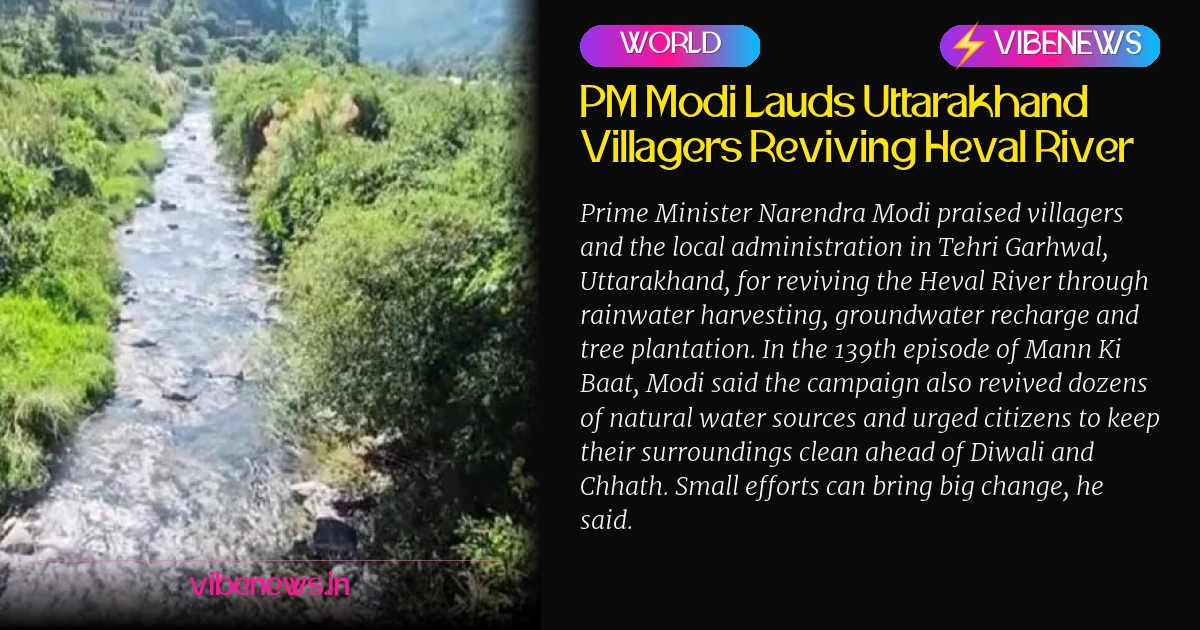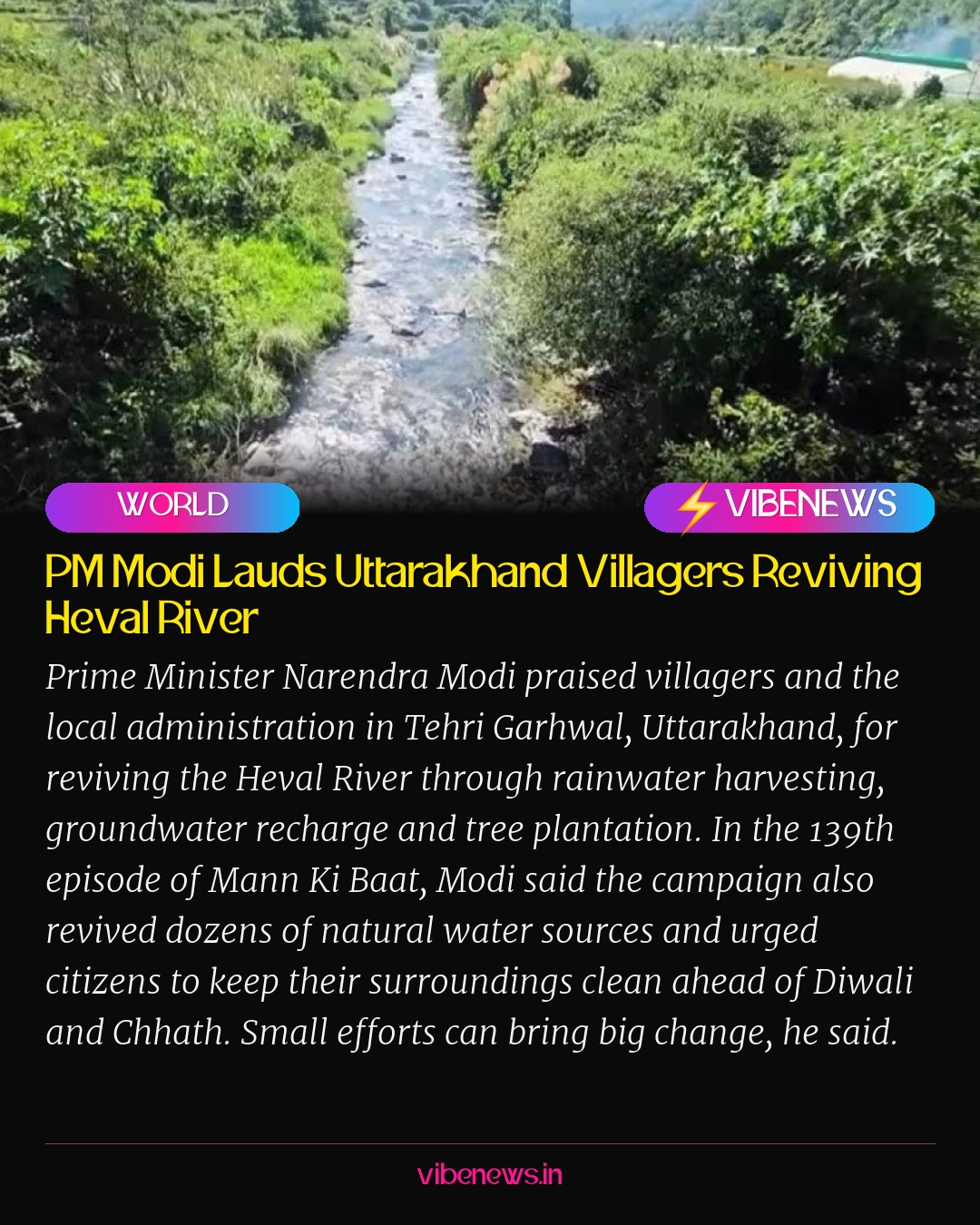
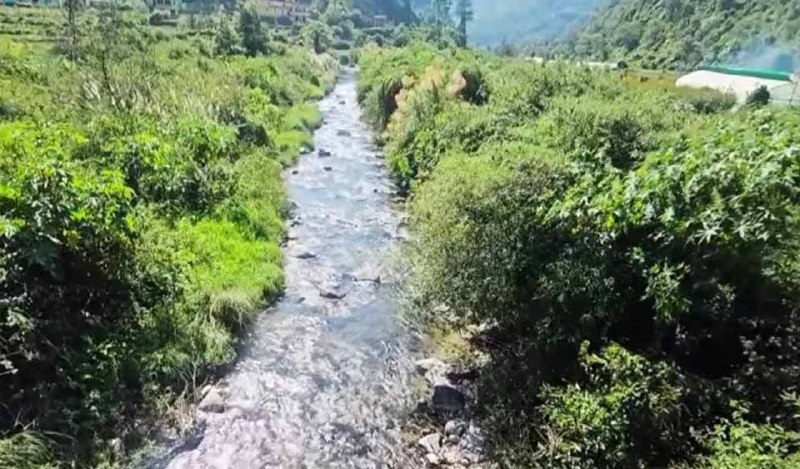
Prime Minister Narendra Modi on Sunday praised villagers in Uttarakhand’s Tehri Garhwal district for bringing the Heval River back to life, holding up the revival as proof that communities can reverse a crisis when they act together.
Speaking in the 139th episode of his monthly radio programme, Mann Ki Baat, Modi credited local residents and the administration with a campaign that turned around a river that was losing its water. The story, he said, began a few years ago, when water levels in the Heval started to fall and nearby natural water sources began drying up.
The response came from the village itself. The local administration and the people of the area ran a joint campaign to save the river, and the work focused on three concrete goals: holding rainwater in place, helping water seep back into the ground, and planting saplings in large numbers.
The results, according to the Prime Minister, reach well beyond one riverbed. Modi said the effort has also helped revive dozens of natural water sources, a reminder that a single rescued waterway can restore an entire network of springs, ponds and wells.
"Today, through this effort, the Heval River has got a new lease of life, and it has also helped revive dozens of natural water sources," PM Modi added.
For Modi, the lesson was about people more than engineering. He said the revival reflected the positive change that becomes possible when communities come together with a shared sense of responsibility, and he tied that spirit to the way Indians gather during their festivals.
He argued that when society works with commitment and a common purpose, the chance of meaningful change grows much stronger. "When society unites with such a spirit, then the guarantee of change becomes certain," he said, pointing to the organised community activity that appears every year around the country’s celebrations.
The message now turns to the coming festival season. Modi noted that Diwali and Chhath are only a few days away and that cleanliness campaigns are being organised from place to place. His call was simple: wherever people live, they should keep those places clean.
The Prime Minister also rooted the message in tradition. He said India has a long-standing respect for nature and that the country’s ancestors taught people that keeping their surroundings clean and caring for water sources is their own responsibility. He said he felt happy to see how people across the country have made that spirit a way of life.
Modi’s remarks spanned cleanliness, water conservation and environmental responsibility, but the Heval example gave the speech its clearest proof. A campaign that began with falling water levels, drying springs and a village willing to act has now brought back a river and dozens of the water sources that depend on it.
In the broader address, the Prime Minister repeatedly returned to one idea: that individual habits and local action add up. Keeping a street clean, protecting a water source and planting saplings are small acts, he said, but together they can change the environment around a community.
The Heval story stands out because it moved from warning sign to recovery through local hands. Modi chose to put that example in front of millions of listeners during his monthly radio programme, presenting it as a model that other communities can follow.
TL;DR
- Prime Minister Narendra Modi praised villagers in Tehri Garhwal, Uttarakhand, for reviving the Heval River.
- The revival used rainwater harvesting, groundwater recharge and large-scale sapling plantation.
- Modi said the campaign also revived dozens of natural water sources in the area.
- The praise came in the 139th episode of Mann Ki Baat, broadcast on Sunday.
- Modi urged citizens to keep their surroundings clean ahead of Diwali and Chhath.