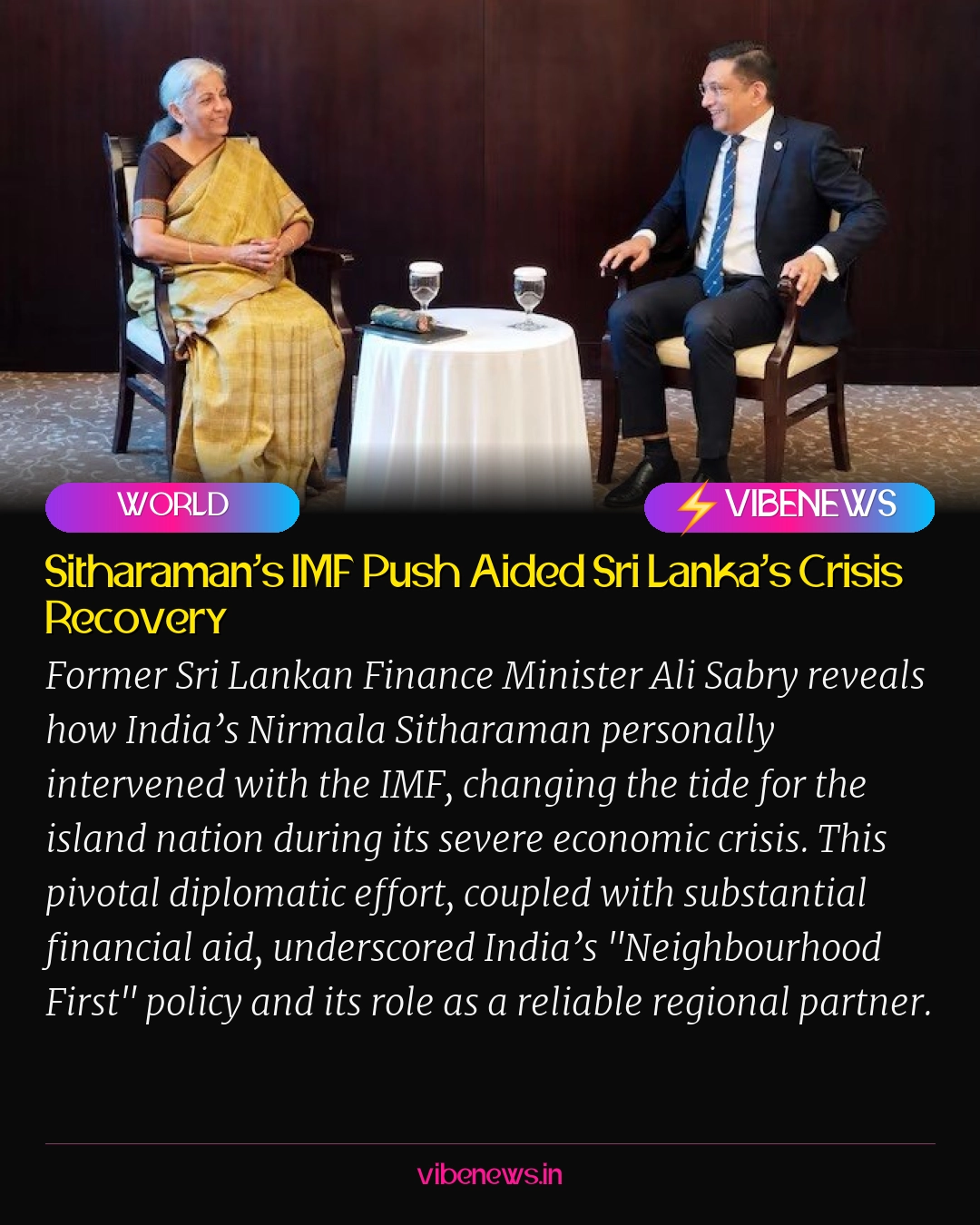
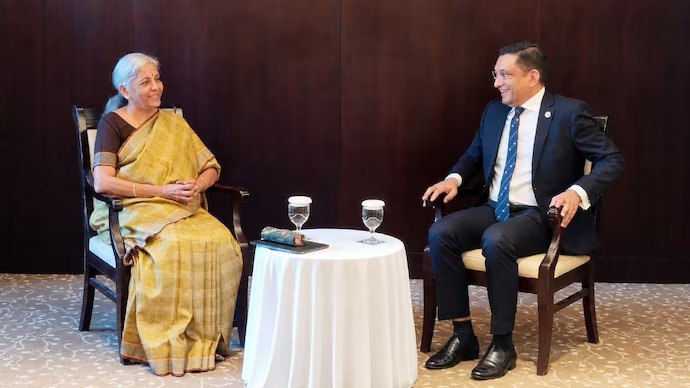
India played a decisive role in helping Sri Lanka navigate its worst economic crisis, with Finance Minister Nirmala Sitharaman personally pressing the International Monetary Fund (IMF) to urgently support the island nation. This significant intervention was recently revealed by former Sri Lankan Finance Minister Ali Sabry, highlighting India’s approach to regional assistance.
Sabry, speaking in a podcast, recounted how the tone of a crucial IMF meeting in Washington in April 2022 dramatically shifted after Sitharaman engaged with the Fund’s leadership on Sri Lanka’s behalf. He described an initially "reluctant" IMF becoming notably more receptive following her advocacy.
A Diplomatic Turning Point
Ali Sabry, who served as Sri Lanka’s Finance Minister from April to May 2022, was tasked with negotiating with the IMF at the height of the crisis. He recalled facing a skeptical response during his initial discussions with regional directors in Washington, who cited Sri Lanka’s 16 previous engagements with the Fund.
Feeling disappointed by what he perceived as a lack of empathy, Sabry shared his concerns with Sitharaman during a lunch ahead of his scheduled meetings with IMF Managing Director Kristalina Georgieva and First Deputy Managing Director Gita Gopinath. Sitharaman assured him, stating, "Don’t worry, don’t worry. I will meet Kristalina at 2 o’clock before your meeting. I will put a word on that."
When Sabry subsequently met the IMF leadership, the atmosphere had transformed. Georgieva informed him that her meeting with Sitharaman had consumed "about 70 to 80% of the time... not for India, but for Sri Lanka." Sabry believes this pivotal conversation laid the foundation for Sri Lanka’s eventual recovery.
While Sabry’s account of the specific percentage is his recollection, an official Indian Finance Ministry statement from April 2022 corroborates Sitharaman’s advocacy. The statement confirmed her meeting with Georgieva to seek urgent help for Sri Lanka, noting that the IMF MD "particularly brought reference to the help India is providing to Sri Lanka during their difficult economic crisis."
The Genesis of a Crisis
Sri Lanka’s economic meltdown in 2022 was not an overnight phenomenon but the culmination of years of fiscal mismanagement and external shocks. The crisis was primarily driven by heavy national debt, sweeping tax cuts implemented in 2019, and critically, the depletion of foreign-exchange reserves.
The collapse of the vital tourism sector during the COVID-19 pandemic further exacerbated the situation, cutting off a major source of foreign currency. Policy missteps, such as a sudden and ill-advised ban on chemical fertilizers, crippled agricultural output, leading to food shortages and soaring prices.
By early 2022, the nation lacked sufficient dollars to import essential goods like fuel, food, and medicines. This resulted in widespread power cuts, severe shortages, hyperinflation, and mass public protests that ultimately led to a change in government. In April, Sri Lanka suspended its foreign-debt payments, signaling the depth of its financial distress.
India’s Comprehensive Assistance
In line with its "Neighbourhood First Policy," India swiftly stepped in with emergency financing and essential supplies. Beyond diplomatic support at the IMF, New Delhi extended nearly $4 billion in credit, payment support, and humanitarian aid, providing a critical lifeline to Colombo.
Specific Indian assistance included a $500-million credit line for petroleum products in February 2022, followed by a $1-billion concessional facility in March for vital imports such as food, medicines, fuel, and industrial raw materials. The Reserve Bank of India also provided the Central Bank of Sri Lanka with a $400-million currency swap.
Further easing immediate pressure on Sri Lanka’s depleted reserves, India deferred approximately $2 billion in payment liabilities under the Asian Clearing Union. A separate $55-million credit line financed the procurement of urea, helping to address severe fertilizer shortages and bolster agricultural production.
The Indian state of Tamil Nadu also contributed significantly, supplying humanitarian assistance valued at around $16 million. This aid package comprised 40,000 tonnes of rice, 500 tonnes of milk powder, and life-saving medicines, directly addressing the immediate needs of the Sri Lankan populace.
A Foundation for Recovery
India’s commitment extended to facilitating Sri Lanka’s long-term recovery through international financial institutions. New Delhi became the first bilateral creditor to provide the IMF with written financing assurances, a crucial step supporting Sri Lanka’s debt restructuring efforts.
These assurances were instrumental in clearing the path for the IMF to approve a nearly $3-billion Extended Fund Facility for Sri Lanka in March 2023. This comprehensive support, encompassing diplomatic advocacy, direct financial aid, and humanitarian assistance, underscored India’s role as a dependable and responsible regional partner.
Editorial Context: Regional Stability and Influence
The revelations by former Sri Lankan Finance Minister Ali Sabry offer a compelling insight into the intricate dynamics of regional diplomacy and economic statecraft. India’s proactive intervention in Sri Lanka’s crisis goes beyond mere bilateral aid; it signifies a strategic commitment to maintaining stability within its immediate neighborhood, a cornerstone of its foreign policy doctrine.
This episode highlights India’s growing influence on global financial institutions and its capacity to leverage diplomatic capital for regional welfare. By advocating for Sri Lanka at the IMF, India demonstrated its willingness to act as a crucial interlocutor, contrasting sharply with narratives often associated with other major powers’ lending practices in the region.
The long-term implications of this support are multifaceted. It not only helped avert a deeper humanitarian catastrophe in Sri Lanka but also reinforced India’s image as a reliable partner, fostering goodwill and strengthening bilateral ties. Such interventions are vital for regional security and economic integration, setting a precedent for how larger economies can responsibly assist smaller, struggling neighbors without imposing undue burdens.
Furthermore, this incident underscores the importance of coordinated international efforts in addressing complex economic crises. India’s role in mobilizing international support for Sri Lanka exemplifies a model of constructive engagement that prioritizes stability and sustainable recovery over short-term geopolitical gains, contributing significantly to the broader regional architecture.
TL;DR
- Former Sri Lankan Finance Minister Ali Sabry revealed India’s Nirmala Sitharaman personally intervened with the IMF to secure support for Sri Lanka during its 2022 economic crisis.
- Sabry described how Sitharaman’s advocacy dramatically changed the IMF’s initially reluctant stance, paving the way for crucial negotiations.
- India provided nearly $4 billion in comprehensive aid, including credit lines for fuel and essential goods, currency swaps, and deferred payment liabilities.
- The assistance, aligned with India’s ‘Neighbourhood First Policy,’ helped Sri Lanka maintain critical imports amidst severe foreign-exchange shortages.
- India was the first bilateral creditor to offer written financing assurances to the IMF, which was crucial for Sri Lanka to secure its nearly $3 billion Extended Fund Facility.
- The crisis in Sri Lanka was caused by heavy debt, tax cuts, depleted foreign exchange, COVID-19’s impact on tourism, and policy missteps like a fertilizer ban.