Trump’s Hormuz Claim Ignites Geopolitical Tensions
Donald Trump’s repeated assertion that the Strait of Hormuz is "American territory" has once again ignited a diplomatic firestorm, drawing a swift and unequivocal rejection from Iran. This provocative claim, amplified on his Truth Social platform, challenges the long-established international legal status of one of the world’s most critical energy chokepoints. The ongoing rhetoric underscores the deep-seated tensions between Washington and Tehran, with significant implications for global maritime security and energy markets.
Trump’s Unilateral Declarations
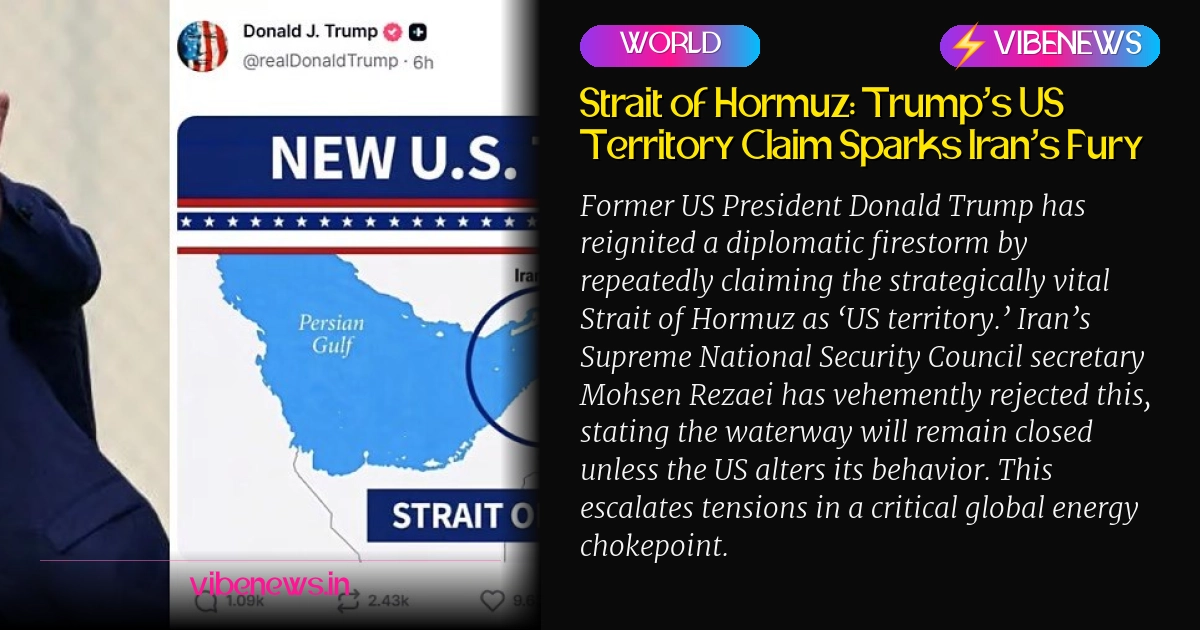
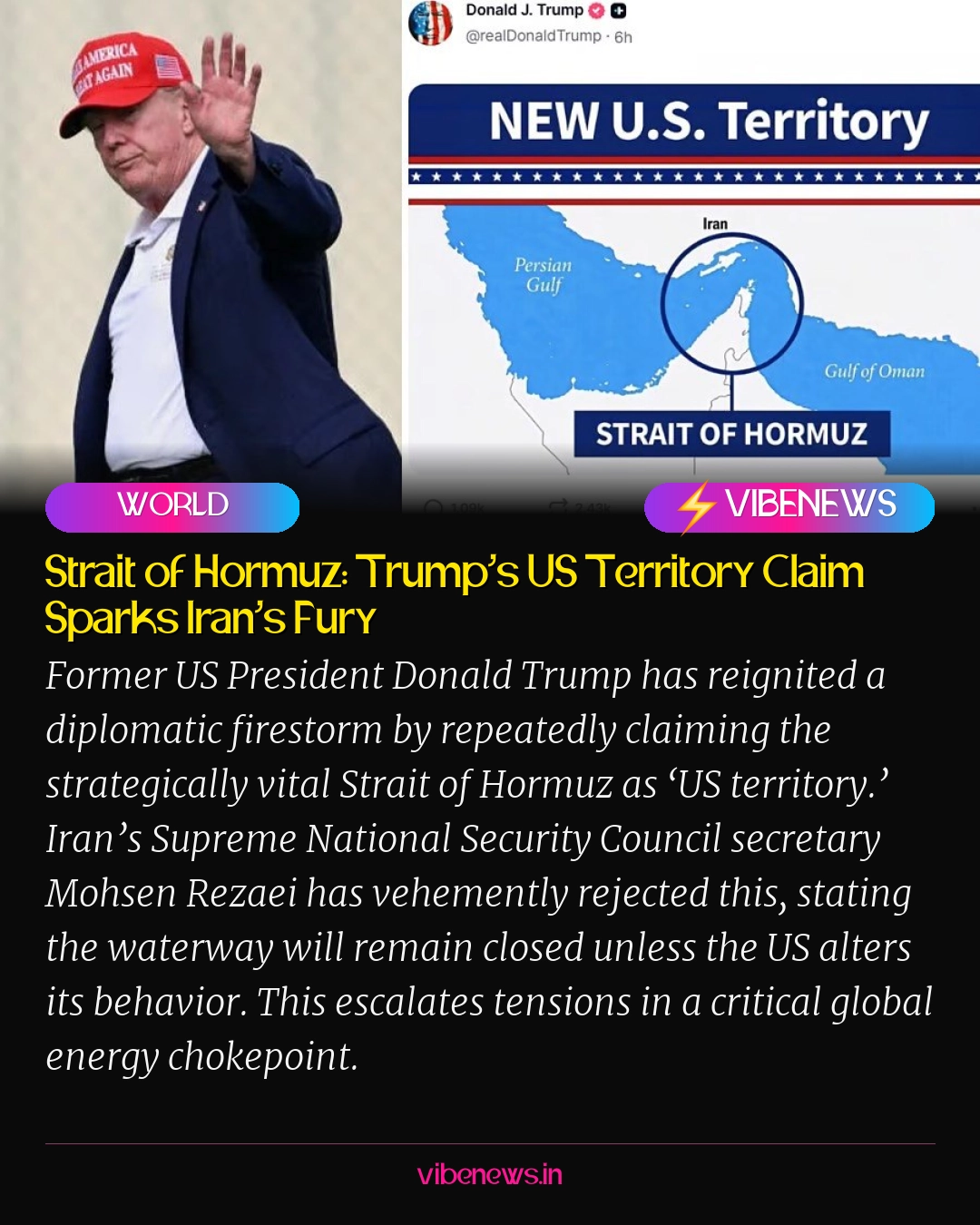
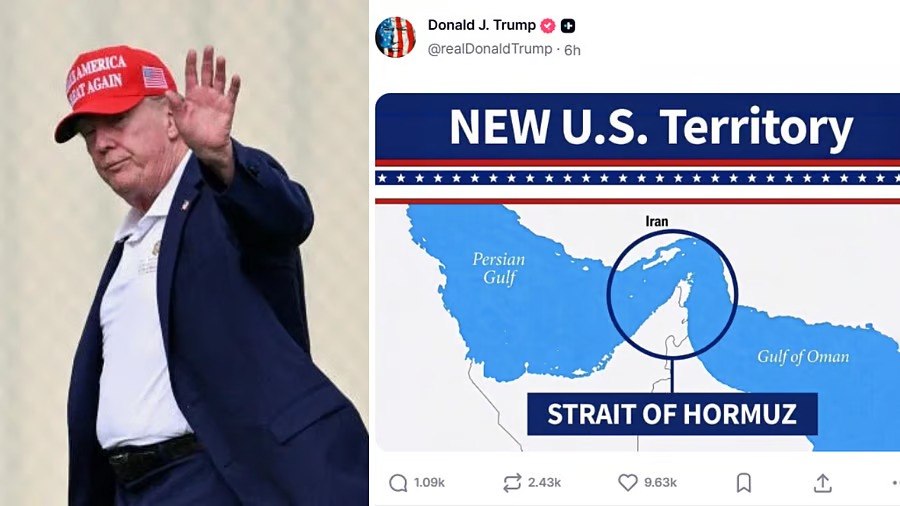
The former US President recently shared an image on Truth Social depicting the Strait of Hormuz explicitly marked as "NEW US Territory," a claim he had previously made in August. He reiterated this stance while discussing Iran and the possibility of a nuclear deal, stating, "It’s an American territory."
Trump further amplified claims by commentator Marc Thiessen, suggesting that over 1,000 ships had been escorted through the strait by the United States. He also asserted that 16 million barrels of oil traversed the waterway in a single day. These figures, while substantial, differ slightly from official reports.
The US Central Command, for instance, reported assisting approximately 1,300 commercial vessels in transiting the Strait of Hormuz since early May, with over 660 million barrels of crude oil moving through during that period. Trump has consistently linked the strait’s status to US efforts to exert pressure on Iran, signaling a potential shift in policy if he were to return to office.
Iran’s Resolute Rejection
Iran has vehemently dismissed Trump’s claims, asserting its sovereign control over the waterway. Mohsen Rezaei, secretary of Iran’s Supreme National Security Council, declared that the strait "is closed and will not reopen" unless the United States fundamentally alters its behavior and fulfills its international commitments.
Rezaei emphasized that any resolution would require concrete action from the United States, not merely words or negotiations. This firm stance highlights Iran’s determination to protect its perceived territorial integrity and strategic interests in the face of what it views as provocative foreign policy.
The Iranian official also mentioned an agreement with Oman regarding a "middle route" through the strait, though a joint statement on this arrangement has yet to be finalized. This suggests Iran is exploring alternative navigation strategies and diplomatic channels to manage the situation.
The Strategic Importance of Hormuz
The Strait of Hormuz, a narrow waterway connecting the Persian Gulf to the Arabian Sea, is globally recognized as an indispensable energy artery. Situated between Iran and Oman, it serves as the sole maritime passage from the Persian Gulf for a significant portion of the world’s crude oil and liquefied natural gas (LNG).
Before recent conflicts and disruptions, nearly one-fifth of global oil and LNG shipments transited through this strait daily. Any threat to its free passage sends immediate ripples through international energy markets, impacting prices and supply chains worldwide. Its strategic value has historically made it a flashpoint for regional and international tensions.
International Law and Maritime Passage
Trump’s unilateral declaration that the Strait of Hormuz is "US territory" directly contradicts established principles of international law. The waterway is universally regarded as an international strait, governed by the United Nations Convention on the Law of the Sea (UNCLOS).
UNCLOS provides for the right of transit passage through such strategic routes, ensuring freedom of navigation for all vessels, including warships, without impediment. A unilateral claim of sovereignty by any nation would be a profound violation of these international norms, potentially destabilizing global maritime governance and inviting widespread condemnation.
Recent Shipping Dynamics
Despite Iran’s declaration of closure, shipping traffic through the strait has shown an increase in recent days, though it remains below pre-war levels. Data cited by the New York Post, based on UK maritime trade operations, indicated nearly 200 ships crossed the strait last week, up from approximately 150 the previous week.
Maritime intelligence firm Kpler noted that over 80% of liquid cargoes passing through the strait in the past two weeks either utilized an Omani route, supported by the US and authorized by the International Maritime Organization, or went "dark," meaning their transponders were turned off to avoid detection. This suggests a complex and evolving operational environment for commercial shipping.
Broader US-Iran Diplomatic Stalemate
These latest developments unfold against a backdrop of stalled talks between Washington and Tehran regarding Iran’s nuclear program. Trump has repeatedly suggested that Iran is eager for a nuclear deal, yet he has also issued stern warnings that the United States will never permit Tehran to acquire a nuclear weapon.
"We’ll never have a nuclear weapon," Trump asserted, adding that Washington had not yet decided whether it desired an agreement with Iran. This contradictory rhetoric further complicates an already delicate diplomatic landscape, leaving the future of US-Iran relations uncertain and prone to sudden shifts.
Editorial Context
The repeated assertion by a former US President that a vital international waterway is "American territory" carries profound long-term implications, irrespective of its immediate legal standing. Such claims challenge the very foundation of international maritime law and the principle of freedom of navigation, which are cornerstones of global trade and security. Should such rhetoric translate into policy, it risks escalating an already volatile situation in the Persian Gulf, potentially leading to miscalculations and direct confrontations.
For global energy markets, the stability of the Strait of Hormuz is paramount. Any perceived threat to its passage can trigger significant spikes in oil prices, impacting economies worldwide, including major energy importers like India. This ongoing geopolitical tension also casts a long shadow over the prospects for a diplomatic resolution to Iran’s nuclear program, perpetuating a cycle of mistrust and confrontation. The international community must remain vigilant, advocating for adherence to international law and promoting de-escalation to safeguard global stability and economic well-being.
TL;DR
- Donald Trump repeatedly claims the Strait of Hormuz as "US territory" on Truth Social.
- Iran’s Supreme National Security Council secretary Mohsen Rezaei states the strait will remain closed until the US changes its behavior.
- The Strait of Hormuz is a critical global energy chokepoint, handling nearly one-fifth of global oil and LNG shipments.
- Trump’s claims contradict international law, which designates the strait as an international waterway with transit passage rights.
- Shipping traffic has increased recently but remains below pre-war levels, with many vessels using alternative routes or going "dark."
- These developments occur amid stalled US-Iran nuclear talks, adding to regional instability.