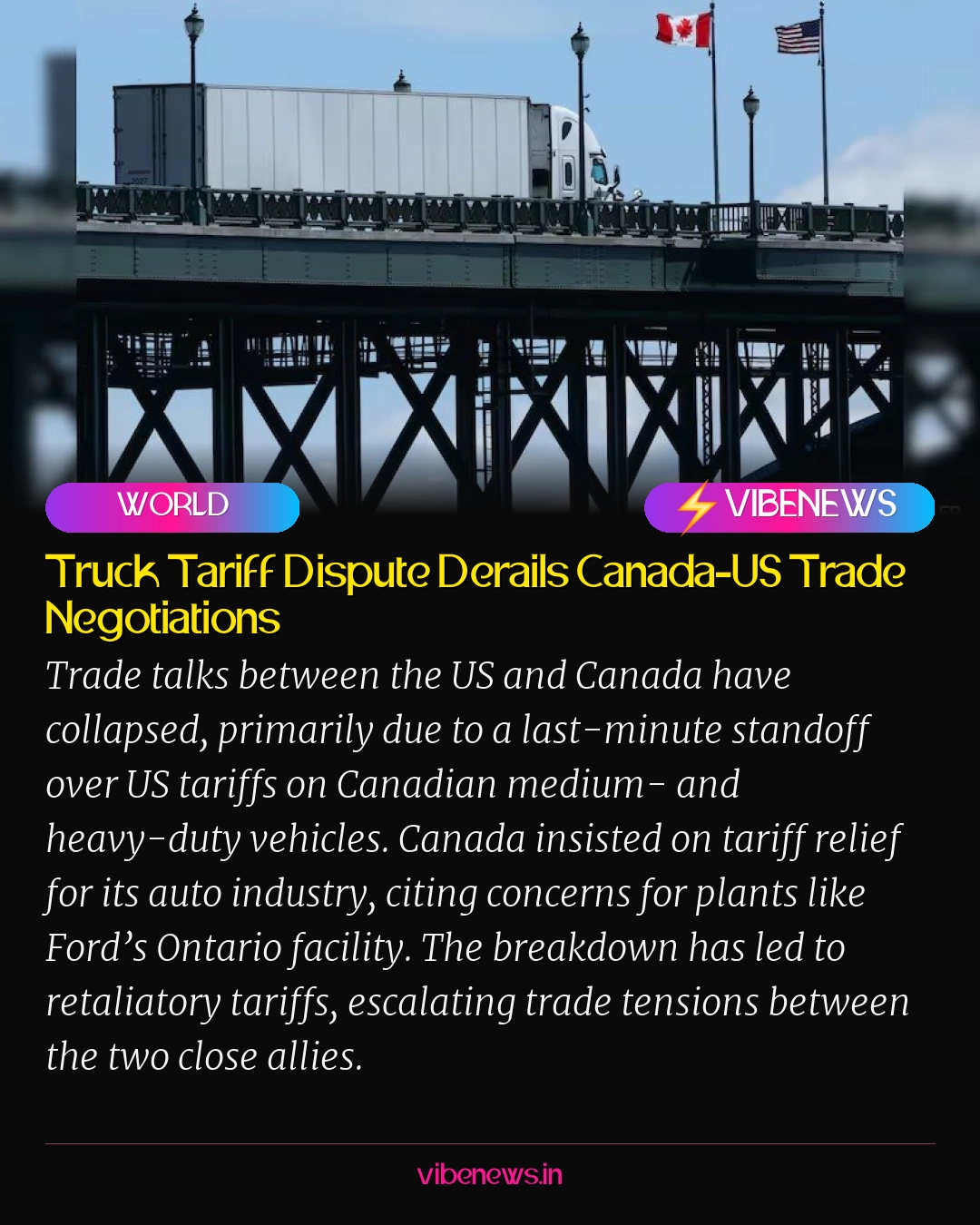

Truck Tariff Dispute Derails Canada-US Trade Negotiations
Trade discussions between the United States and Canada recently concluded without an agreement, primarily due to a last-minute disagreement concerning US tariffs on Canadian medium- and heavy-duty vehicles. Both nations had reportedly outlined a potential deal that would have reduced US sectoral tariffs across various goods, including autos, steel, aluminum, and lumber. However, negotiations faltered as Canada pressed for additional relief specifically for its larger vehicle manufacturing sector.
The Tariff Impasse
The core of the dispute centered on Canada’s insistence that the proposed tariff reduction for regular automobiles, which would have seen the rate drop from 25% to 15%, be extended to cover medium- and heavy-duty vehicles. These categories typically encompass a range of products from large pickup trucks, such as the Ford F-350s, to various commercial vehicles. Canadian officials argued this expansion was critical for the viability of their domestic auto industry.
According to sources familiar with the private negotiations, the US delegation viewed this request as an additional demand that had not been part of the original framework. Conversely, Canadian industry representatives countered that it was the Americans who attempted to segment the industry. Flavio Volpe, president of the Automotive Parts Manufacturers’ Association, stated that the US "pulled that classification out of the class of product that would get a reduced tariff" at the eleventh hour, suggesting a potential motive to diminish auto manufacturing in Canada.
A Deepening Rift in North American Trade
The collapse of these talks quickly escalated into a tit-for-tat tariff exchange. The United States proceeded to impose new 50% tariffs on approximately $20 billion worth of Canadian goods. In response, Canada announced its intention to implement dollar-for-dollar counter-tariffs on American products, effective from September 8th, signaling a significant hardening of positions between the historically close trading partners.
This breakdown marks a critical juncture in the broader renegotiation of the North American Free Trade Agreement (NAFTA), which has been a cornerstone of economic integration between the US, Canada, and Mexico for decades. The auto sector, in particular, represents a highly integrated cross-border supply chain, making tariff disputes in this area particularly disruptive and politically charged.
Industry Voices and Labor Concerns
The Canadian auto industry and its labor unions voiced strong concerns over the implications of the failed negotiations. Mark Carney, a prominent Canadian voice in the trade discussions, highlighted that without tariff relief on trucks, facilities like Ford’s new plant in Ontario, which produces F-350s and larger pickup trucks, would have been unfairly excluded. He emphasized the lack of rationale for such an exclusion, underscoring the perceived threat to Canadian manufacturing jobs and investment.
Lana Payne, national president of Unifor, Canada’s largest private-sector union, publicly stated that Canada had no alternative but to stand firm. She conveyed the apprehension among autoworkers that agreeing to a tariff carveout solely for US parts would pave the way for more aggressive demands in future negotiations. Such concessions, she warned, could ultimately erode Canada’s ability to maintain a competitive automotive sector, posing a long-term threat to the industry’s sustainability.
Beyond the Immediate Fallout
The immediate imposition of tariffs and counter-tariffs is expected to have tangible impacts on businesses and consumers on both sides of the border. Industries reliant on cross-border supply chains, particularly in the automotive and related manufacturing sectors, will face increased costs and uncertainty. This economic friction could translate into higher prices for consumers and potential job losses as companies adjust to the new trade landscape.
Historically, the US and Canada have maintained one of the world’s largest and most integrated bilateral trade relationships, underpinned by shared economic interests and geographical proximity. The current dispute over truck tariffs, however, underscores a growing trend of protectionist measures and nationalistic economic policies that challenge established global trade norms and alliances. The willingness of both nations to engage in retaliatory tariffs suggests a departure from previous diplomatic approaches to trade disagreements.
Editorial Context: The Long-Term Stakes
The collapse of US-Canada trade talks over truck tariffs carries significant long-term implications, extending far beyond the immediate economic impact. This dispute highlights the fragility of established trade agreements and the increasing tendency towards bilateral rather than multilateral solutions. For Canada, the protection of its auto manufacturing sector is not merely an economic issue but a matter of national industrial policy and job security, particularly in provinces like Ontario where the industry is a major employer.
The incident also serves as a critical test case for the future of North American economic integration. Should these trade tensions persist or escalate, they could fundamentally alter supply chains, investment patterns, and the overall competitiveness of industries across the continent. It signals a potential shift away from decades of open borders and integrated production, forcing businesses to re-evaluate their operational strategies and potentially leading to a more fragmented regional economy. The resolution, or lack thereof, will set a precedent for how future trade disagreements are handled among close allies in an increasingly protectionist global environment.
TL;DR
- US-Canada trade talks collapsed over Canadian demand for tariff relief on medium- and heavy-duty trucks.
- Canada sought to extend a proposed 15% auto tariff reduction to vehicles like Ford F-350s and other commercial vehicles.
- The US deemed this a last-minute additional demand, while Canada argued it was crucial for its auto manufacturing sector’s competitiveness.
- The breakdown led to the US imposing 50% tariffs on approximately $20 billion in Canadian goods, met by Canada’s dollar-for-dollar counter-tariffs.
- Canadian industry and labor unions, including Unifor, expressed concerns that failing to secure relief would undermine the long-term viability of their auto sector.
- The dispute highlights growing protectionist trends and poses significant long-term implications for North American economic integration and supply chains.