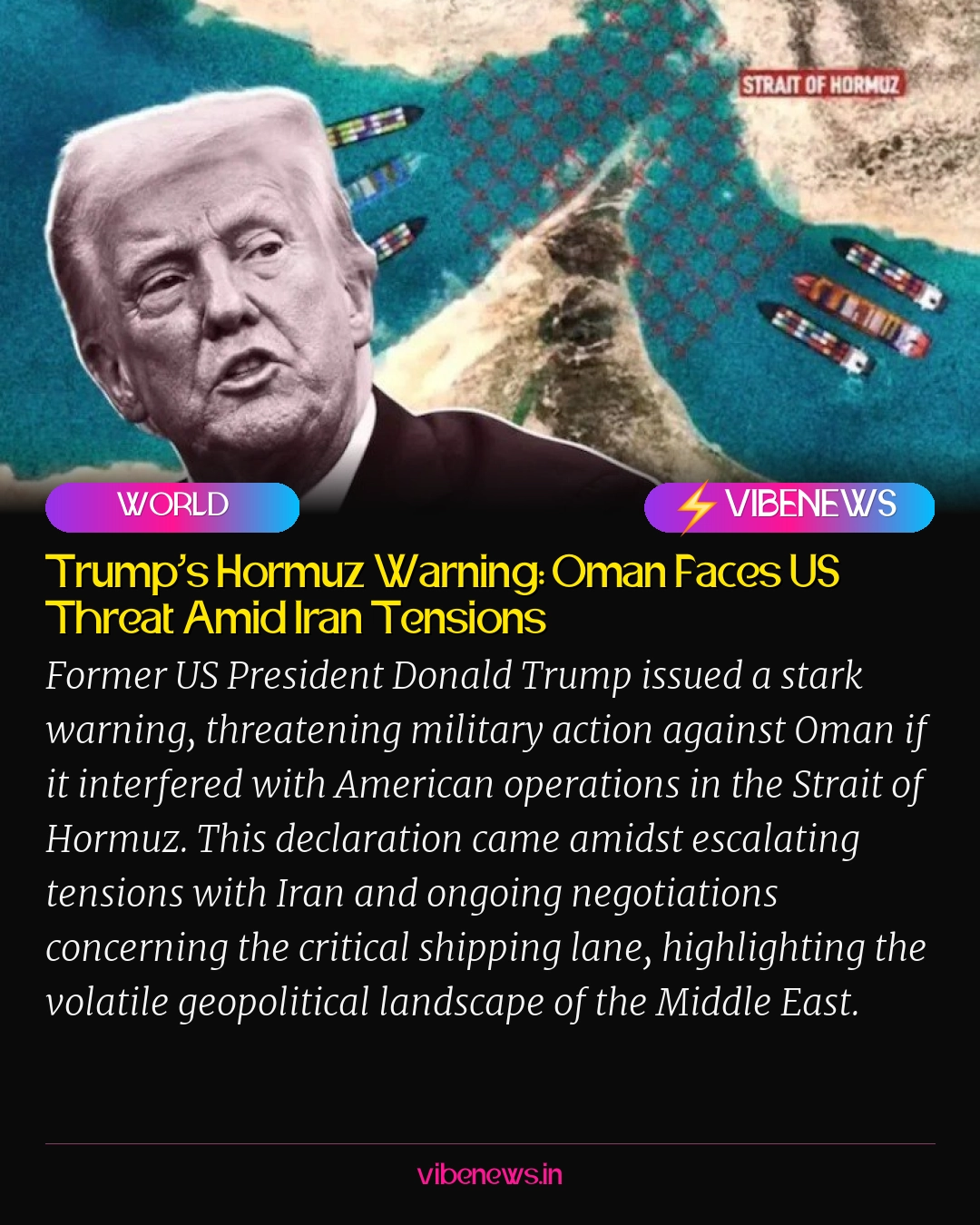
Trump’s Direct Warning to Oman
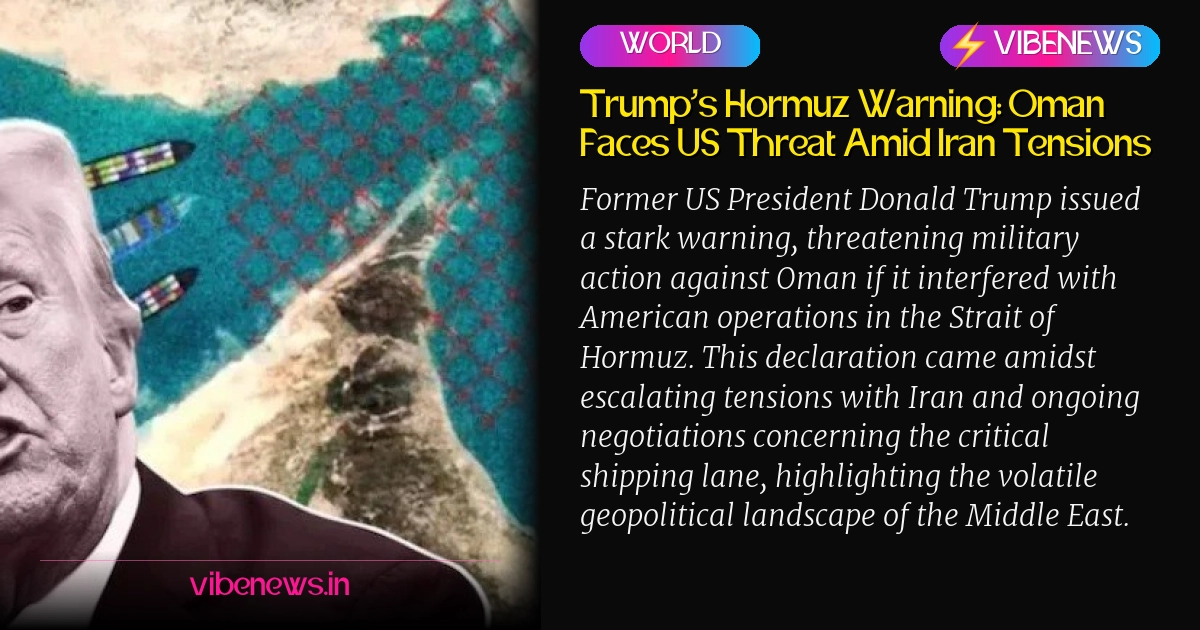
Former US President Donald Trump issued a severe warning, stating the United States would take decisive military action against Oman if the Gulf nation impeded American interests in the Strait of Hormuz. This aggressive stance was articulated during a Fox News interview, just days before a critical ceasefire deadline between the US and Iran was set to expire.
Trump’s comments specifically addressed ongoing parallel negotiations between Iranian and Omani diplomats. These talks aimed to establish a provisional arrangement for managing shipping through the Strait of Hormuz, a vital global chokepoint for oil transit.
The Strategic Importance of Hormuz
The Strait of Hormuz is one of the world’s most critical maritime passages, connecting the Persian Gulf with the Arabian Sea and the broader Indian Ocean. Approximately one-fifth of the world’s total oil consumption, and a significant portion of its liquefied natural gas, passes through this narrow waterway daily.
Its strategic importance makes it a perennial flashpoint in regional and international geopolitics. Any disruption to shipping in the Strait can have immediate and severe repercussions on global energy markets and international trade.
Oman’s Traditional Diplomatic Role
Historically, Oman has cultivated a reputation as a neutral mediator in the often-turbulent Middle East. The Sultanate has frequently played a crucial, behind-the-scenes role in facilitating dialogue between adversaries, including the United States and Iran.
Its unique diplomatic position has allowed it to host sensitive negotiations, often serving as a discreet channel for communication when direct talks between other nations were impossible. Trump’s direct threat to Oman, therefore, marked a significant departure from the traditional respect accorded to its mediating efforts.
Escalating Tensions with Iran
The backdrop to Trump’s remarks was a period of heightened tension between Washington and Tehran. The US had withdrawn from the Joint Comprehensive Plan of Action (JCPOA), commonly known as the Iran nuclear deal, in 2018, subsequently reimposing stringent sanctions on Iran.
This withdrawal and the ‘maximum pressure’ campaign led to a series of escalations, including attacks on oil tankers in the Gulf and the downing of a US drone. The approaching 60-day ceasefire deadline added further urgency and volatility to the situation.
The Nuclear Ambition and ‘White Flag’ Demand
During the interview, Trump also reiterated a core tenet of his administration’s Iran policy: preventing Tehran from acquiring nuclear weapons. He stated, "The number one Goal is, and always will be, that Iran cannot have, in any way, shape, or form, a Nuclear Weapon."
He further urged Iran to "put up the white flag of surrender," characterizing Iranian negotiators as "good poker players" but asserting they were "dying" under the weight of sanctions. Trump also indicated no specific timeline for resolving the standoff, emphasizing he was "not in a hurry."
Editorial Context
This episode underscores the precarious nature of international diplomacy when confronted with assertive, unilateral foreign policy. Trump’s threat against Oman, a traditional US ally and regional mediator, risked alienating a key player whose stability and diplomatic channels are vital for de-escalation in the Gulf.
The incident highlights the broader challenges of managing complex geopolitical rivalries, particularly when critical global resources like oil transit are involved. It also serves as a stark reminder of how quickly rhetoric can escalate tensions, potentially undermining years of careful diplomatic engagement and regional stability. The long-term implications of such statements can erode trust and complicate future efforts to build consensus and resolve conflicts peacefully in a region already prone to volatility.
TL;DR
- Former US President Donald Trump threatened military action against Oman if it interfered with US operations in the Strait of Hormuz.
- The threat came amidst US-Iran tensions and Omani-Iranian talks regarding shipping management in the critical Strait.
- The Strait of Hormuz is a vital global chokepoint for approximately one-fifth of the world’s oil supply.
- Trump reiterated the US goal of preventing Iran from acquiring nuclear weapons and urged Iran to ‘surrender’.
- Oman has historically served as a crucial neutral mediator in the Middle East, facilitating dialogue between adversaries.
- The incident occurred as a 60-day ceasefire deadline between the US and Iran was nearing its end.