Britain’s government has told every household to stock at least three days of food, water and essentials, launching a ‘Be Ready’ campaign that warns of power cuts, internet failures and frozen payment systems.
The push comes after a technical fault in PHP software brought daily life to a standstill across the country last week. The government’s warning goes further, pointing to summer heat, drought and forest wildfires that could hit in the coming period.
Why the government is sounding the alarm
When the power goes, the rest follows. Phones die, the internet stops, ATMs go silent and online payments fail. The government wants families to be able to hold out for at least three days without outside help.
The campaign is aimed at ordinary homes, not emergency services. Officials want every family to have supplies in the cupboard before a crisis arrives, not after.
Water: 9 litres per person
Each person needs about 3 litres of water a day. That adds up to 9 litres per person for three days. Households are being told to store water now, before shortages set in.
Stored water is the first thing to run out in a prolonged outage, and the one thing no shop can restock during a power failure.
Food that needs no fridge and no cooking
A power cut can switch off the fridge and make cooking impossible. The government says families should keep food that does not need refrigeration or cooking and can last a long time.
Examples include tinned meat, tinned fish, canned vegetables and dried fruit. Stocking these items means families will not have to scramble for food or water in an emergency.
The six items on the government list
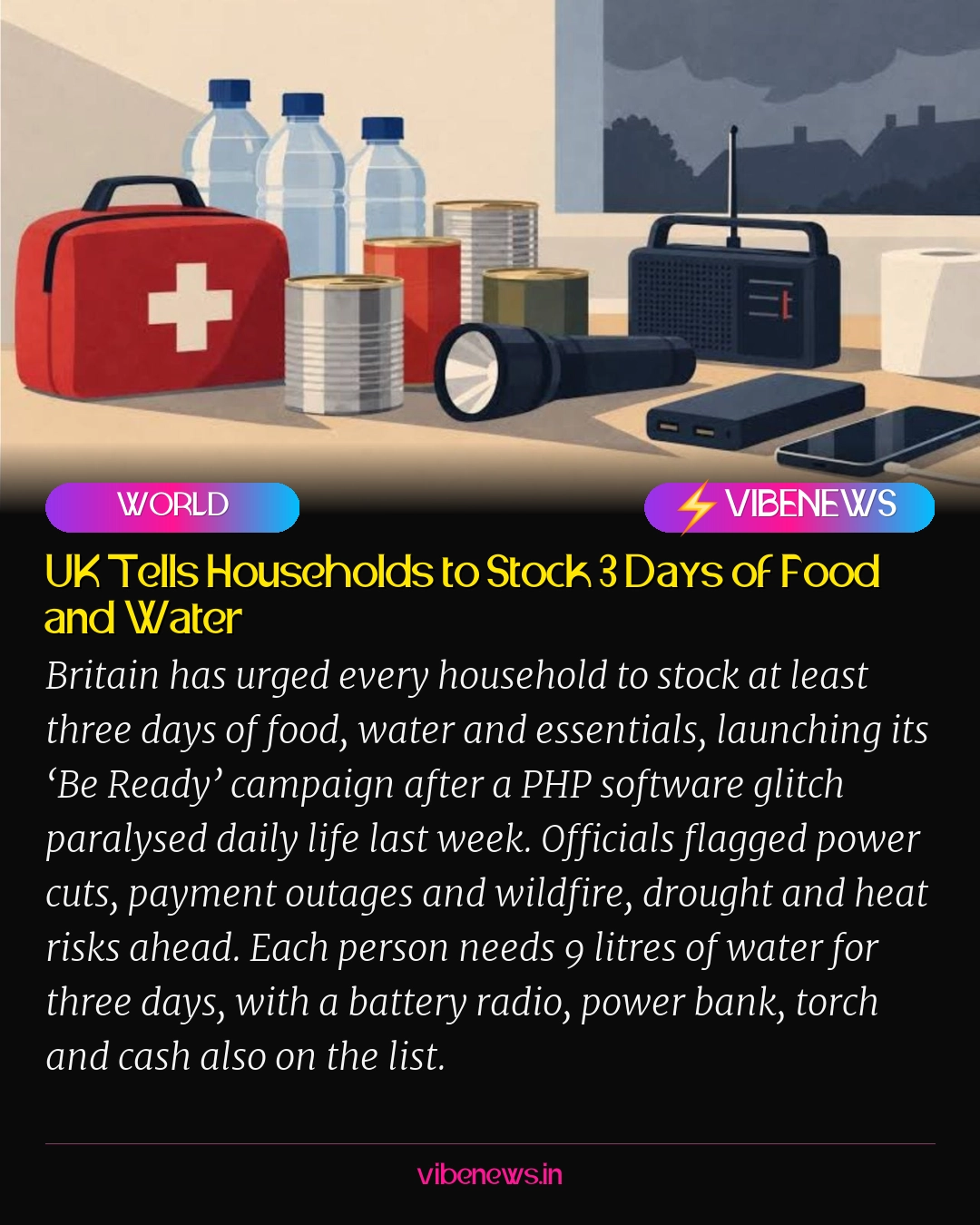
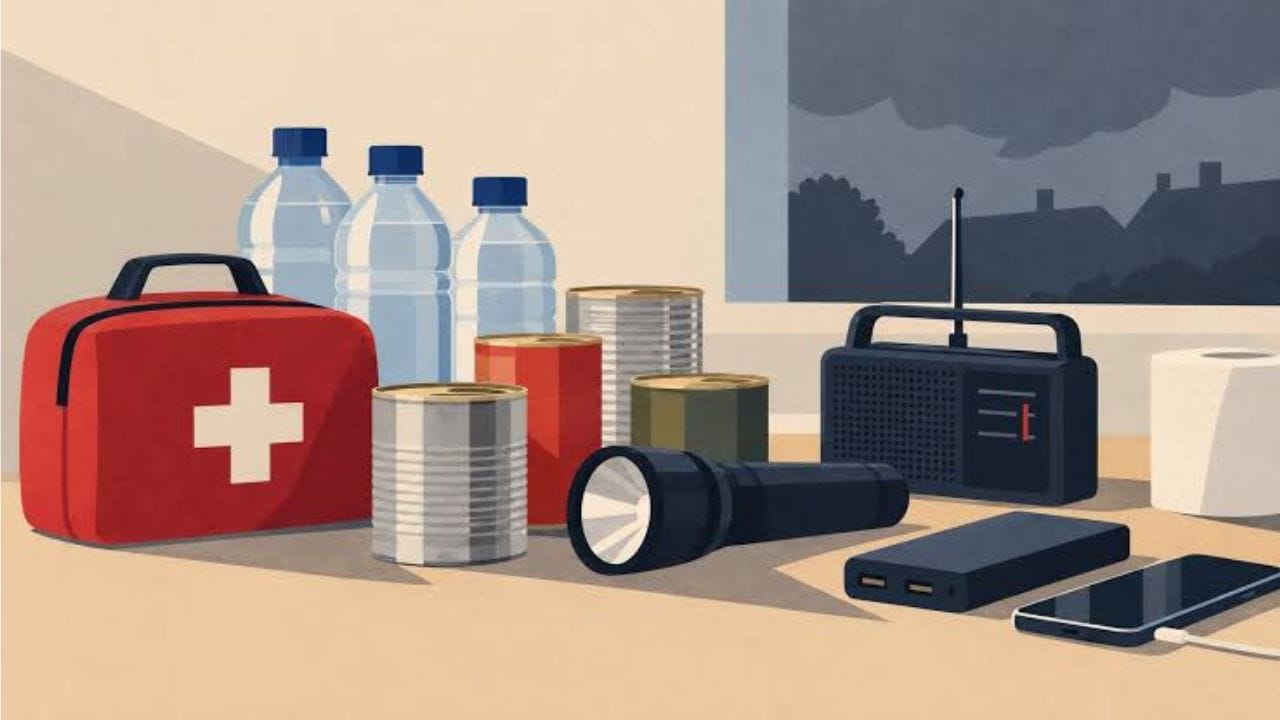
1. Battery or hand-crank radio: A battery-powered or hand-cranked FM radio keeps you connected to emergency information when electricity is gone.
2. Power bank: Phones need charge to work. Keep a fully charged power bank ready.
3. Torch: A battery-powered torch prevents people from stumbling around in the dark during a night-time blackout.
4. Cash: When power or technology fails, digital payments stop working. Keep some cash at home for essential purchases.
5. Medicines and first aid kit: Keep daily medicines and a basic first aid kit for minor injuries.
6. Hand sanitiser and blankets: Hand sanitiser supports personal hygiene. Blankets or sleeping bags protect against the cold.
What happens if food supplies are cut off
Britain imports a large share of what it eats. Around 40 to 50 percent of its food comes from abroad. Fruit dependence is even higher, with roughly 80 percent of the fruit consumed in the country imported.
That leaves the food supply exposed to disruption in global supply chains and transport. The government is asking households to plan ahead so that a shortage abroad does not turn into an empty shelf at home.
A warning, not a panic button
Prime Minister Andy Burnham said unexpected incidents are happening more often than they did in the past. In earlier emergencies, the government had to respond on the spot. Now, he said, the country needs more advance planning.
Keeping enough essentials at home is a wise step that helps families through difficult times, and the aim is not to spread fear.
The message from Downing Street, as reported, is simple. Stock up sensibly, know what you need, and be ready before the lights go out.
TL;DR
- Britain’s government urges every household to keep three days of food, water and essentials at home.
- The ‘Be Ready’ campaign follows a technical fault in PHP software that paralysed daily life last week.
- Each person needs about 9 litres of water for three days, at 3 litres per day.
- Officials warn of power cuts, internet outages and failing ATMs and online payments.
- The list includes a battery radio, power bank, torch, cash, first aid kit and blankets.
- Britain imports around 40 to 50 percent of its food, and about 80 percent of its fruit.