-
US Retaliates Against Iran, Destroys Oil Tankers Amid Escalating Gulf Tensions
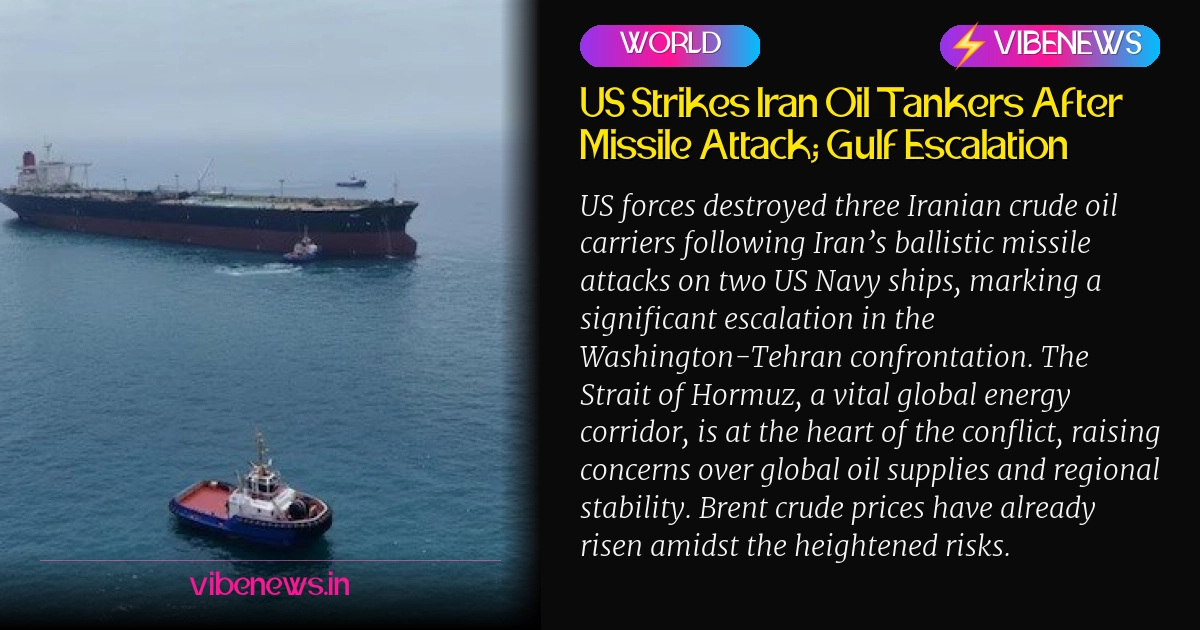
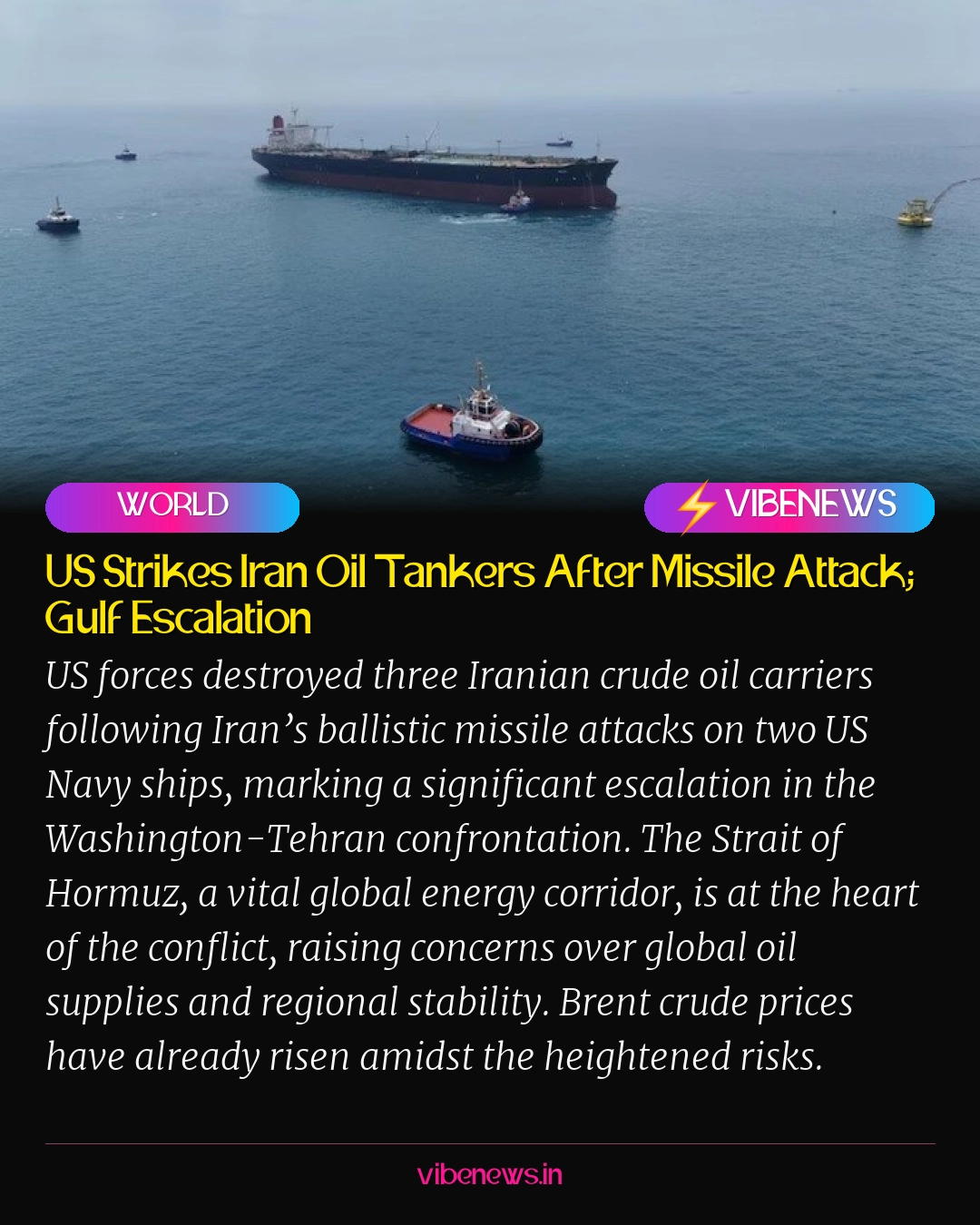
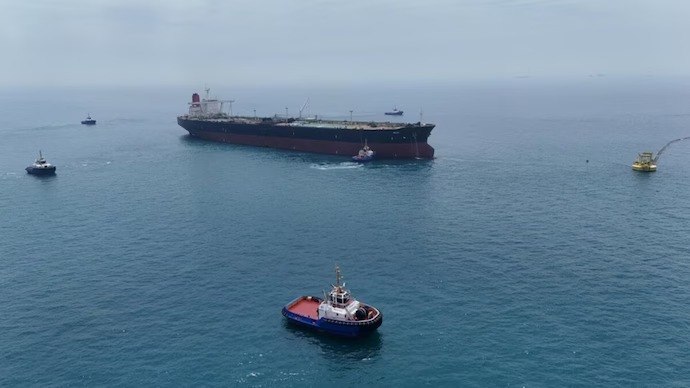
US forces on Saturday struck and destroyed three Iranian crude oil carriers, hours after Iran launched ballistic missiles at two US Navy ships. This action marks a significant escalation in the months-long confrontation between Washington and Tehran, as confirmed by US Central Command (CENTCOM).
The US military reported that no American personnel were harmed in the Iranian missile attacks, and the targeted warships successfully evaded the incoming projectiles. In a strong statement, CENTCOM commander Adm. Brad Cooper underscored the US position:
Let the message to the IRGC be clear: If you shoot at two of our ships, we will impose an even higher economic cost —taking out three of yours. We will not hesitate to defend American forces, and if necessary, destroy Iran’s limited and exposed oil fleet.
The targeted Iranian crude oil carriers included the M/T Downy, disabled off the coast of Kharg Island, and the M/T Stark 1, struck near Jask. Additionally, American forces completely destroyed the unladen crude oil carrier M/T Kylo (also known as the “Noxen”) in the Gulf of Oman, rendering it inoperable after its crew was directed to abandon ship.
Strait of Hormuz: A Global Flashpoint
This latest development adds a new dimension to an increasingly intense conflict, which has largely centered on maritime security and the strategically important Strait of Hormuz. This waterway is a critical global energy corridor, through which approximately one-fifth of the world’s oil supply normally passes. Commercial traffic in the strait has already seen a sharp decline due to increased risks from attacks and military operations.
The US has intensified its military presence and actions around the strait, citing Iranian forces’ attempts to threaten commercial vessels and US personnel. Previous US strikes included Iranian military positions on Larak Island, linked to preparations for deploying sea mines, and Iranian military infrastructure along the southern coast, targeting air-defence systems, radar installations, maritime assets, mine-laying capabilities, and communications facilities associated with the Islamic Revolutionary Guard Corps (IRGC).
Iran has consistently responded with missile and drone attacks against US-linked positions across the region. Tehran has also warned that it could further restrict oil shipments through the Strait of Hormuz if its own exports are blocked, repeatedly framing the waterway as a potential pressure point in the conflict.
Economic Repercussions and Regional Instability
The military exchanges have already had tangible repercussions for global energy markets. Brent crude prices have risen amidst concerns that continued fighting could further disrupt oil shipments through the Gulf. Any sustained interference with traffic through the Strait of Hormuz could exert additional pressure on global supplies, freight costs, and fuel prices.
Beyond economic concerns, the escalating military actions have raised fears of a broader regional confrontation. US President Donald Trump has warned Iran of a stronger response if it retaliates against American strikes, while Tehran has vowed to respond to what it describes as US aggression. With attacks now involving military installations, oil infrastructure, and commercial shipping, the risk of further escalation remains high, with the immediate focus likely to remain on the Strait of Hormuz.
US forces struck three Iranian crude oil carriers (M/T Downy, M/T Stark 1, M/T Kylo) in retaliation for Iranian missile attacks.Iran had launched ballistic missiles at two US Navy ships, though no American personnel were harmed.The incident marks a significant escalation in the months-long confrontation between Washington and Tehran.The conflict centers on the strategically vital Strait of Hormuz, a key global energy corridor.Concerns are rising over global oil supply disruptions, with Brent crude prices already increasing.Both US President Donald Trump and Tehran have issued warnings, heightening fears of a broader regional conflict.