A Landmark Energy Agreement Unveiled
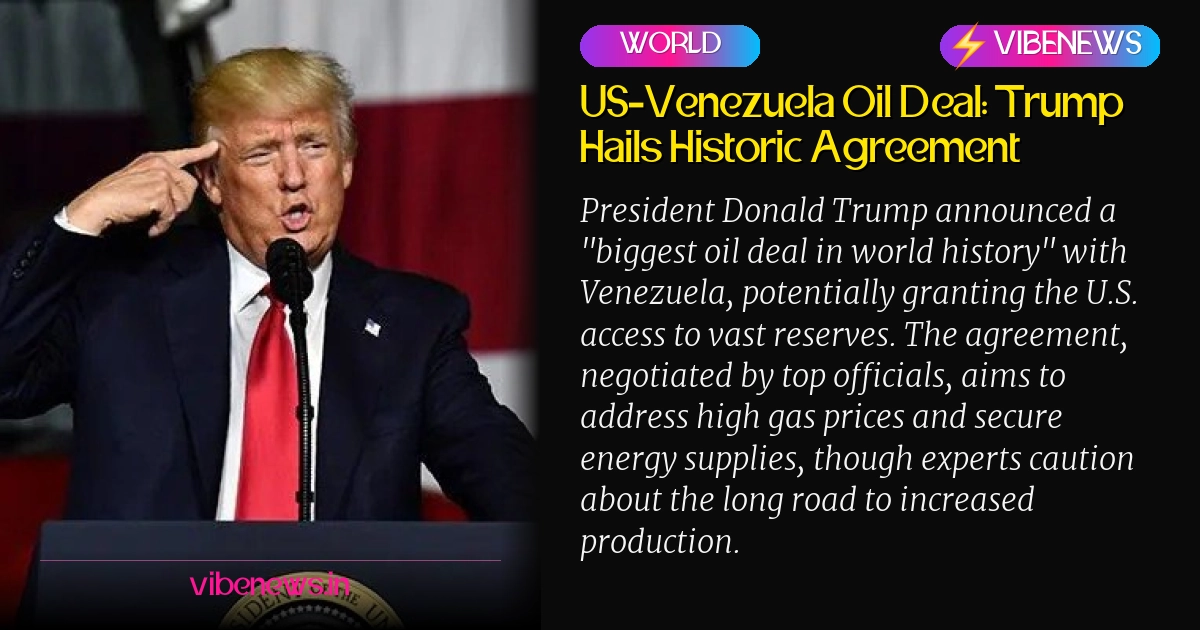
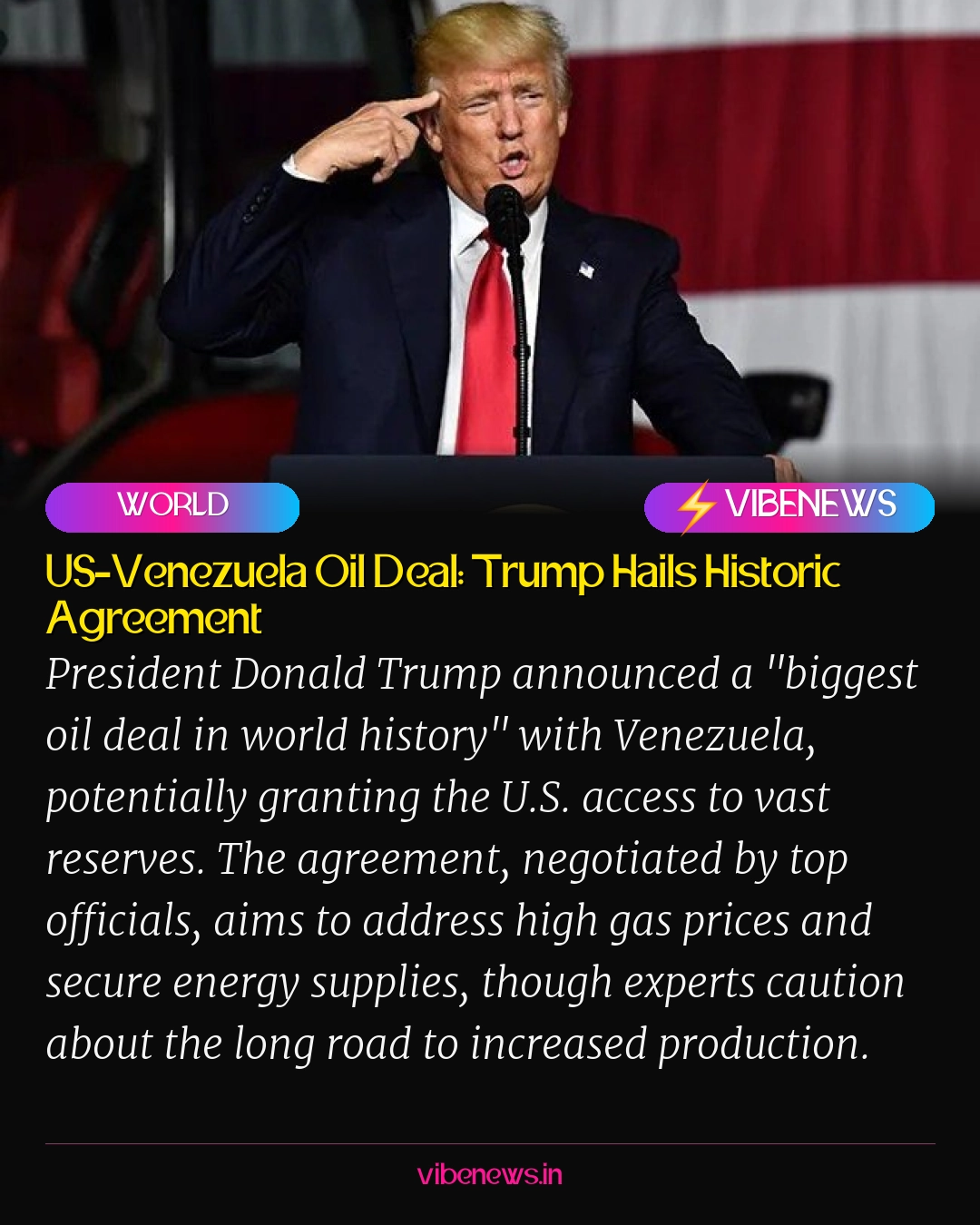
President Donald Trump declared a "biggest oil deal in world history" between the United States and Venezuela. This sweeping agreement, announced via social media, could provide the U.S. with access to significant portions of Venezuela’s vast, untapped oil reserves at a preferential cost. The announcement marks a dramatic shift in relations following years of strained diplomatic ties and economic sanctions.
The deal was reportedly negotiated by Secretary of State Marco Rubio and Defense Secretary Pete Hegseth on the U.S. side, with Venezuela’s acting President Delcy Rodriguez representing her nation. Trump lauded the agreement as a monumental achievement for American energy security and economic interests.
Contours of the Historic Deal
According to statements from Rodriguez’s government, the agreement encompasses the development of 17 oil fields, boasting a proven potential of 65 billion barrels. Venezuelan officials project that the deal could attract an estimated $100 billion in investment into the nation’s beleaguered oil industry, potentially generating over $209 billion in taxes for Caracas. Rodriguez expressed optimism that this initiative would significantly contribute to Venezuela’s national revival.
A U.S. official, speaking anonymously due to the sensitive nature of the discussions, revealed that the agreement involves the United States partnering with an unnamed private operator in Venezuela. This collaboration would establish a new private company tasked with developing the reserves. Crucially, Rodriguez’s government has reportedly granted this new entity 100-year rights to develop the designated oil fields.
Under the terms, the United States is set to gain a 55% effective output from the new private company. This includes a direct ownership stake and the right to purchase oil at cost. The official indicated that this new company would become the second-largest corporate holder of proven oil reserves globally, trailing only Saudi Aramco.
Addressing US Energy Security Concerns
This landmark announcement arrives amidst mounting pressure on the Trump administration to tackle persistently high domestic gas prices. The ongoing war in Iran, which recently reached its six-month mark without resolution, has significantly disrupted global oil supplies. Specifically, the conflict has severely curtailed the flow of Gulf oil through the Strait of Hormuz, a critical chokepoint through which approximately 20% of the world’s petroleum transited before the hostilities.
The U.S. has been actively drawing down its strategic petroleum reserves to mitigate the impact of these disruptions. In early August, these reserves dipped below 300 million barrels, representing a reduction of over 100 million barrels since the beginning of 2026. The average price of gasoline in the U.S. stood at approximately $4.09 per gallon, a notable increase from $3.21 a year prior, according to AAA data.
Venezuela’s Policy Reversal
The deal represents a dramatic pivot for Venezuela, coming nearly nine months after the U.S. military operation that led to the capture and extradition of then-President Nicolas Maduro to face federal charges in the United States. Maduro remains jailed, having pleaded not guilty to narcoterrorism and drug trafficking charges.
Historically, Venezuela’s oil sector has been a cornerstone of its socialist movement, with former President Hugo Chavez nationalizing hundreds of foreign-owned assets, including those of American oil companies, decades ago. Trump has frequently cited these actions as a "theft" of U.S. oil. However, acting President Rodriguez, in one of her initial policy moves, signed legislation opening the nation’s oil sector to privatization, effectively reversing a fundamental tenet of the socialist ideology that has governed the country for over two decades.
Challenges and Expert Caution
Despite the ambitious nature of the agreement, experts have cautioned against expecting an immediate and significant drop in U.S. gas prices. They repeatedly warn that a substantial boost in Venezuelan oil production will not materialize quickly. Repairing and expanding the country’s severely dilapidated oil infrastructure will require years of effort and billions of dollars in investment.
Persuading major American oil companies to return to the region could also face considerable headwinds. The long history of political instability in Venezuela, coupled with decades of damaged infrastructure and past nationalizations, presents significant risks. Following Maduro’s ouster, Trump had convened oil executives at the White House, urging them to re-engage with Venezuela. While interest was expressed, a measure of caution prevailed, with Darren Woods, CEO of ExxonMobil, famously describing the country as "un-investable" at that time.
Political Endorsements and Strategic Implications
Secretary of State Marco Rubio, a key negotiator, echoed Trump’s sentiment, stating on social media that the agreement would usher in billions in private investment into Venezuela and contribute to lower gas prices in the United States. He characterized the deal as a "huge win for both the American and Venezuelan people," highlighting it as an example of President Trump’s "bold foreign policy" driving "America First wins" by securing stable, low-cost oil in the Western Hemisphere.
The oil acquired from this new company is earmarked for replenishing the U.S. strategic petroleum reserve and for military use, according to the U.S. official. This strategic allocation underscores the deal’s importance beyond mere commercial gain, linking it directly to national security and long-term energy resilience.
Venezuela’s Untapped Potential
Venezuela possesses the largest proven oil reserves in the world, estimated at 303 billion barrels of crude oil, accounting for approximately 17% of the global supply, according to the U.S. Energy Information Administration. Unlike many other regions where extensive geological exploration is required, Venezuela’s reserves are largely mapped and known. However, due to chronic underinvestment, mismanagement, and dilapidated infrastructure, the country currently produces only about 1% of the world’s oil. This stark contrast between potential and current output highlights both the immense opportunity and the formidable challenges inherent in this new agreement.
Editorial Context
This agreement between the United States and Venezuela represents a profound recalibration of geopolitical alliances and energy strategy. For the U.S., it signifies a proactive step towards diversifying its energy sources and bolstering its strategic reserves, particularly in an era marked by heightened global instability and supply chain vulnerabilities. The potential for a stable, long-term supply of oil from a Western Hemisphere nation could significantly enhance American energy independence and provide a crucial buffer against price shocks stemming from conflicts in other parts of the world.
For Venezuela, the deal offers a lifeline to its devastated economy and a potential pathway to rebuilding its crucial oil industry. The influx of foreign investment and expertise could reverse decades of decline, creating jobs and generating much-needed revenue. However, the long-term success hinges on sustained political stability, transparent governance, and the ability to overcome deep-seated infrastructural and logistical challenges. The shift away from a core socialist tenet of nationalization also signals a significant ideological evolution within Venezuela’s leadership, potentially paving the way for broader economic reforms.
The agreement also carries significant diplomatic weight. It demonstrates a willingness by the Trump administration to engage with a previously adversarial nation under new leadership, prioritizing pragmatic energy security over past ideological differences. This could set a precedent for future U.S. foreign policy engagements in regions undergoing political transitions. The success or failure of this ambitious undertaking will be closely watched, not only for its economic implications but also for its impact on regional stability and the future of global energy markets. It underscores the complex interplay between geopolitics, economics, and national security in the 21st century.
TL;DR
- President Trump announced a "biggest oil deal in world history" with Venezuela, negotiated by Secretary Rubio and Defense Secretary Hegseth.
- The agreement involves developing 17 fields with 65 billion barrels potential, attracting $100 billion investment, and generating $209 billion in taxes for Venezuela.
- The U.S. will gain 55% effective output from a new private company, with 100-year development rights and the ability to buy oil at cost.
- The deal aims to address high U.S. gas prices and replenish strategic petroleum reserves amidst global supply disruptions from the Iran war.
- Experts caution that significant Venezuelan oil production increases will take years and billions in investment due to dilapidated infrastructure.
- Venezuela’s acting President Delcy Rodriguez reversed a long-standing socialist policy by opening the oil sector to privatization.