US Visa Policy Change: Harvard’s Urgent Advisory
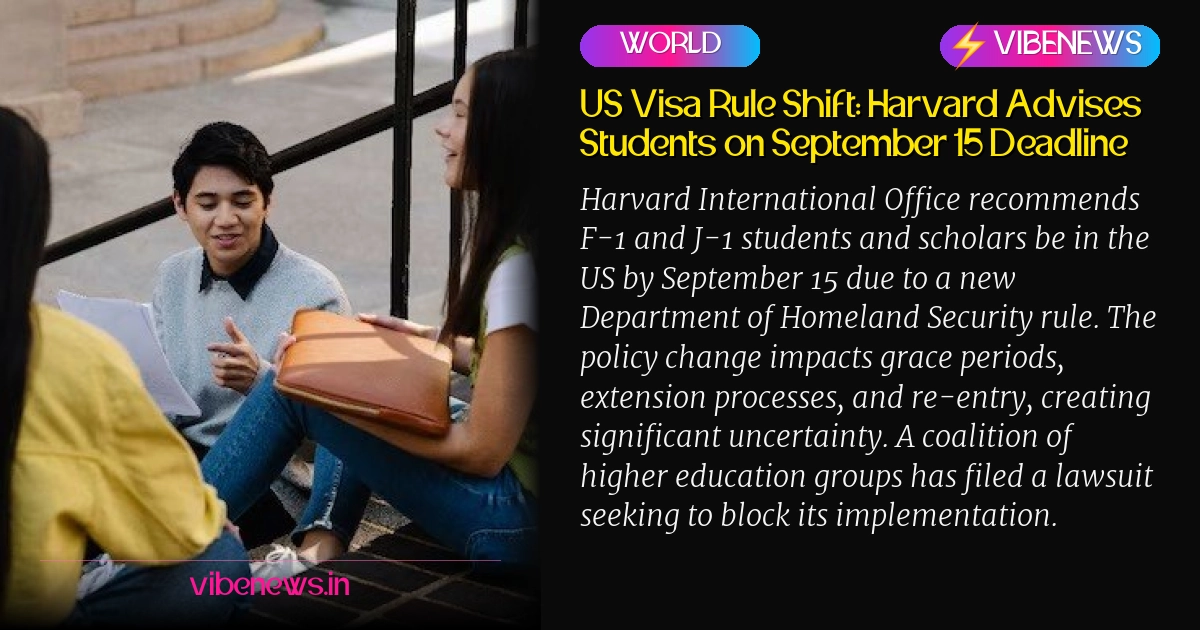
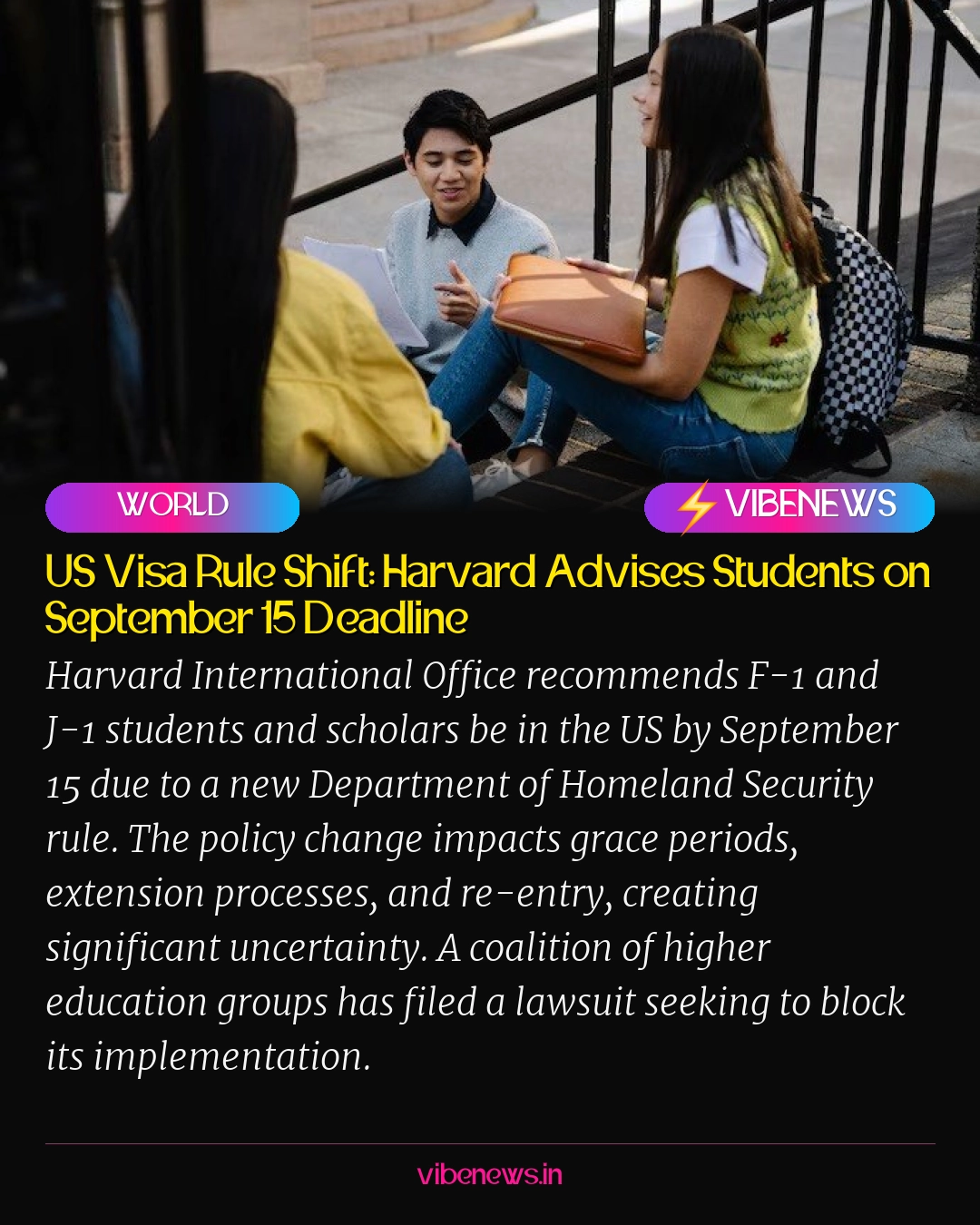
The Harvard International Office (HIO) has issued a critical recommendation to its international student and scholar community: F-1 and J-1 visa holders enrolled in on-campus programs this fall should endeavor to be physically present in the United States by September 15. This advisory comes in response to a new Department of Homeland Security (DHS) rule set to take effect on that date, which introduces significant changes to visa regulations.
The core of the HIO’s guidance stems from the differential application of the new rule. Students and scholars already within the US when the policy is enacted will be subject to different, generally more favorable, conditions compared to those who depart and subsequently re-enter the country after September 15.
The Legislative Shift
Under the existing framework, F-1 visa holders typically enjoy a 60-day grace period following their program’s completion, while J-1 visa holders have a 30-day grace period. For those present in the US on September 15, these established grace periods will largely remain intact, allowing them to stay without filing for an extension until their program end date or the expiration of post-completion work authorization, up to a maximum of four years.
However, the new DHS rule significantly alters this for those who re-enter the US after the deadline. The grace period for F-1 visa holders will be shortened to 30 days. Furthermore, the ‘Admit Until Date’ on their I-94 forms, which dictates their authorized stay, may be adjusted to align precisely with their program end date, potentially complicating future extensions of status.
Navigating Travel and Re-entry
A crucial aspect of the new policy is its impact on international travel. Current students and scholars who leave the US and return after September 15 will immediately become subject to the revised regulations upon their re-entry. This means that even if they were previously under the older, more lenient rules, their status will be re-evaluated under the new, stricter guidelines.
The process for extending one’s stay in the US is also undergoing a fundamental change. Historically, students could often extend their program dates through their respective universities without needing to file a separate application with US Citizenship and Immigration Services (USCIS). The new rule mandates that any student wishing to remain beyond their initially authorized admission period must now file for an extension directly through USCIS, adding an extra layer of administrative burden and potential delays.
Uncertainty and Legal Recourse
Since the rule’s announcement in July, a palpable sense of uncertainty has gripped the international student community. Many remain unclear about the practical implications, particularly concerning how travel plans might affect their visa status. The HIO itself has acknowledged these ambiguities, stating that its ability to provide definitive clarity is limited given the evolving nature of the situation.
In response to these concerns, a coalition of higher education groups and labor unions has taken legal action. A lawsuit was filed, seeking to prevent the rule from taking effect. The plaintiffs have also requested a preliminary injunction from a federal judge, which, if granted, would temporarily block the rule’s implementation while the legal challenge proceeds. As of now, this injunction has not been granted, leaving the September 15 deadline looming.
Editorial Context: Long-Term Implications
This latest shift in US visa policy carries significant long-term implications for the nation’s higher education landscape and its standing as a global magnet for talent. The increased administrative complexity and reduced flexibility for international students could deter prospective applicants, particularly from countries like India, which consistently send a large cohort of students to American universities.
The uncertainty surrounding grace periods and extension processes creates an environment of anxiety, potentially impacting students’ academic focus and post-graduation career planning. Such policies risk making the US a less attractive destination compared to other countries that offer more predictable and streamlined immigration pathways for international graduates. Over time, this could diminish the diversity and intellectual vibrancy of American campuses and reduce the flow of skilled professionals into the US economy, affecting innovation and competitiveness on a global scale.
TL;DR
- Harvard advises international students and scholars to be in the US by September 15 due to a new DHS visa rule.
- The new rule shortens F-1 visa grace periods to 30 days and mandates USCIS applications for extensions of stay.
- Students and scholars who leave and re-enter the US after September 15 will be subject to the new, stricter regulations.
- Those already in the US by September 15 will largely retain older grace periods and extension processes until their program ends.
- Significant uncertainty persists regarding the practical implementation of the new visa policy.
- A coalition of higher education groups and labor unions has filed a lawsuit to block the rule, seeking a preliminary injunction.