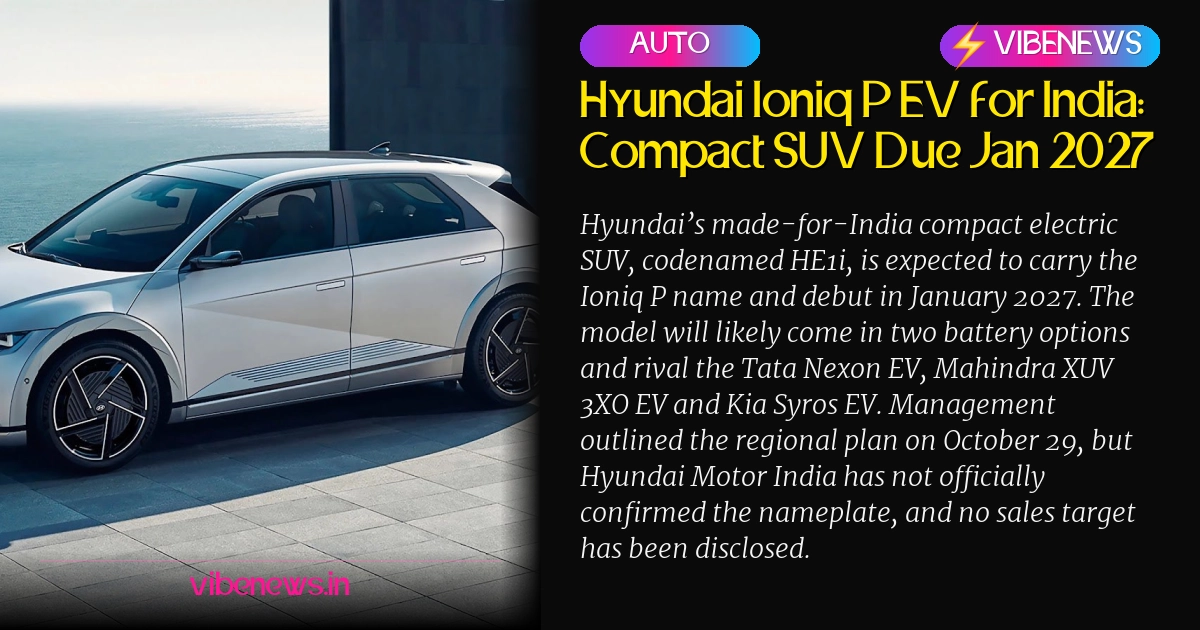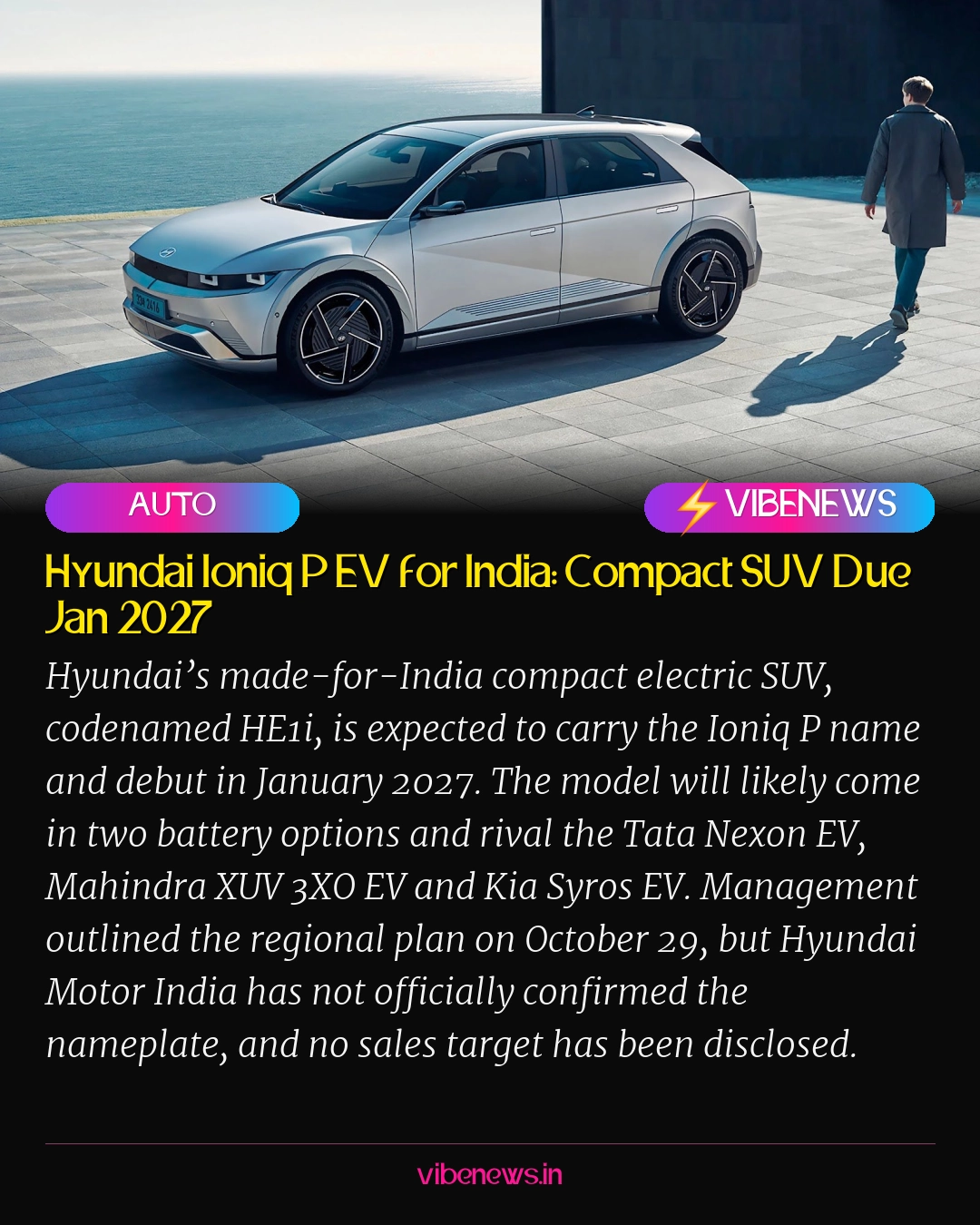
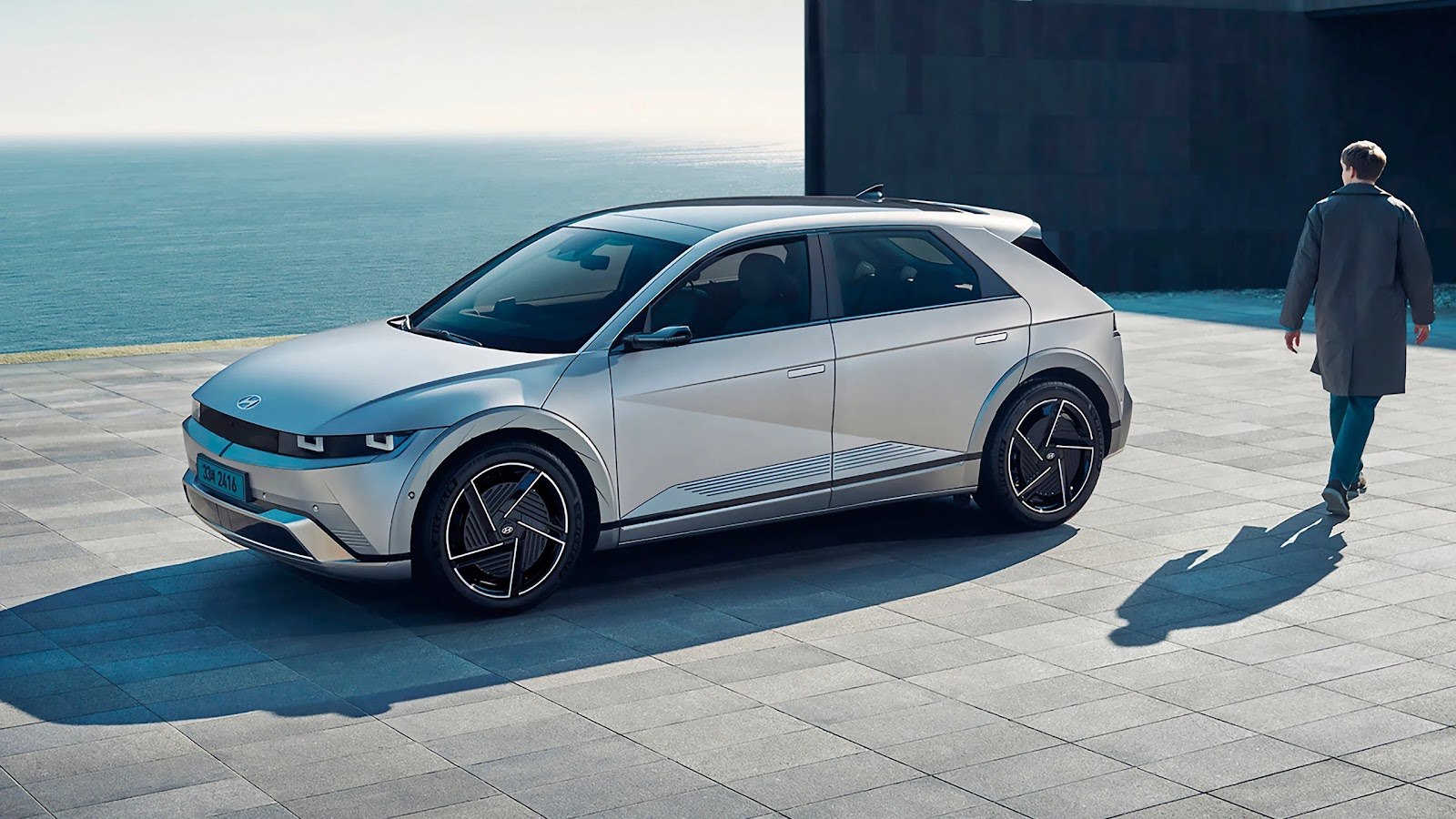
Hyundai is preparing to bring a made-for-India compact electric SUV to market under the Ioniq P name, and the debut is now expected in January 2027. The model is codenamed HE1i, and it is designed to push the globally recognised Ioniq nameplate into a more accessible part of the Indian market.
The timing came from Hyundai management during the third-quarter 2026 earnings conference call with analysts on October 29. Executives said the company would introduce the Ioniq P in India after the Bayon. The company has yet to officially announce the nameplate, and the management commentary did not explicitly link the Ioniq P name to the HE1i project. Until Hyundai Motor India makes an official statement, the name remains an expected one rather than a confirmed launch title.
The shift in timeline matters. Hyundai had previously pointed to an end-of-2026 timeline for the compact EV. The official debut is now expected in January 2027, which pushes the car into the new calendar year and gives Hyundai more time to finalise the product before it reaches showrooms.
Why an affordable EV is the priority right now
India’s electric passenger vehicle sales have risen almost 90 percent so far in FY27. That growth is the reason this model carries weight for Hyundai. A more affordable electric car is no longer a side project in the company’s portfolio. It is the centre of the plan.
The upcoming model will lead Hyundai’s effort to lift its EV sales share closer to the industry average in FY28. Hyundai has not disclosed a sales target for the new model, so the company’s ambition is clear but the numbers are not yet public.
Tarun Garg, managing director of Hyundai Motor India, said the company aims to achieve this with a made-for-India mass-market electric vehicle.
That line sums up the strategy. Hyundai is not simply bringing a global EV to India. It is building a car for a mass market, and the price point and local fit will decide how fast it moves.
What is under the skin
The Ioniq P is expected to sit on the E-GMP (K) platform. The same platform underpins the Inster EV, which is sold in international markets. The Inster EV comes in standard-range and long-range versions, with 42kWh and 49kWh battery packs, and offers a claimed range of up to 355km on the WLTP cycle.
The Indian model is likely to follow a similar split. It will probably be offered in a standard-range and a long-range version, but the exact specifications have not been revealed. Hyundai has kept the numbers under wraps, so anything beyond the battery configuration remains speculation until the company releases details.
The battery story is more complicated. The upcoming compact EV will initially use imported battery cells. Hyundai had planned to source locally made cells through its partnership with Exide Industries. Exide has indicated that supplies under the Hyundai-Kia programme will not begin this year, and local cell sourcing will follow at a later stage.
That delay has a direct cost impact. Local cell supply is a major factor in controlling the price of an affordable EV and reducing dependence on imports as volumes grow. Until local cells arrive, the car will carry the cost burden of imported parts, which is a key pressure point for a model meant to sell in large numbers.
Tech and safety upgrades on the way
Hyundai has previously confirmed that the new compact EV will get a next-generation infotainment system. The company has not named the system officially, but it could be the Pleos Connect infotainment system already seen on several of the brand’s new-age models. The car will also get Level 2 assisted driving technology.
Those two features position the car above what buyers might expect at this size and price. Assisted driving and a modern infotainment setup are increasingly visible in the compact segment, and Hyundai is clearly aiming to match that expectation.
Where it will be built and who it will fight
The EV will be manufactured at Hyundai’s Sriperumbudur facility in Tamil Nadu. That places production in a plant that is central to Hyundai’s Indian manufacturing base, and it gives the company a direct route to scale volumes once the model is ready.
On the competitive front, the Ioniq P is set to lock horns with the Tata Nexon EV, Mahindra XUV 3XO EV and Kia Syros EV. The Nexon EV and Syros EV are already well known in the compact electric space, so Hyundai will need to offer a clear reason for buyers to choose the Ioniq P over these established options.
The name is the mystery, and the car could be the surprise
The name Ioniq P is the most intriguing part of this story. Hyundai has built the Ioniq brand into a global electric identity, and placing it on a made-for-India compact SUV would signal a clear intent to change how the brand is seen in the country. The nameplate has not been officially confirmed, and the management commentary did not connect it directly to the HE1i project. That gap is exactly what keeps the story open.
What is confirmed is the direction. Hyundai is building a mass-market electric SUV for India, it will use the E-GMP (K) platform, it will start with imported cells, it will be built in Sriperumbudur, and it is expected to launch in January 2027. Everything else is still under wraps.
If the Ioniq P delivers on the promise of a more accessible Ioniq, it could reshape the compact EV contest in India. For now, the car remains a teaser with a famous name, a clear target and a debut date that is still a few months away.
TL;DR
- Hyundai’s made-for-India compact electric SUV, codenamed HE1i, is expected to carry the Ioniq P name.
- The company is expected to debut the model in India in January 2027, later than the end-of-2026 timeline given earlier.
- The EV will likely come in standard-range and long-range versions and use the E-GMP (K) platform also seen on the Inster EV.
- Initial battery cells will be imported, as the planned Exide Industries local supply will not begin this year.
- The car will get a next-generation infotainment system and Level 2 assisted driving technology, and it will be built in Sriperumbudur.
- It will compete directly with the Tata Nexon EV, Mahindra XUV 3XO EV and Kia Syros EV.