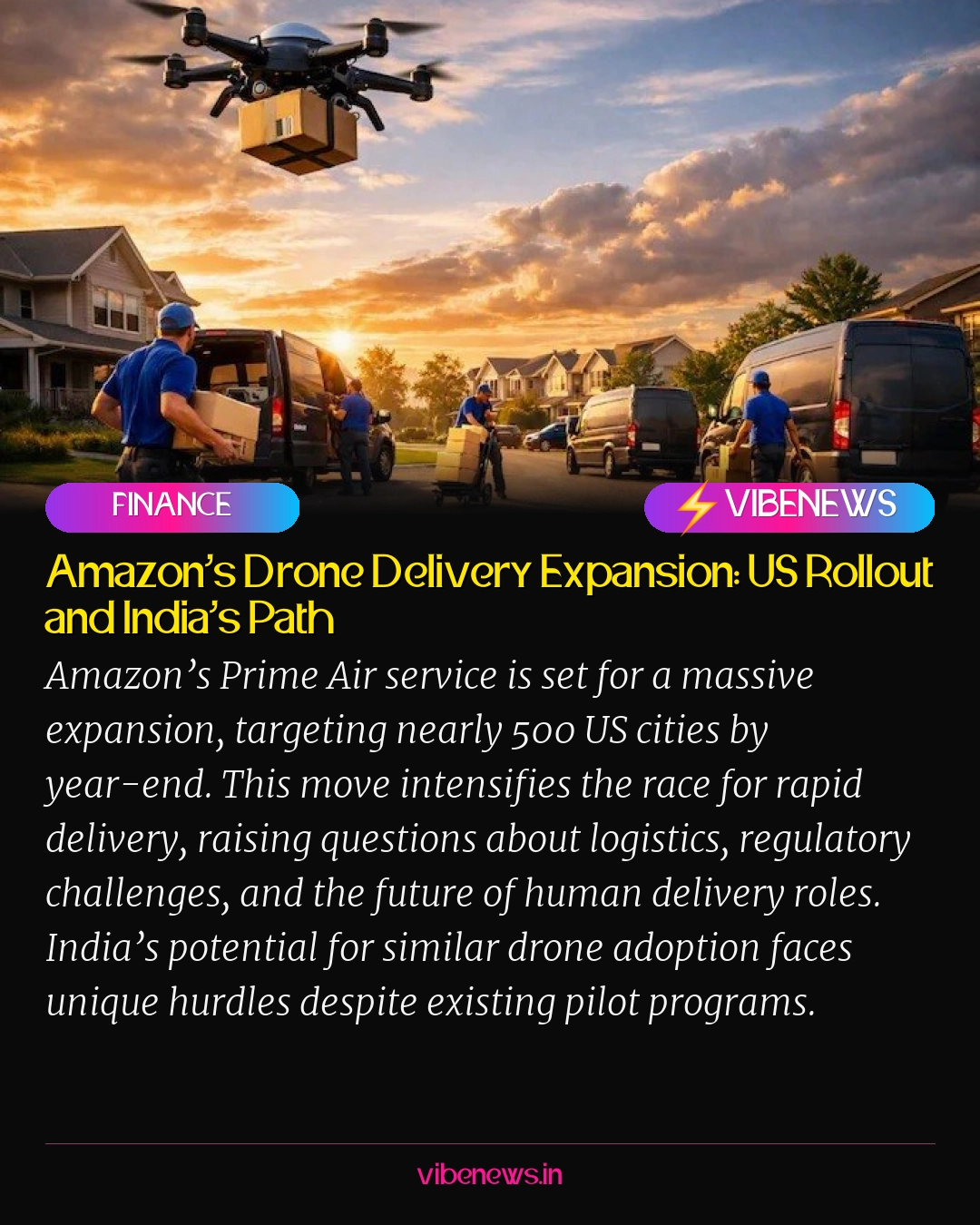
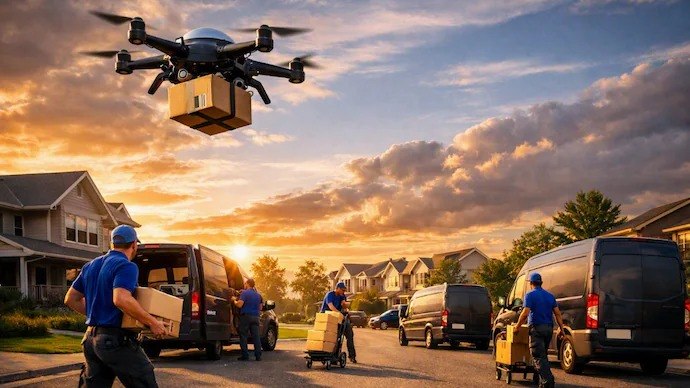
Amazon is embarking on a significant expansion of its Prime Air drone delivery service, aiming to reach nearly 500 cities and towns across the United States by the close of this year. This ambitious rollout represents a six-fold increase in the service’s current operational footprint, signaling a major push towards integrating autonomous aerial vehicles into mainstream logistics.
The move underscores Amazon’s long-standing commitment to ultra-fast delivery, a cornerstone of its Prime membership offering. From two-day shipping to one-day and same-day options, the company consistently seeks to reduce delivery times, with Prime Air designed to push these boundaries even further.
A Decade in the Making: Prime Air’s Journey
The concept of drone delivery was first unveiled by Amazon founder Jeff Bezos over a decade ago, capturing public imagination with its futuristic vision. However, the journey from concept to widespread implementation has been protracted, marked by numerous challenges.
Regulatory hurdles, technical complexities, and even staff reductions have slowed the project’s momentum over the years. Concerns from local communities regarding noise pollution and privacy have also contributed to a cautious, phased approach to expansion.
Operational Scale and Innovation
Currently, Amazon’s Prime Air operates in 11 US metropolitan areas, with plans to activate six more locations imminently. The company reports that its drones have already completed hundreds of thousands of deliveries this year, with daily delivery volumes now reaching into the thousands.
These drones are engineered to carry packages weighing up to five pounds and can travel within a 7.5-mile radius of their operating facilities. A notable innovation in development is a retractable tether system, designed to gently lower packages to the ground, potentially enabling the safe delivery of more delicate items like perishables.
The Evolving Role of Delivery Personnel
A crucial question surrounding this expansion is the impact on Amazon’s vast network of human delivery drivers. While the scale of drone deployment is significant, industry analysis suggests that drones are not poised to entirely replace human workers.
Instead, drones are currently best suited for small, lightweight orders and short-distance deliveries, particularly to homes located close to Amazon facilities. This specialization means human drivers will continue to handle larger, more varied shipments across wider geographical areas, potentially shifting their roles rather than eliminating them.
Navigating the Skies: Challenges and Competition
Amazon is not alone in the drone delivery race, facing stiff competition from other tech giants. Alphabet’s Wing, for instance, has already surpassed one million commercial drone deliveries and operates in 20 US markets, while Zipline boasts two million deliveries across four continents.
Despite its progress, Prime Air continues to grapple with technical challenges. Incidents such as two Amazon drones colliding with a crane in Arizona and another reportedly damaging an internet cable in Texas highlight the complexities of integrating autonomous flight into existing infrastructure. Investigations into these incidents by US authorities are ongoing, alongside a similar probe into a Prime Air drone crash in England.
India’s Unique Trajectory in Drone Logistics
While Amazon’s US expansion is rapid, a similar large-scale rollout in India faces a distinct set of challenges and opportunities. India’s dense urban environments, complex aviation regulations, and diverse geographical landscape present unique hurdles for widespread drone adoption.
However, India is not new to drone-based logistics. The country has actively explored and piloted drone deliveries in various sectors, including healthcare and e-commerce. Flipkart, a major Indian e-commerce player, has notably participated in pilot programs for vaccine and medical supply deliveries in states like Telangana, demonstrating the technology’s potential in critical areas.
For consumer-facing drone deliveries on the scale Amazon envisions in the US, India would require comprehensive regulatory frameworks, robust airspace management systems, and significant public acceptance. The potential benefits, such as enhanced last-mile connectivity in remote areas and increased efficiency, are substantial, but the path to widespread implementation will necessitate careful planning and collaboration between industry and regulators.
Editorial Context
Amazon’s aggressive expansion of Prime Air marks a pivotal moment in the evolution of global logistics and e-commerce. This development is not merely about faster package delivery; it represents a significant leap towards integrating autonomous systems into daily life, with profound long-term implications.
The shift will undoubtedly reshape urban planning, requiring new infrastructure for drone hubs and flight paths. It will also necessitate a re-evaluation of employment models in the logistics sector, fostering new skill sets and potentially redefining the roles of human workers. Furthermore, the regulatory frameworks governing drone operations will continue to evolve, balancing innovation with safety, privacy, and public interest.
For emerging economies like India, the lessons learned from the US rollout will be invaluable. While facing unique challenges, India’s existing pilot programs demonstrate a readiness to embrace drone technology, positioning it to potentially leapfrog traditional infrastructure limitations in specific niches. The global race for autonomous delivery is accelerating, promising a future where packages arrive not just quickly, but intelligently.
TL;DR
- Amazon’s Prime Air drone delivery service is set to expand to nearly 500 US cities and towns by the end of this year, significantly increasing its operational reach.
- The drones are designed for small, lightweight packages (up to 5 pounds) and can travel within a 7.5-mile radius, with a new tether system in development for delicate items.
- The expansion is expected to shift, rather than eliminate, the roles of human delivery workers, with drones handling specific last-mile, lightweight deliveries.
- Prime Air faces competition from companies like Alphabet’s Wing and Zipline, which have already completed millions of drone deliveries.
- Technical hurdles, including drone collisions and damage incidents, along with regulatory and community concerns (noise, privacy), continue to be challenges.
- India’s large-scale drone delivery adoption faces unique challenges like dense populations and regulatory complexities, despite existing pilot programs by companies like Flipkart in Telangana.