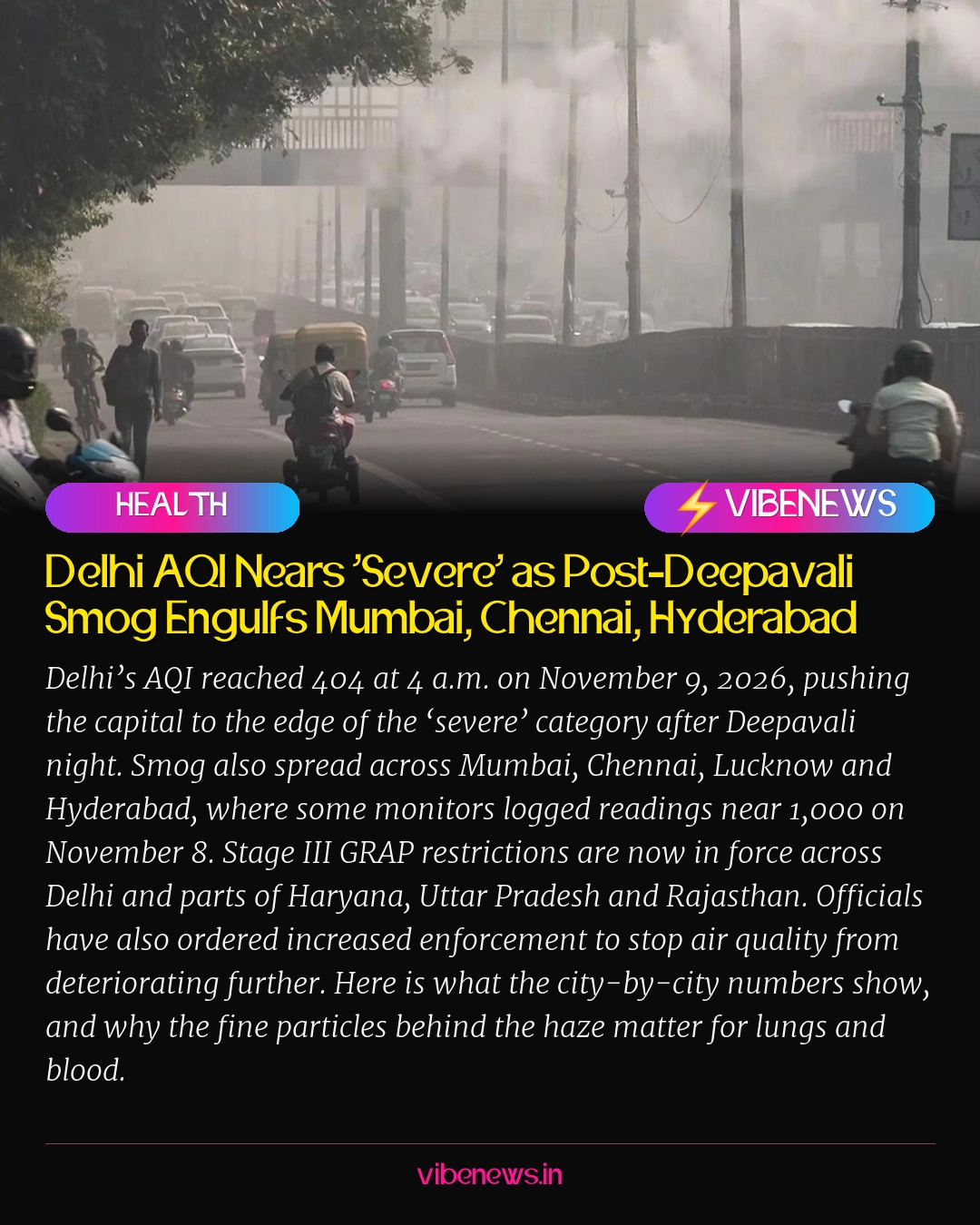
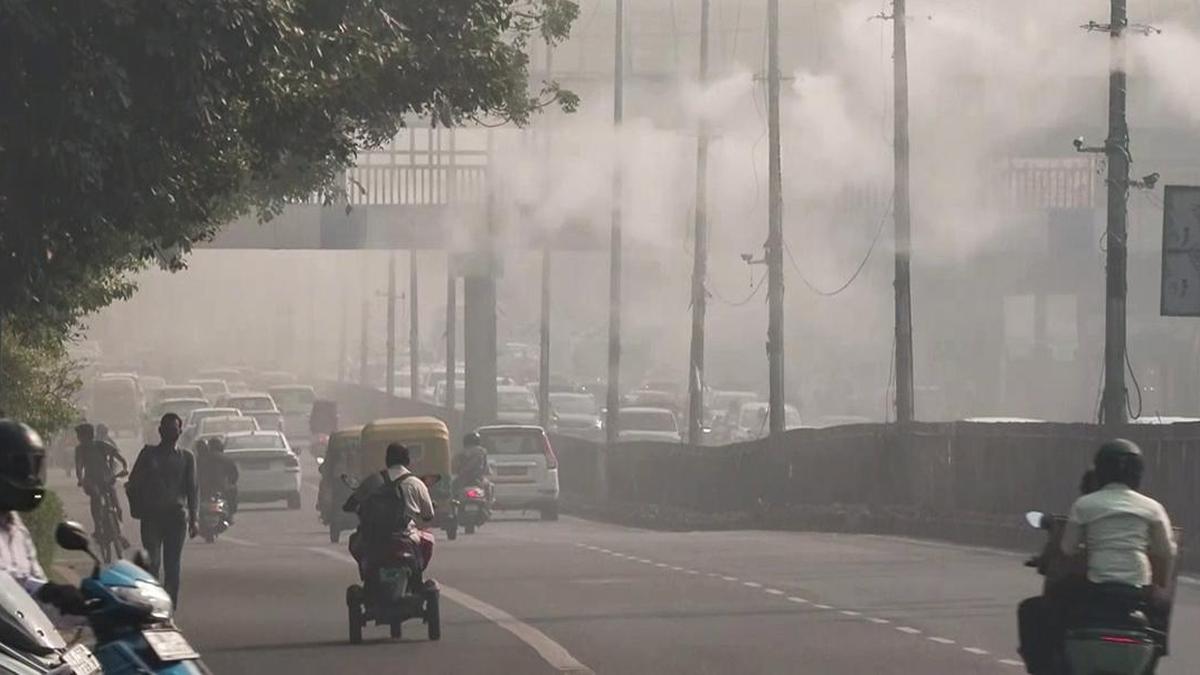
Delhi’s air quality slid to the edge of the ‘severe’ category on Monday, with the Air Quality Index topping 400 across the capital after Deepavali night, and smog spread to Mumbai, Lucknow and other major cities.
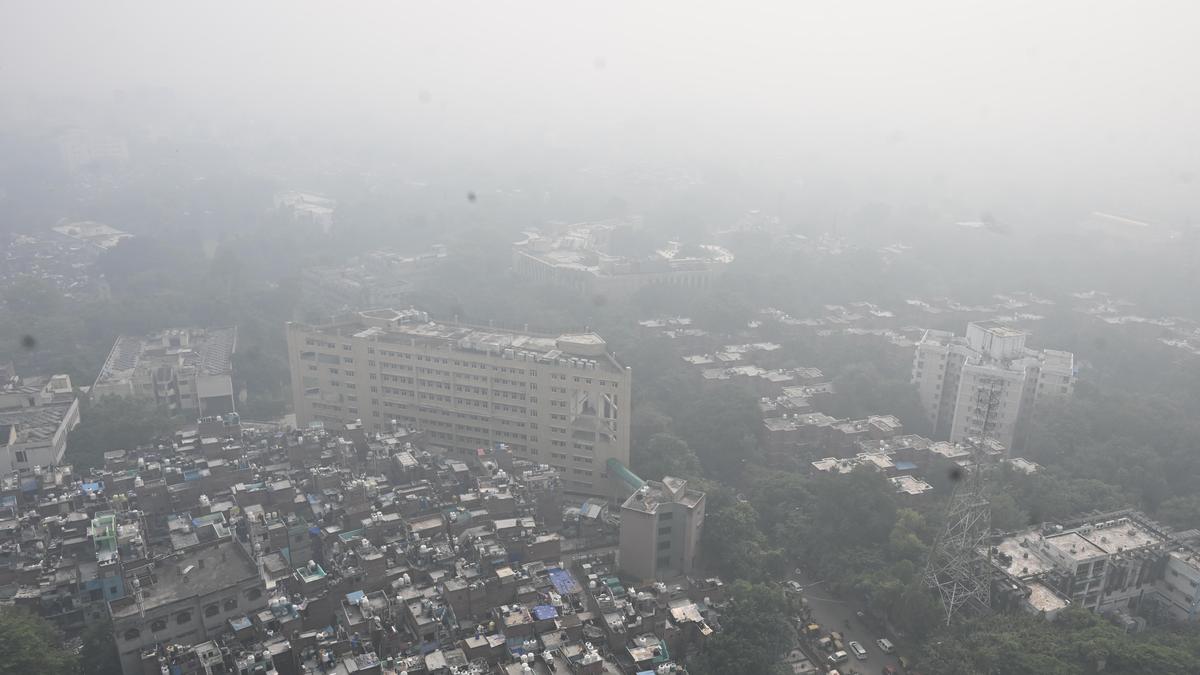
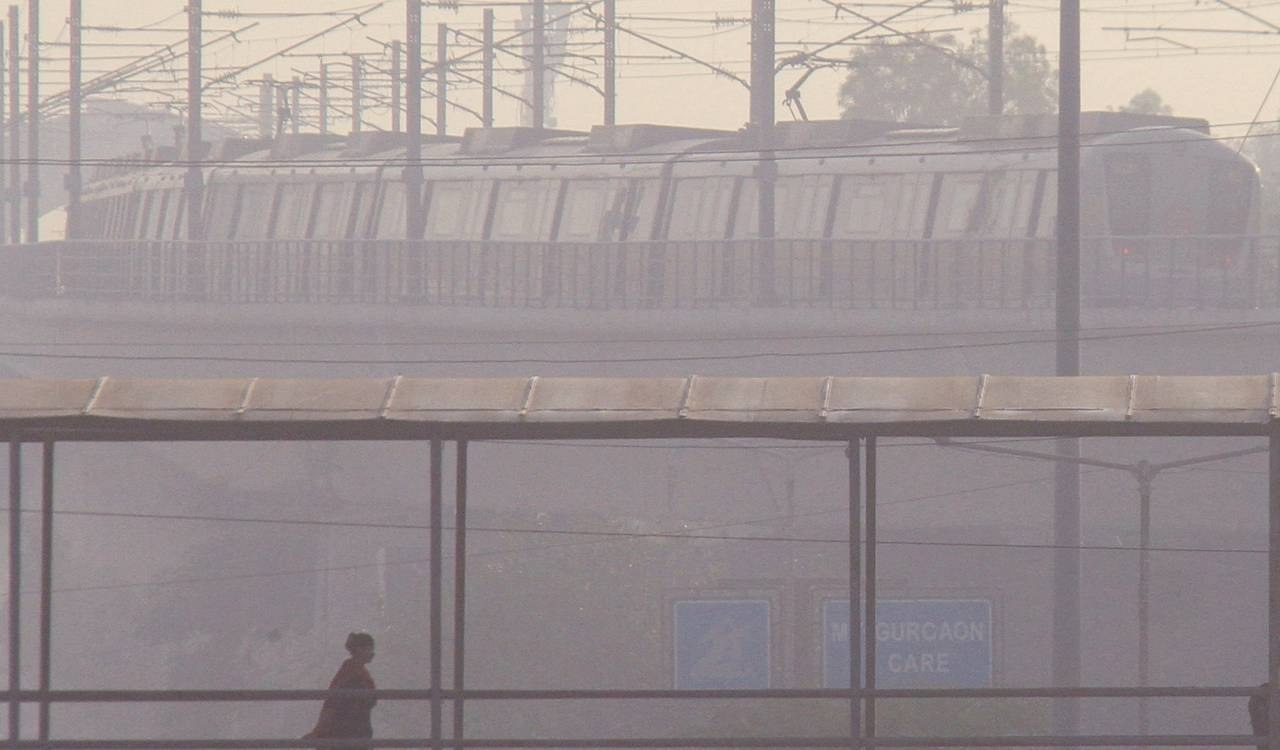
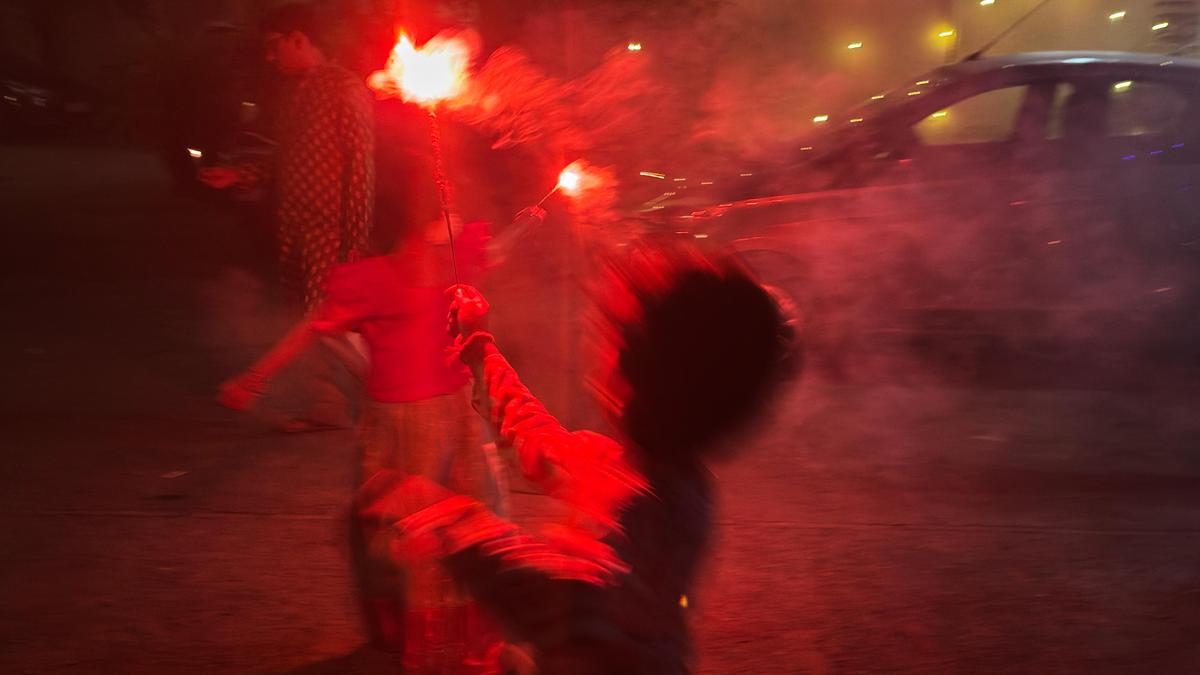
A thick layer of toxic haze settled over parts of the national capital during the early morning hours and cut visibility sharply. The smog came despite strict limits on fireworks set by the Supreme Court. People kept bursting crackers well past 10 p.m. on Deepavali night, even though the apex court had allowed only green firecrackers in specified time windows on November 7 and 8. Traditional crackers, which are more polluting, were still available in Delhi markets.
The Central Pollution Control Board’s live dashboard showed Delhi’s AQI climbing to 404 at 4 a.m. on November 9, before readings eased. Burari Crossing recorded the highest level in the city at 441. Vivek Vihar followed at 437, Delhi Technological University at 434, North Campus of Delhi University and Jahangirpuri at 433 each, and Rohini at 430. The city’s 24-hour average stood at 370 at 9 a.m., which falls in the ‘very poor’ band.
Emergency curbs kick in across the region
Stage III of the Graded Response Action Plan is now in force across Delhi and adjoining districts of Haryana, Uttar Pradesh and Rajasthan. The Commission for Air Quality Management ordered the measures. Existing restrictions will continue, and authorities are adding more pollution-control steps, tighter enforcement and directions to concerned agencies to stop further deterioration.
GRAP is a four-stage emergency framework run by the CAQM, working with the CPCB and state governments. Restrictions get tougher as air quality worsens. Stage III was triggered as a precaution, based on meteorological and pollution forecasts from the India Meteorological Department and the Indian Institute of Tropical Meteorology. The idea is to act before citywide readings reach the ‘severe’ mark, not after.
Why the numbers matter for people breathing it
Most of the headline figures come from PM2.5, a measure of fine inhalable particles 2.5 micrometres or smaller. These particles can travel deep into the lungs and even enter the bloodstream, which can lead to respiratory and other health problems. That is why a reading in the 400s is not just a bad day on a chart. It means people commuting, jogging or working outdoors are inhaling far more of this material than usual.
Mumbai sees haze over Kalanagar and Bandra
Mumbai woke up hazy, with a thick layer of smog blanketing the Kalanagar and Bandra areas as air quality worsened. Kherwadi-Bandra East was the worst hit in the city, recording an AQI of 264. Sewri followed at 226, Ghatkopar at 221 and Chembur at 216. Byculla logged 193, Mindspace-Malad West 191, Kandivali West 187 and Worli 148. Kurla was the cleanest of the monitored spots at 96.
Chennai residents describe smoke they could barely see through
Chennai’s AQI slipped into the ‘poor’ category at 213 on the morning of November 9, according to the CPCB’s Sameer app. The worst moment came the night before. A private sensor at the Chennai home of weather blogger K. Srikanth recorded an AQI of around 1,000 for nearly four hours, between 6 p.m. and 10 p.m. on November 8.
Smoke from firecrackers lingered in cramped residential communities, with visibility so poor at one point that people could barely see one another.
That is how Chennai residents described the scene in their neighbourhoods. As of 9 a.m., Manali Village recorded the city’s highest official reading at 296. Arumbakkam logged 265, Kodungaiyur 215, Royapuram 184 and Velachery Residential Area 142.
Hyderabad wakes to grey, smoggy morning
The pollution story is not only a northern one. Hyderabad woke up to a grey and smoggy morning on November 9, after Deepavali celebrations ran until 3 a.m. in localities such as Banjara Hills, Panjagutta, S.R. Nagar, Ameerpet and Somajiguda. Smog was visible over the historic Golconda Fort.
The numbers from the previous night are alarming. PM2.5 in Hyderabad reached 392 μg/m³ at 9.30 p.m. on November 8, and the city’s AQI averaged 509. Ravi Colony near Masjid Banda logged an AQI of 995 on November 8. Serilingampally recorded 666 at 11.30 p.m., when the city average was 442.
The trouble is that the official picture is incomplete. Telangana Pollution Control Board monitors in Hyderabad were out of order as pollution rose on November 8, and the University of Hyderabad station went offline by 10 p.m. The figures that did come through were from publicly available monitors. By the morning of November 9, Hyderabad’s AQI had dropped to 178, with PM10 at 113 μg/m³.
Smog spreads across the rest of the country
Several other cities also recorded ‘poor’ air on November 9. Amritsar logged 242, Jodhpur 234, Ahmedabad 230, Dehradun 228, Jaipur and Udaipur 223 each, Surat 207, Nagpur 239, Pune 221 and Bhopal 205. Kolkata stood at 167. Lucknow was also blanketed in haze, with several parts of the city waking up to hazy conditions.
Southern cities fared better overall. Bangalore recorded 127, Hyderabad 120 and Thiruvananthapuram 67. Under the CPCB’s bands, an AQI of 0 to 50 is ‘good’, 51 to 100 ‘satisfactory’, 101 to 200 ‘moderate’, 201 to 300 ‘poor’, 301 to 400 ‘very poor’ and 401 to 500 ‘severe’. By that yardstick, Delhi sat just short of the worst band, while several Chennai and Hyderabad monitors crossed into the ‘very poor’ range or beyond during the night.
For now, the restrictions and the monitors are the only tools authorities are pointing to. Whether the air clears or worsens depends on what happens next, and the city-level readings will show that within hours.
TL;DR
- Delhi’s AQI hit 404 at 4 a.m. on November 9, 2026, just short of the ‘severe’ category.
- Smog spread to Mumbai, Lucknow and other cities after Deepavali night, with fireworks continuing past the 10 p.m. deadline.
- Stage III GRAP restrictions are now in force across Delhi and parts of Haryana, Uttar Pradesh and Rajasthan.
- Hyderabad’s PM2.5 hit 392 μg/m³ on November 8, with the city’s AQI averaging 509 at one point.
- Chennai’s Sameer app reading dropped to ‘poor’ at 213 by the morning of November 9.
- PM2.5 particles can enter deep into the lungs and bloodstream, causing respiratory and other health problems.