Rust’s Rs 14 Lakh Crore Toll on India’s Economy Annually
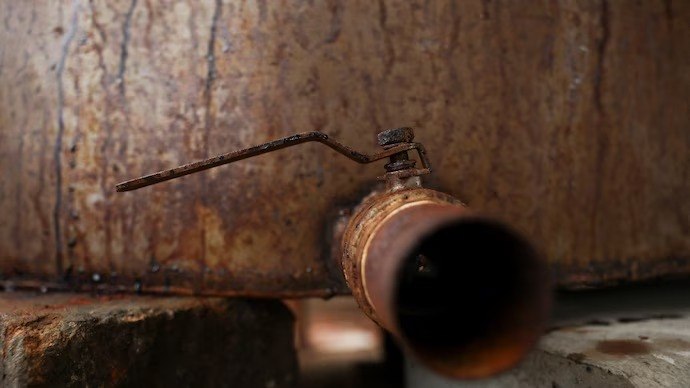
India’s economic landscape is silently grappling with a colossal challenge: corrosion. This pervasive issue, often overlooked in daily discourse, is estimated to cost the nation a staggering Rs 14 lakh crore annually. This figure, highlighted in a recent Nomura report, represents approximately 4.3% of India’s Gross Domestic Product, a significant drain on national resources that could otherwise fuel growth and development.
The gradual deterioration of metals due to environmental exposure is quietly eroding the integrity of vital infrastructure across the country, forcing expensive repairs and replacements.
The Unseen Erosion of National Assets
Corrosion extends far beyond a mere maintenance inconvenience; it is a fundamental threat to the longevity and efficiency of India’s core assets. Bridges, highways, railways, ports, power generation facilities, and industrial complexes are all susceptible to its relentless advance.
This necessitates expensive repairs and premature replacements, diverting substantial public and private funds from new construction and innovation. The Nomura report underscores that this phenomenon increases public spending on infrastructure upkeep, diminishes asset productivity, strains government finances, and critically, poses tangible risks to public safety.
Sectors Under Siege
The economic burden of corrosion is not uniformly distributed but heavily concentrated in sectors reliant on extensive metal components. The power generation and transmission sector bears the brunt of these losses, followed closely by telecommunications, automotive manufacturing, general infrastructure, and railways.
These industries operate with vast networks of steel and metal, constantly exposed to moisture, atmospheric pollution, extreme heat, and various chemicals, rendering them particularly vulnerable to corrosive forces. The report estimates the infrastructure sector alone loses over Rs 1.41 lakh crore annually, with significant figures also seen in power (Rs 53,860 crore), telecommunications (Rs 38,320 crore), railways (Rs 23,788 crore), and automotive (Rs 87,098 crore), culminating in the estimated annual total of Rs 14.15 lakh crore.
India’s Climatic Challenge and Regulatory Gaps
India’s diverse and often harsh climatic conditions significantly exacerbate the problem of corrosion. Regions experiencing heavy monsoon rains, persistently high humidity, and the saline environments of coastal areas accelerate the degradation of materials, particularly in critical infrastructure like bridges and ports.
Despite this pronounced environmental vulnerability, the Nomura report points out a critical oversight: India largely adheres to uniform construction specifications nationwide. This contrasts sharply with practices in countries such as the United States and Japan, which meticulously classify infrastructure based on specific environmental exposure levels and mandate tailored corrosion protection measures accordingly.
While existing Bureau of Indian Standards (BIS) norms stipulate requirements for corrosion protection, they often fail to specify precise methods or levels needed under varying environmental conditions. This regulatory ambiguity grants contractors flexibility, often leading to minimum protection levels rather than the most effective techniques, inadvertently contributing to premature asset deterioration.
Forging a Resilient Future
Addressing this pervasive issue demands a multi-faceted approach. The Nomura report strongly advocates for the implementation of mandatory corrosion protection measures across all relevant sectors, coupled with stricter enforcement of existing standards and enhanced compliance mechanisms.
A concerted effort to raise awareness among stakeholders within the infrastructure ecosystem is also crucial. Furthermore, the report emphasizes the imperative of aligning Indian standards more closely with global benchmarks to improve the durability and safety of long-term assets.
Editorial Context
The economic toll of corrosion in India is not merely a technical engineering challenge; it represents a profound impediment to the nation’s developmental aspirations. The diversion of Rs 14 lakh crore annually from productive investments to remedial repairs signifies a massive opportunity cost.
This capital could otherwise be channeled into building new, state-of-the-art infrastructure, investing in education, healthcare, or fostering innovation, all crucial pillars for India’s long-term growth and global competitiveness. The premature degradation of assets also undermines public trust in infrastructure quality and can lead to significant safety hazards, impacting the lives and livelihoods of millions.
Effectively tackling corrosion is therefore not just about preserving metal; it is about enhancing national productivity, optimizing public spending, and ensuring the safety and reliability of essential services. The potential to add as much as 1.5% to India’s GDP by adopting superior corrosion protection measures highlights the transformative economic benefits awaiting a proactive approach. This strategic investment in asset integrity is fundamental to building a robust, resilient, and sustainably growing economy, positioning India firmly on its path towards becoming a developed nation.
TL;DR
- India loses an estimated Rs 14 lakh crore annually due to corrosion, accounting for 4.3% of its GDP.
- Corrosion significantly impacts critical sectors including power generation, telecommunications, automotive, infrastructure, and railways.
- India’s climatic conditions, such as heavy monsoons and high humidity, accelerate corrosion in infrastructure.
- Current Indian construction standards often lack specific corrosion protection measures tailored to diverse environmental conditions, unlike countries like the US and Japan.
- Better corrosion protection measures could potentially increase India’s GDP by as much as 1.5%.
- Recommendations include mandatory protection, stricter enforcement of standards, increased compliance, and aligning Indian norms with global benchmarks.