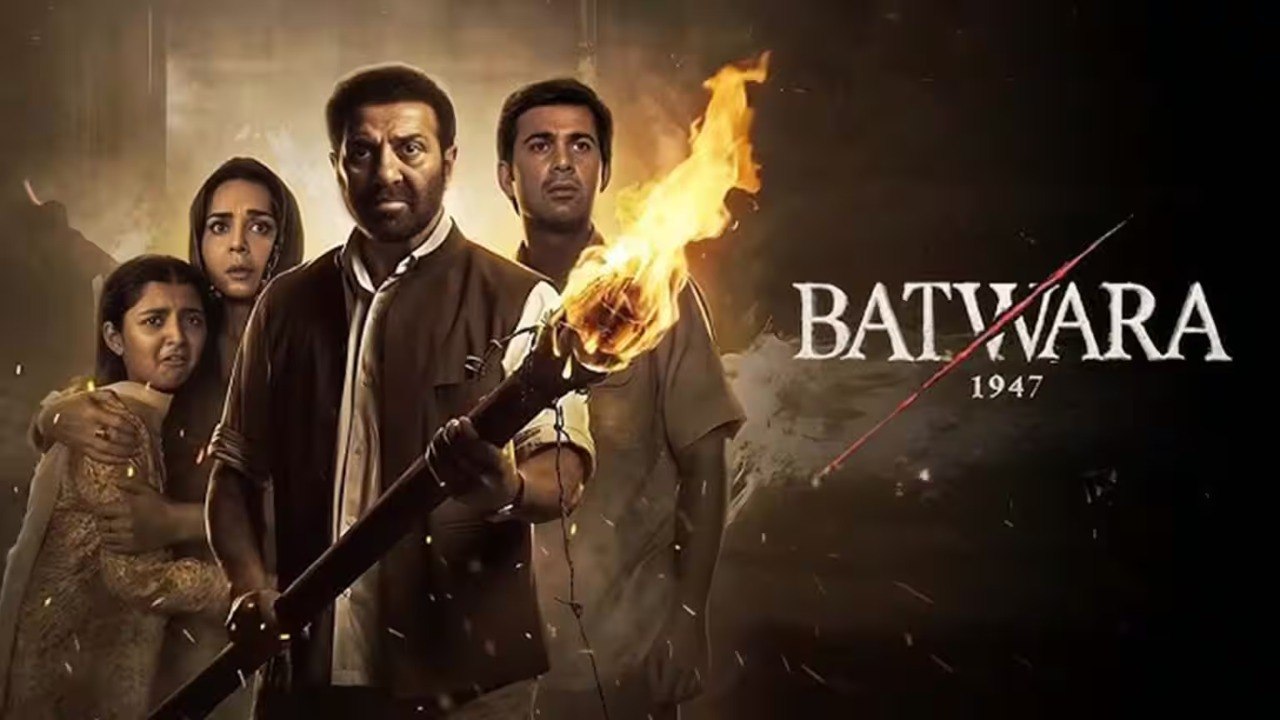
The Genesis of ‘Batwara 1947’
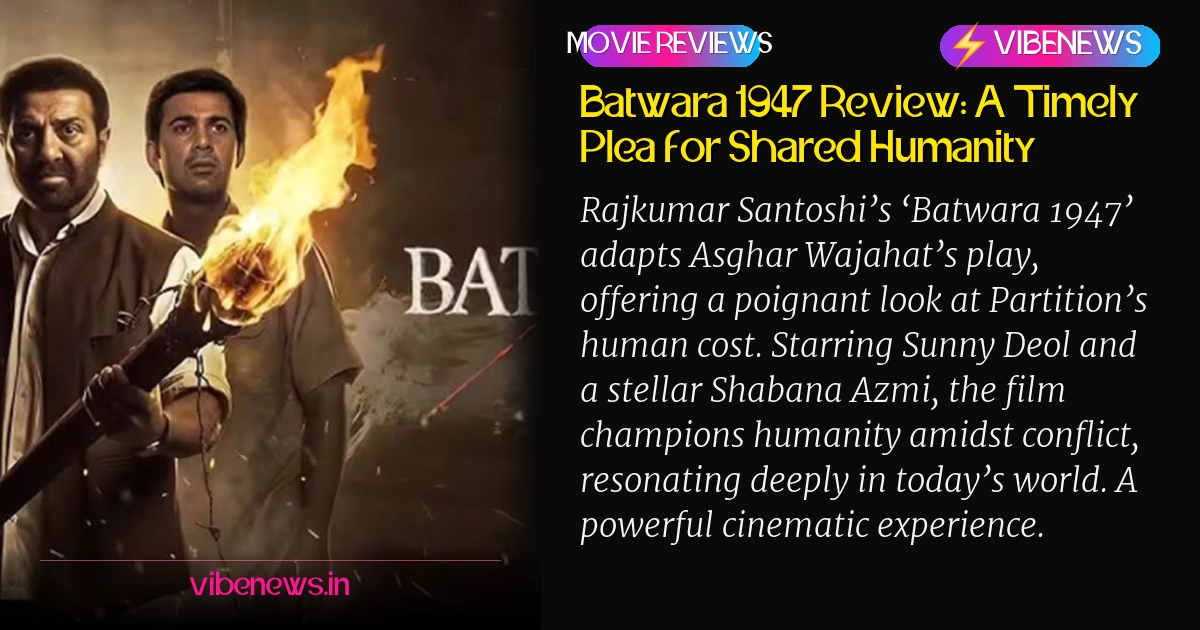
Three decades after their successful collaborations, director Rajkumar Santoshi reunites with actor Sunny Deol for ‘Batwara 1947’. This cinematic endeavor draws its essence from Asghar Wajahat’s celebrated 1989 play, ‘Jis Lahore Nai Vekhya O Jamyai Nai’. Santoshi has undertaken significant textual modifications to expand the dramatic scope for the screen, aiming to heighten emotional impact and provide the lead actor with substantial screen time.
The original play, a poignant exploration of the human cost of Partition, resonated widely across India and even in Pakistani cities like Karachi and Lahore. Santoshi’s adaptation seeks to translate this universal appeal to a contemporary audience, navigating the complexities of a period drama set against one of history’s most tumultuous backdrops.
A Home Divided, A Spirit Undaunted
The narrative of ‘Batwara 1947’ unfolds in the immediate aftermath of the subcontinent’s division. Sikander Mirza (Sunny Deol), a businessman from Meerut, along with his wife Hameeda (Preity Zinta) and children Tanno and Javed, flees to Lahore. They are allotted a sprawling 22-room haveli, once owned by a prosperous Hindu jeweler.
Unbeknownst to them, the haveli is still home to its original occupant, an elderly Hindu widow named Durgavati (Shabana Azmi). She clings to her home and her faith, oblivious to the political upheaval and holding onto the hope of her missing son’s return. Her presence becomes a central point of contention and, eventually, an unlikely catalyst for unity.
The Heart of the Haveli: Shabana Azmi’s Portrayal
Shabana Azmi delivers a truly remarkable performance as Durgavati, or Mai, as she comes to be known. Her character embodies an unwavering faith in humanity, remaining unsullied by the madness of Partition swirling around her. She represents the enduring spirit of compassion and the deep-rooted connection to one’s home, transcending religious and political divides.
Initially viewed with suspicion by Sikander and Hameeda, Mai’s benign and matronly qualities gradually foster a bond between them. Azmi imbues Durgavati with a profound gravitas, elevating the entire film with her nuanced portrayal of resilience and quiet strength. Her performance is a tour de force, reminiscent of Naseeruddin Shah’s impactful role in ‘Main Vaapas Aaunga’.
Beyond the Fists: Deol’s Nuanced Performance
Sunny Deol, known for his ‘dhai kilo ka haath’ persona, navigates the role of Sikander Mirza with a surprising depth. While the film occasionally leans into his action hero image, Deol effectively utilizes the quieter, more emotive scenes to convey a powerful sense of internal conflict and evolving understanding. He portrays a man initially driven by the need to protect his family and secure his new home, who gradually embraces a more pacifist and humane approach.
Preity Zinta, as Hameeda, provides an ideal foil to Deol’s character, contributing significantly to crucial turning points in the narrative. The film also introduces other characters like Habib Anwar (Ali Fazal), a refugee poet, and a principled maulvi, who represent rays of hope and amity, though their roles are somewhat sidelined in the larger scheme.
Crafting the Visual and Aural Landscape
The technical attributes of ‘Batwara 1947’ are of the highest order, significantly enhancing the film’s impact. Santosh Sivan’s cinematography is particularly noteworthy, lending the production a rich visual texture that adapts to changing spaces and moods. His lens captures both the opulence of the haveli and the stark realities of displacement with equal finesse.
The production design by Subrata Chakraborty and Amit Ray achieves an impressive balance between historical accuracy and visual grandeur. Their meticulous attention to detail ensures a period-appropriate setting that feels authentic and immersive. While music may not be the film’s strongest suit, the collaboration between A.R. Rahman and Javed Akhtar yields poignant compositions. The song ‘Kahaan chale gaye ho Ram’ resonates deeply, serving as a lament for lost humanity.
A Resonant Message for Fractious Times
’Batwara 1947’ arrives at a crucial juncture, offering a powerful counter-narrative to the often bellicose and divisive themes prevalent in recent cinema. The film’s emphatic pronouncement that there is no religion greater than humanity feels particularly urgent. It stands alongside other recent Bollywood films like ‘Ikkis’ and ‘Main Vaapas Aaunga’ that have sought to highlight shared humanity amidst conflict.
The film’s message of peace, understanding, and the rejection of hate is as vital today as it was during the Partition era. By adapting a play that found universal acceptance even across borders, Santoshi’s film attempts to rekindle a spirit of amity in a world that often seems increasingly polarized. It serves as a reminder of the profound losses incurred when humanity is sacrificed at the altar of division.
Editorial Context
The long-term significance of ‘Batwara 1947’ extends beyond its immediate cinematic release. In an era where historical narratives are frequently reinterpreted through a lens of division, a film that champions universal human values holds immense importance. It offers a nuanced perspective on the Partition, focusing not just on the political upheaval but on the individual human stories of loss, resilience, and the enduring capacity for compassion.
This film contributes to a vital cultural discourse, reminding audiences of the shared heritage and interconnectedness that often gets overshadowed by conflict. Its emphasis on empathy and the idea that home is where humanity resides, rather than merely a geographical location, provides a timeless lesson. Such narratives are crucial for fostering understanding and promoting a more inclusive societal dialogue for future generations.
TL;DR
- Rajkumar Santoshi’s ‘Batwara 1947’ is an adaptation of Asghar Wajahat’s acclaimed 1989 play ‘Jis Lahore Nai Vekhya O Jamyai Nai’.
- The film centers on a displaced family in Lahore post-Partition, who are allotted a haveli still occupied by an elderly Hindu widow.
- Shabana Azmi delivers a powerful, tour de force performance as Durgavati (Mai), embodying humanity and resilience amidst conflict.
- Sunny Deol portrays Sikander Mirza, a man of action who evolves to embrace pacifism and compassion through his interactions with Mai.
- The film’s core message emphatically champions humanity and communal harmony above religious and political divisions.
- Technically, the film boasts high production values, with notable cinematography by Santosh Sivan and meticulous production design.