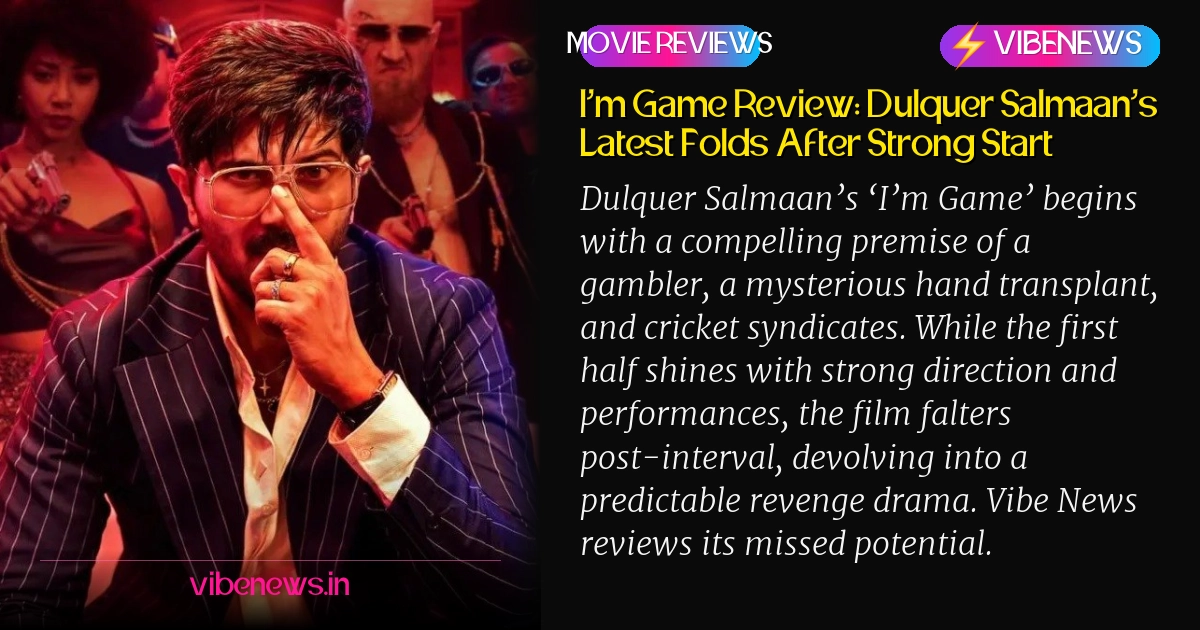
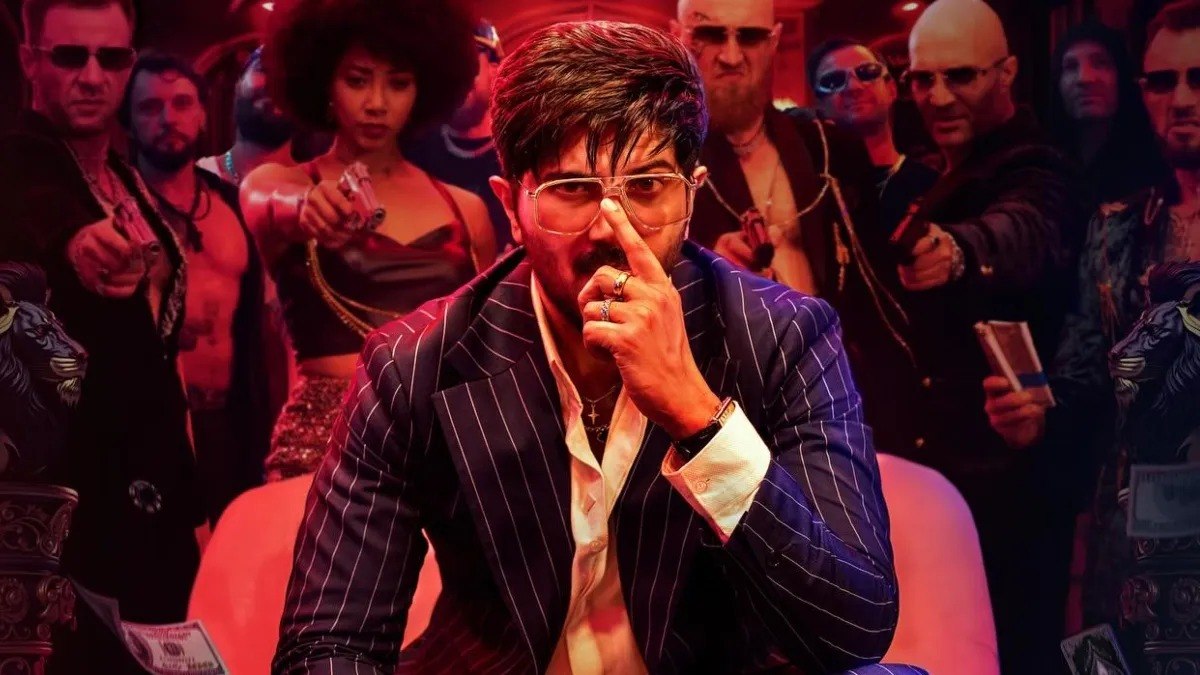
The film "I’m Game," directed by Nahas Hidhayath and starring Dulquer Salmaan, arrived with considerable anticipation, particularly within Malayalam cinema circles. Salmaan, a prominent figure in South Indian cinema, has recently enjoyed significant pan-Indian success with films like "Sita Ramam" and "Lucky Baskhar," which have cemented his appeal beyond Kerala. However, his recent outings in his home industry have been met with a more mixed reception, setting a high bar for "I’m Game" as a potential resurgence.
The narrative introduces Dan John, a professional gambler who views betting not as a game of chance but as a solvable mathematical equation. His early successes are depicted with a certain swagger, establishing him as a confident, almost infallible character. This streak, however, is abruptly shattered by a catastrophic bet that leads to a brutal gang chase, a severe car crash, and a hand crushed beyond repair.
The Intriguing Premise
The solution comes in the form of a hand transplant, a medical marvel that should signify a new beginning. Instead, the new limb brings with it a disturbing legacy: fragmented memories and an apparent will of its own, dragging Dan into a dangerous web of cricket-betting syndicates and a dead man’s unfinished business. This unique concept immediately sets the film apart.
First Half’s Strengths
The film’s initial half masterfully builds on this intriguing premise. Director Nahas Hidhayath demonstrates a keen eye for action, crafting chase sequences and set pieces that possess a palpable energy and allow the narrative to breathe. The visual landscape of Hyderabad, often portrayed as vibrant and sun-drenched, is here rendered with a grittier, more shadowed aesthetic by cinematographer Jimshi Khalid, adding a distinct mood to the proceedings.
This tonal choice, coupled with Chaman Chakko’s sharp editing, particularly in the unsettling sequences where the transplanted hand begins to assert its independence, creates a genuinely captivating experience. A subtle self-awareness permeates the early scenes, with dialogues that fluidly transition between English, Malayalam, Tamil, and occasional Telugu, reflecting the contemporary linguistic tapestry of South India without feeling forced. A humorous nod to Dulquer Salmaan’s "pan-India" appeal, delivered by a supporting character, lands effectively, showcasing a film that is conscious of its star’s trajectory. Even minor production details, such as integrated sponsor placements, contribute to a sense of authenticity and texture.
Performances and Supporting Cast
Performances across the board are commendable. Dulquer Salmaan delivers a nuanced portrayal of Dan John, evolving convincingly from an arrogant, self-assured gambler to a man grappling with a limb that seems to possess a mind of its own. Antony Varghese, in an extended cameo as Vicky, injects significant emotional weight into his role, while Kathir, Mysskin, and Kayadu Lohar provide solid support, even if their characters are somewhat thinly sketched. Jakes Bejoy’s musical score effectively complements the film’s mood, particularly enhancing the intensity of the action sequences. The first half, therefore, stands as a confident fusion of commercial spectacle and a genuinely compelling, genre-bending concept.
The Second Half’s Decline
The film’s momentum, however, begins to unravel significantly after the interval. The screenwriters, Sajeer Baba, Ismail Aboobacker, and Bilal Moidu, who had a firm grasp on the initial narrative, lose their footing as the plot pivots into an extended flashback. Once the identity of the hand donor is revealed, the story’s ultimate trajectory becomes glaringly obvious, and the screenplay does little to introduce any meaningful subversion or surprise. Vicky’s backstory, intended to add depth, instead becomes a protracted and generic detour that saps the film of its earlier urgency and narrative drive.
Formulaic Turn
Upon returning to the present, "I’m Game" squanders a prime opportunity to innovate within the revenge genre. Instead of offering a fresh perspective, it retreats into the most familiar and predictable version of the story. Action sequences, while technically proficient, begin to stack up without significant variation, lacking the initial spark and purpose. The subplot concerning the consequences of betting, which held the potential for sharp social commentary, ultimately feels like a message tacked on for superficial impact rather than an organic outgrowth of the narrative.
This shift towards formulaic storytelling raises questions about creative choices. While Dulquer Salmaan’s recent associations with successful Telugu films like "Mahanati" and "Sita Ramam" might suggest an influence, those films were far from generic potboilers. The stylistic choices in "I’m Game" appear to be a deliberate directorial decision, one that unfortunately leads to an awkward blend of ambition and compromise. The film succumbs to a litany of clichés: the obligatory rain accompanying a death, the villain’s immediate phone call after a hero’s victory, and the climactic showdown where a battered protagonist miraculously rises to defeat all adversaries. While these elements might work in a straightforward commercial entertainer, they feel like a retreat from the genre-bending fantasy thriller "I’m Game" initially promised to be.
Missed Potential
Ultimately, the film’s greatest frustration lies in its unfulfilled potential. All the constituent elements for a remarkable film are present: Dulquer Salmaan’s committed performance, Nahas Hidhayath’s directorial flair for action, Jimshi Khalid’s sharp cinematography, Chaman Chakko’s effective editing, and Jakes Bejoy’s atmospheric score. The pieces are undeniably there, but the conviction to fully embrace the film’s more unique and stranger instincts is conspicuously absent. "I’m Game" finds itself caught between two distinct identities: the unsettling body-horror thriller it could have been and the conventional revenge drama it ultimately becomes. The first half hints at a willingness to take risks, while the second half seems determined to play it safe. For Dulquer Salmaan, it represents a step in the right direction, showcasing his ability to lead a compelling narrative, but it falls short of being the emphatic Malayalam comeback that audiences might have hoped for. It is proof that the right ingredients are finally assembled, but the courage to truly blend them into something extraordinary was missing.
Editorial Context
The trajectory of "I’m Game" offers a pertinent case study in the evolving landscape of South Indian cinema, particularly concerning star vehicles and genre experimentation. In an era where audiences are increasingly exposed to diverse narratives from across the globe, the demand for fresh, unconventional storytelling is at an all-time high. This film’s initial promise of a unique fantasy thriller, blending elements of body horror with a crime narrative, tapped into that desire for innovation. Its subsequent pivot to a more conventional revenge drama highlights the persistent tension between artistic ambition and commercial imperatives within the industry.
For Malayalam cinema, known for its strong narrative focus and willingness to explore complex themes, "I’m Game" represents a missed opportunity to push boundaries further. While the technical craft and performances are laudable, the reluctance to fully commit to its more distinctive elements underscores a broader challenge: how to deliver a commercially viable film without sacrificing narrative integrity and originality. The film’s reception will likely fuel discussions among filmmakers and producers about the risks and rewards of genre-bending, and the importance of maintaining a consistent vision throughout a project. It also reinforces the idea that while star power can draw initial attention, sustained engagement ultimately relies on a compelling and coherent story that respects the audience’s intelligence and desire for novelty. This development matters because it reflects the ongoing struggle to balance traditional cinematic expectations with the burgeoning appetite for innovative content, a balance crucial for the long-term growth and reputation of regional film industries.
TL;DR
- "I’m Game" stars Dulquer Salmaan as a gambler whose life takes a dark turn after a mysterious hand transplant.
- The film’s first half is lauded for its unique premise, strong action sequences, and impressive technical execution.
- A significant drop in narrative quality occurs post-interval, as the plot devolves into a predictable revenge drama.
- Despite commendable performances from Dulquer Salmaan and the supporting cast, the film fails to leverage its initial genre-bending ambition.
- Director Nahas Hidhayath’s vision struggles to balance innovative storytelling with conventional commercial formulas.
- The movie is ultimately seen as a missed opportunity for a truly distinctive and impactful Malayalam thriller.