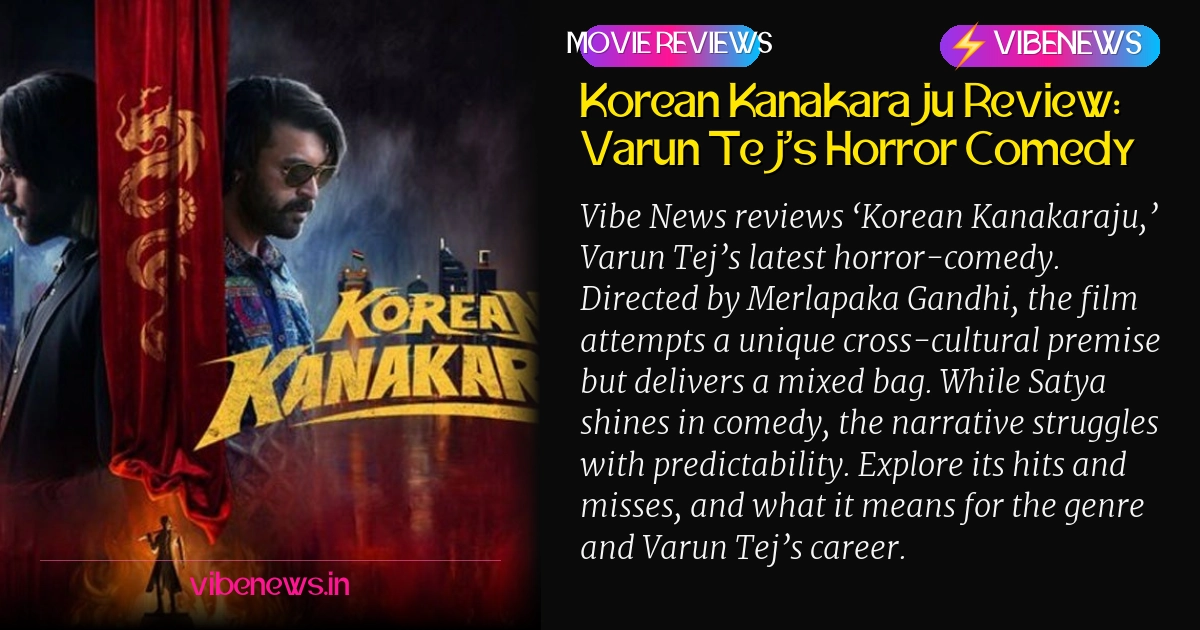
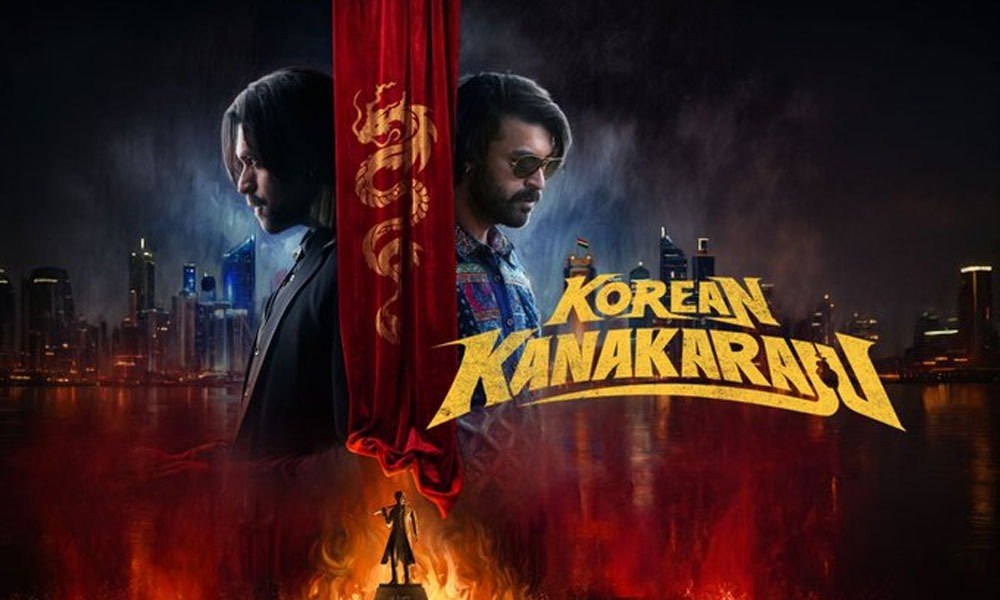
A New Direction for Varun Tej
Mega Prince Varun Tej, navigating a period of varied cinematic choices, has recently ventured into the entertainment genre with ‘Korean Kanakaraju.’ This horror-comedy, directed by Merlapaka Gandhi, marks a deliberate shift from his previous experimental roles. Produced by Rajeev Reddy, Sai Babu Jagarlamudi, Pramod Uppalapati, and Vamsi Krishna Reddy under the banners of UV Creations and First Frame Entertainments, the film premiered on August 7, 2026, aiming to offer a fresh blend of scares and laughter to the Telugu audience.
The film’s premise is set against the rustic backdrop of Penukonda, a town that becomes the unlikely nexus for a cross-cultural supernatural event. A vessel containing the ashes of a Korean man mysteriously arrives in Penukonda, setting off a chain of bizarre occurrences. The protagonist, Kanakaraju, inadvertently consumes these ashes mixed with liquor, leading to his possession by the Korean ghost.
The Narrative’s Unique Blend
The core of ‘Korean Kanakaraju’ revolves around unraveling the ghost’s story and the subsequent journey that takes Kanakaraju, now possessed, all the way to Korea. This unique geographical and cultural juxtaposition—from the rural heartland of Andhra Pradesh to the bustling streets of Korea—is a novel attempt in Telugu cinema, offering a distinct flavor to the horror-comedy genre.
Merlapaka Gandhi, who also penned the script, aimed to weave a narrative that balances comedic elements with a compelling supernatural mystery. While the film introduces an intriguing setup, its execution in the story department has been met with a mixed reception, often leaning towards predictable plot points and convenient writing choices.
Performances Under Scrutiny
Varun Tej takes on a dual challenge, portraying both the mass character of Kanakaraju in Penukonda and the ghost-possessed version in Korea. His sincerity in embodying these distinct personalities is evident, with critics noting his effortless transition between the two. He also put considerable effort into the film’s dance sequences and action stunts, showcasing a commitment to his role.
Ritika Nayak, while part of the main cast, finds her character somewhat underdeveloped, limiting her scope for a more impactful performance. The true standout, however, is Satya, who delivers a memorable performance with his impeccable comedic timing and unique histrionics. His character is given substantial material, allowing him to steal many scenes and provide much-needed levity.
Supporting actors like Sunil, Srinivas Avasarala, Muralidhar Goud, VT Ganesh, Bulli Raju, Senior Actor Chinna, and Tulasi contribute to the ensemble. Though their roles are relatively minor, they fulfill their parts adequately within the film’s broader narrative.
Technical Craftsmanship and Musical Score
The technical aspects of ‘Korean Kanakaraju’ present a mixed bag. Thaman’s musical contributions, particularly the songs, have been largely disappointing, with only ‘Kamsahamida’ garnering some appreciation. The background score, especially in the Korean segments, draws comparisons to his previous work, leading to a sense of redundancy as tracks are repeated frequently.
Manoj Reddy Katasani’s cinematography is deemed strictly adequate, capturing the contrasting locales without significant flair. The editing also receives a mixed review, suggesting inconsistencies in pacing and narrative flow. Production values, while sufficient, do not elevate the film beyond a standard offering, reflecting a pragmatic approach rather than an ambitious visual spectacle.
The Enduring Appeal of Horror Comedy
Horror-comedy remains a consistently popular genre in Telugu cinema, often enjoying a high success rate due to its ability to satisfy audiences with a blend of jump scares and humor. This genre allows for a certain degree of audience leniency, where a few well-executed comedic sequences or frights can often compensate for narrative shortcomings. Filmmakers frequently leverage this appeal, experimenting with various sub-genres and cultural backdrops to keep the formula fresh.
’Korean Kanakaraju’ attempts to capitalize on this trend by introducing a cross-cultural element, a first for Telugu cinema. The initial novelty of the Kia-Penukonda-Korea backdrop works in the film’s favor, promising a unique cinematic experience. However, the narrative soon reverts to familiar tropes, with village conflicts and a conventional love story feeling like beaten-to-death formulas.
Navigating the Narrative’s Twists and Turns
The film’s pacing and story progression are critical points of discussion. The director’s decision not to delve into the core story early on is seen as a misstep, with the central conflict only truly beginning just before the pre-interval sequence. This delay impacts engagement, as the initial setup feels prolonged and less focused.
Despite these issues, the film manages to deliver some effective comedic moments. Two back-to-back comedy blocks involving a dog and a graveyard are particularly well-received, generating genuine laughter. The interval sequence also builds anticipation for an interesting second half, momentarily raising hopes for a stronger narrative.
However, the second half struggles with predictability, as the Korea proceedings, a twist involving Avasarala Srinivas, and the Bulliraju track fail to impress. The climax, marred by convenient writing and tacky visual effects, further disappoints. Yet, a ‘Vaseekarana Pooja’ block and Satya’s continuous funny one-liners manage to keep the audience intermittently entertained, highlighting the film’s reliance on its comedic strengths.
Editorial Context
The release of ‘Korean Kanakaraju’ holds significance for several reasons within the broader landscape of Telugu cinema. For Varun Tej, it represents a strategic move to reconnect with audiences through a more accessible, entertainment-driven genre after a series of diverse, sometimes experimental, roles. The film’s reception, despite its mixed reviews, will undoubtedly influence his future project selections and his positioning as a versatile actor capable of both intense and lighthearted performances.
Furthermore, the film’s attempt at a cross-cultural horror-comedy, blending rural Andhra Pradesh with Korean elements, signifies the industry’s ongoing willingness to explore novel concepts. While the execution may have faltered in parts, such ventures push creative boundaries and introduce new narrative possibilities. The success of comedic performances, particularly Satya’s, also underscores the enduring power of strong character acting in elevating even a flawed script.
Ultimately, ‘Korean Kanakaraju’ serves as a case study in genre filmmaking, demonstrating that while a unique premise and strong comedic performances can draw audiences, a predictable and conveniently written story can hinder a film’s overall impact. Its journey from Penukonda to Korea, though uneven, contributes to the evolving tapestry of Telugu cinema, offering lessons for future endeavors in the horror-comedy space.
TL;DR
- "Korean Kanakaraju" is a horror-comedy starring Varun Tej, directed by Merlapaka Gandhi, released on August 7, 2026.
- The plot involves Kanakaraju, a man from Penukonda, getting possessed by a Korean ghost after consuming its ashes.
- Satya’s comedic timing and character are highlighted as the film’s major strength, often stealing the show.
- Varun Tej delivers a sincere performance in dual roles, showcasing effort in action and dance sequences.
- The narrative is criticized for its predictability, convenient writing, and a disappointing climax, despite a unique cross-cultural backdrop.
- Technical aspects like Thaman’s music and cinematography receive mixed reviews, with production values deemed strictly okay.