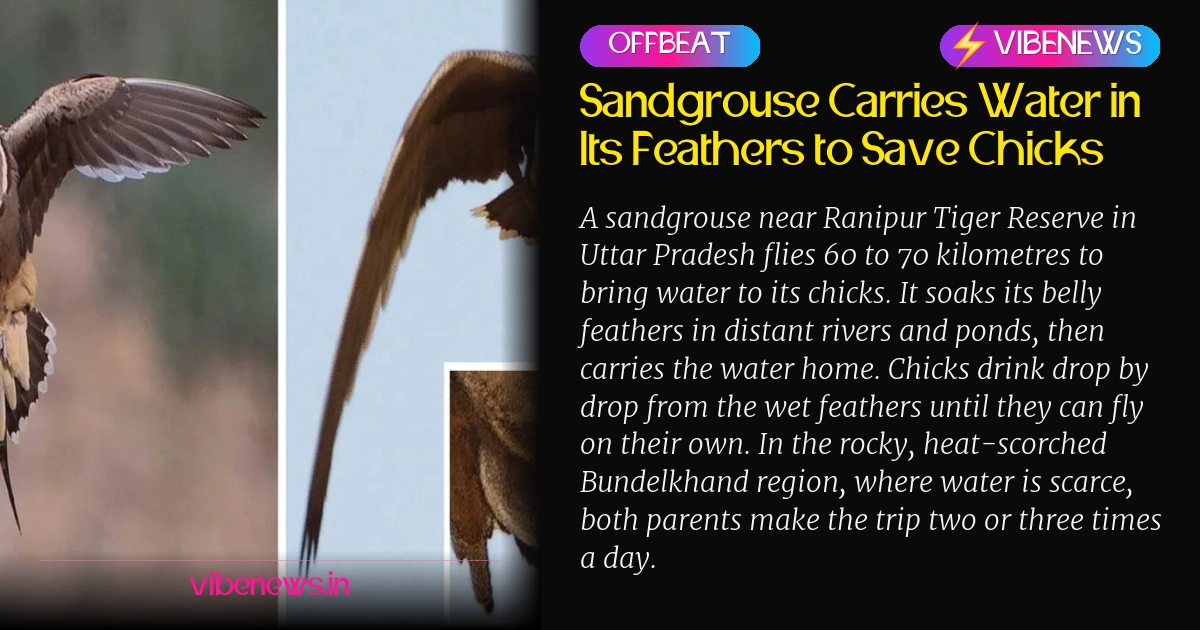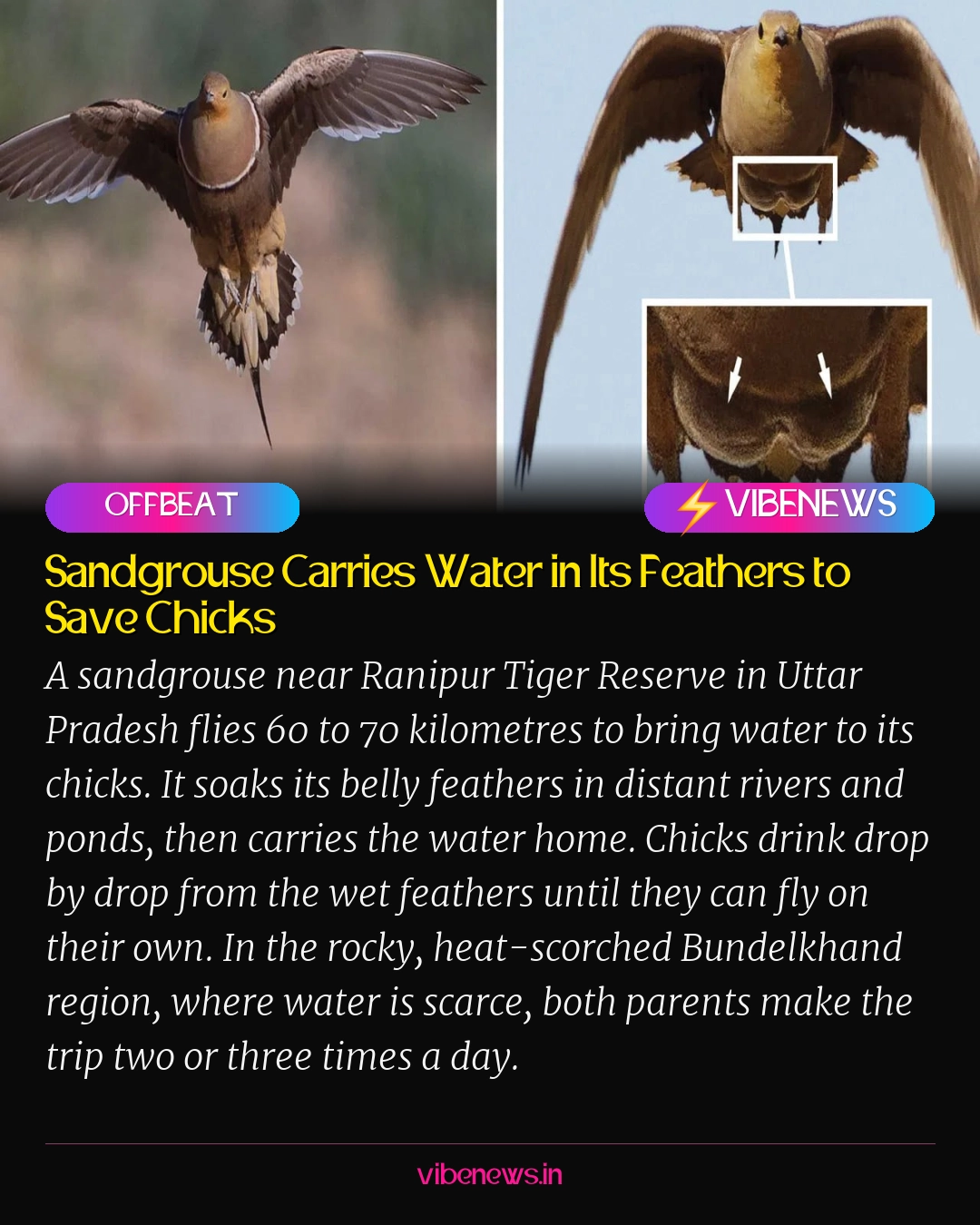
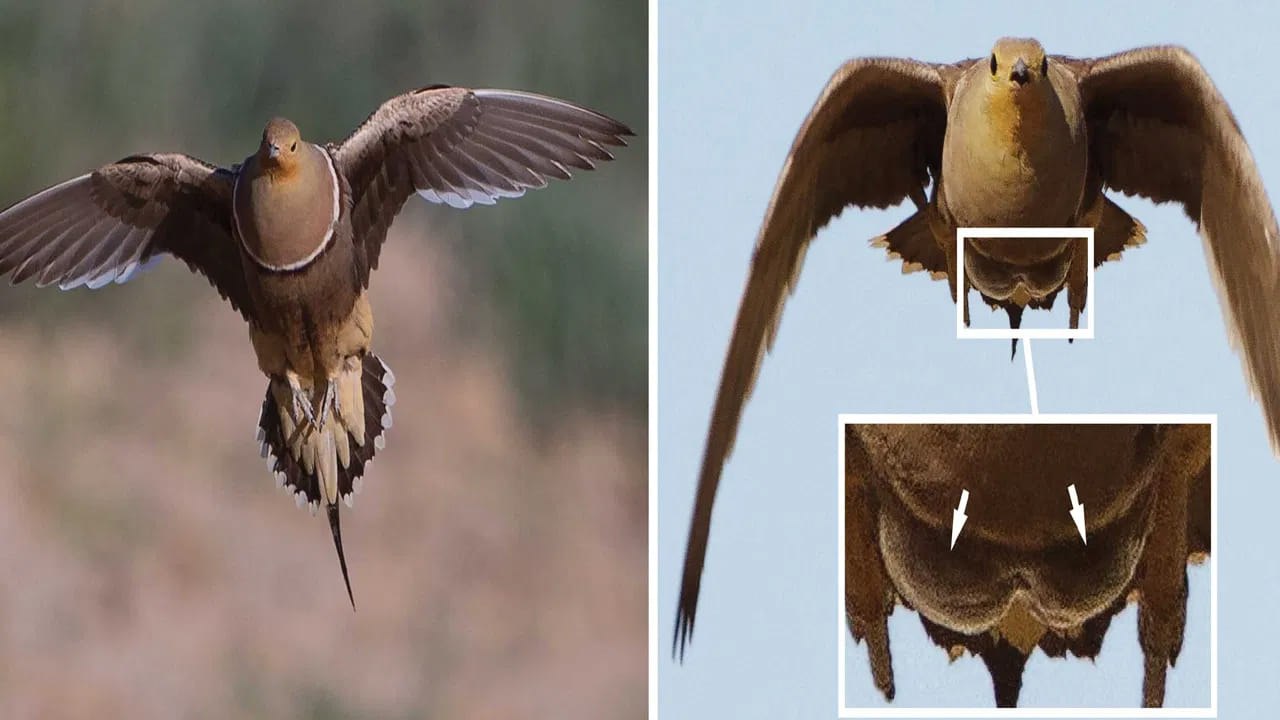
A sandgrouse is flying 60 to 70 kilometres to bring water back to its chicks, and the bird’s method is drawing wide attention. The species is found near the Ranipur Tiger Reserve in Chitrakoot district of Uttar Pradesh, where the heat is intense and water is hard to find.
A Dry Region With Little Water
The sandgrouse lives in the Bundelkhand region, a dry belt of rocky ground, scorching sun and water shortage. Wildlife experts say the sandgrouse has several subspecies. These birds mostly eat grass seeds and small grains, and that diet creates a serious problem. Seed-eating birds need water to digest their food, yet the rocky, desert-like stretches where they live can run for kilometres without any visible water source.
Breeding season makes the problem worse. Chicks cannot fly yet, so they stay in the nest while their parents search for water. The report describes both the male and the female sandgrouse making the journey. Each day they cover 60 to 70 kilometres to reach rivers and ponds far from the nest.
Feathers That Work Like a Sponge
Birds cannot easily carry water in their beaks, so nature solved the problem in a different way. The sandgrouse has a specialised structure in the feathers of its belly and chest. When it reaches a water source, the bird wades in and submerges its belly completely.
Those feathers have a fine, coil-like structure. They soak up water quickly and hold it like a sponge. The bird then takes off and flies back toward its chicks. Even at speed, the feathers keep the water in place. The report says the water neither evaporates nor slips away during the flight.
Even while flying fast, the feathers hold the water firmly so that it neither evaporates nor slips away.
Drinking From a Parent’s Chest
When the parent reaches the nest and stands still, the chicks get to work. They peck at the breast feathers and drink the water from the wet plumage, drop by drop. The parent does not need to do anything more than stay put while its young feed.
The round trip is not a one-time effort. Parents repeat the journey two or three times a day. They keep this up until the chicks grow wings and learn to fly on their own. The report presents this routine as ordinary daily work for the birds, carried out without any sign of exhaustion.
Wildlife lovers have been drawn to the story because the birds keep going despite limited water and harsh conditions. The report calls the sandgrouse a clear example of how living creatures have adapted to the hardships nature hands them. For a bird with no pump, no pipe and no shortcut, the feathers are the whole plan, and the parents carry it out again and again until their young can fly.
TL;DR
- Sandgrouse parents fly 60 to 70 kilometres a day to bring water back to their chicks.
- The birds soak their belly feathers in rivers and ponds, then carry the water to the nest.
- Fine coil-like structures in the feathers hold water during flight without evaporating or dripping.
- Chicks drink drop by drop from the wet breast feathers of a parent standing at the nest.
- The trips continue two or three times a day until the chicks learn to fly.
- The sandgrouse lives near Ranipur Tiger Reserve in Chitrakoot district, Uttar Pradesh.