Telangana’s Crime Investigation Department has arrested 14 rice millers and registered three cases over allegations that they supplied coarse rice instead of the fine variety the Food Corporation of India (FCI) required, CID Director General Charusinha said in a statement on Sunday.
The state’s probe has so far found that several mills swapped premium grain for cheaper rice, leaving the government short on the bonus payments that come with fine rice. The estimated damage is large, and the investigators say it is still preliminary.
How the scheme allegedly worked
In the 2025-26 Vanakalam season, the Telangana government procured 71.86 lakh tonnes of paddy. The state set a target of supplying 59.60 lakh tonnes of rice to the FCI.
Some millers who received allotments of fine paddy allegedly moved that grain to the open market. In its place, they milled cheaper coarse rice and sent it out as the fine variety. Investigators also suspect that some of the rice came from outside Telangana.
The complaint that started the case came from the General Manager (Procurement) of the Civil Supplies Corporation, who filed it on the 24th. It pointed to irregularities stretching from the allotment of fine paddy all the way to the delivery of milled rice.
Sixteen mills, thousands of tonnes
CID officers identified 16 rice mills in Nizamabad, Karimnagar and Mulugu districts as the main focus of the probe. Those mills, the agency says, supplied 3,385.820 tonnes of coarse rice in place of fine rice allotments.
That substitution alone cost the government an estimated Rs 1.69 crore in bonus payments tied to fine rice.
A second set of allotments is where the numbers get much bigger. Investigators say another 45,414.833 tonnes of paddy had been allotted for milling in the same scheme. If that grain had been swapped for coarse rice in the same way, the bonus burden on the government could have reached about Rs 242 crore.
Civil Supplies officials stepped in and ordered a halt to those deliveries before the damage spread further, CID said. Put together, the two figures point to a financial impact of roughly Rs 243.69 crore. The agency stressed that the actual loss will only be fixed once the investigation is complete.
What the lab tests showed
Vigilance and Enforcement Task Force teams collected rice samples during their inspections. Those samples were sent to laboratories for testing.
In the cases examined so far, the tests found that the rice supplied did not meet the quality standards for fine rice set out in the allotments, CID said.
We will collect evidence and determine the actual loss, the CID said in its statement on the case.
The agency has framed the investigation around diverting government-owned grain, switching rice varieties to make illegal profits, and causing losses to the state treasury. It also cited possible violations of the CMR contract terms for the 2025-26 Vanakalam marketing season and what it called a conspiracy to harm the government.
Investigators are asking several questions at once. How were grain allotments made to the millers? Who approved permission to mill the paddy? Was fine grain moved to the open market? Who was responsible for the switch in rice variety? Were any government officials or other people involved? CID says it will gather evidence before it settles on the final loss figure.
Bold transition: Huzurabad and Jammikunta arrests.
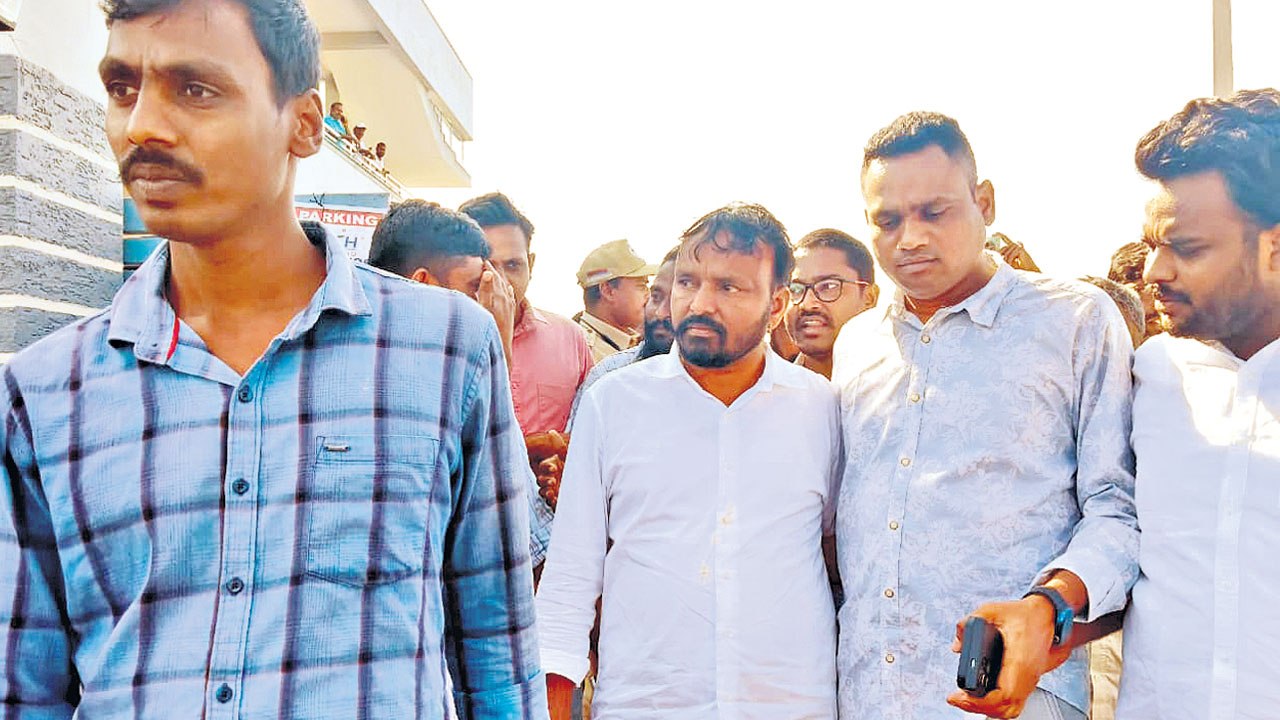
In Jammikunta on Sunday, CID officers took four rice millers from the Huzurabad division into custody. They were identified as Kalluri Krishnamurthy of Varalakshmi mill in Huzurabad, Vollala Mallikarjun of Annapurna mill, Yansani Sampathkumar of Lakshmi Sai mill, and Lenkalapelli Madhusudhan of Karunya mill. The four were taken to the CID office in Karimnagar for questioning.
The allegations against the Huzurabad group included diverting government grain, selling fine rice for profit, and replacing grade A rice with the common variety for levy supplies to the FCI.
The arrests followed a vigilance task force inspection on the 14th, ordered by the Civil Supplies Commissioner, which visited several mills in Huzurabad and Jammikunta. Local reports said officials and millers had allegedly met socially during the inspections, including a stay and a dinner arranged at a lodge for officials. That report caused a stir across the state and prompted senior officers to bring in the CID, according to the sources.
Bold transition: Arrests during a mill association election in Mulugu.
The timing of the arrests in Mulugu has also drawn attention. CID officers arrested Badam Praveen, who was contesting the presidency of the district rice millers’ association, along with six others. The arrests came on the morning of the association election, with officers reaching the millers’ homes at about 7 am.
Praveen and three others were taken to the Mulugu DSP office and then brought under police escort to the millers’ office as the nomination process closed. Praveen did not file a nomination in the end. Katragadda Satish Kumar, the only candidate to file, was elected unopposed. Satish Kumar is reputed to be sympathetic to the Congress party. After the nominations, Praveen and three other millers were taken to Hanamkonda for questioning.
Sources said vigilance officers had earlier inspected the mills of the millers now in custody and found irregularities.
Why this matters for Telangana.
This case is a Telangana story first. The grain at the center of it was procured from farmers in the state, and the bonus losses fall directly on the state government. Farmers, mill owners who play by the rules and consumers who depend on the public distribution system all have a stake in whether the state can clean up its procurement chain. The outcome will show whether the checks in place between paddy allotment and FCI delivery actually work.
The investigation is still in its early stages. CID has not named any government officials as accused, and it says it is still establishing who had a hand in the substitutions and whether anyone else was involved. The final loss figure will depend on that evidence.
TL;DR
- CID has arrested 14 rice millers in Telangana for allegedly supplying coarse rice instead of fine grain to the FCI.
- The probe puts the estimated government loss at about Rs 243.69 crore, though investigators call that figure preliminary.
- Sixteen mills in Nizamabad, Karimnagar and Mulugu are at the center of the first set of allegations.
- Another 45,414.833 tonnes of paddy allotted for milling was stopped before more damage was done.
- Four millers from Huzurabad division were taken to the CID office in Karimnagar for questioning.
- Lab tests found the rice supplied did not meet fine-variety quality standards, CID said.